 homebuildy.com
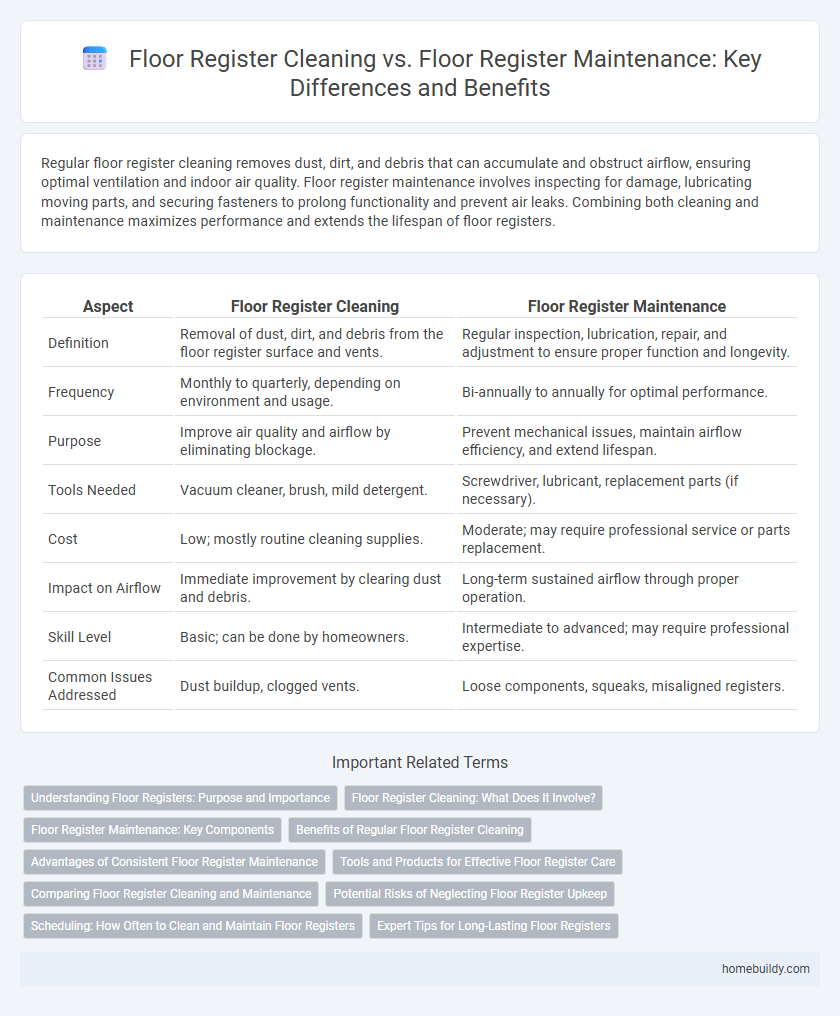
 Regular floor register cleaning removes dust, dirt, and debris that can accumulate and obstruct airflow, ensuring optimal ventilation and indoor air quality. Floor register maintenance involves inspecting for damage, lubricating moving parts, and securing fasteners to prolong functionality and prevent air leaks. Combining both cleaning and maintenance maximizes performance and extends the lifespan of floor registers.
Table of Comparison
| Aspect | Floor Register Cleaning | Floor Register Maintenance |
|---|---|---|
| Definition | Removal of dust, dirt, and debris from the floor register surface and vents. | Regular inspection, lubrication, repair, and adjustment to ensure proper function and longevity. |
| Frequency | Monthly to quarterly, depending on environment and usage. | Bi-annually to annually for optimal performance. |
| Purpose | Improve air quality and airflow by eliminating blockage. | Prevent mechanical issues, maintain airflow efficiency, and extend lifespan. |
| Tools Needed | Vacuum cleaner, brush, mild detergent. | Screwdriver, lubricant, replacement parts (if necessary). |
| Cost | Low; mostly routine cleaning supplies. | Moderate; may require professional service or parts replacement. |
| Impact on Airflow | Immediate improvement by clearing dust and debris. | Long-term sustained airflow through proper operation. |
| Skill Level | Basic; can be done by homeowners. | Intermediate to advanced; may require professional expertise. |
| Common Issues Addressed | Dust buildup, clogged vents. | Loose components, squeaks, misaligned registers. |
Understanding Floor Registers: Purpose and Importance
Floor registers play a crucial role in regulating airflow and maintaining indoor air quality by effectively covering duct openings on floors. Cleaning floor registers removes accumulated dust, debris, and allergens, ensuring unobstructed air circulation and preventing contamination. Regular maintenance, including inspection for damage and proper sealing, enhances efficiency, extends the lifespan of HVAC systems, and supports consistent temperature control throughout the space.
Floor Register Cleaning: What Does It Involve?
Floor register cleaning involves removing dust, dirt, and debris accumulated in the vent grilles and surrounding ductwork to ensure optimal airflow and indoor air quality. This process typically includes vacuuming, wiping down the registers, and occasionally using mild detergents to eliminate stubborn grime without damaging the finish. Regular cleaning prevents blockages that can reduce HVAC system efficiency and helps maintain a healthier environment by limiting allergens and dust circulation.
Floor Register Maintenance: Key Components
Floor register maintenance involves regular inspection, dust removal, and lubrication of moving parts to ensure optimal airflow and durability. Key components include the grate, damper, and frame, which require cleaning to prevent clogging and corrosion. Proper maintenance extends the lifespan of floor registers and improves HVAC system efficiency.
Benefits of Regular Floor Register Cleaning
Regular floor register cleaning prevents dust buildup and improves indoor air quality by reducing allergens that circulate through HVAC systems. Clean registers enhance airflow efficiency, leading to lower energy consumption and extended HVAC system lifespan. Maintaining clean floor registers also minimizes the risk of mold growth and unpleasant odors, promoting a healthier home environment.
Advantages of Consistent Floor Register Maintenance
Consistent floor register maintenance improves airflow efficiency by preventing dust and debris buildup, which reduces HVAC system strain and energy consumption. Regular maintenance extends the lifespan of floor registers by safeguarding against rust and damage, ensuring optimal performance over time. It also enhances indoor air quality by minimizing allergens and contaminants that accumulate in neglected registers.
Tools and Products for Effective Floor Register Care
Effective floor register care requires the right tools and products tailored for both cleaning and maintenance tasks. For cleaning, a vacuum with a brush attachment and microfiber cloths efficiently remove dust and debris from the register grilles, while mild detergent solutions help eliminate stubborn dirt without damaging finishes. Maintenance involves using rust inhibitors or protective coatings on metal registers and lubricants on moving parts to ensure durability and smooth airflow over time.
Comparing Floor Register Cleaning and Maintenance
Floor register cleaning involves the removal of dust, dirt, and debris to improve air quality and airflow efficiency, typically requiring vacuuming and wiping of the vents. Floor register maintenance encompasses regular inspections, lubrication of moving parts, and checking for damage to ensure long-term functionality and prevent issues such as rust or blockages. While cleaning addresses immediate cleanliness and airflow, maintenance extends the lifespan of the floor registers by preventing wear and mechanical failures.
Potential Risks of Neglecting Floor Register Upkeep
Neglecting floor register upkeep can lead to significant risks such as reduced indoor air quality due to accumulated dust and allergens, which can trigger respiratory issues. Poor maintenance increases the likelihood of mold growth and blockages that impede airflow efficiency, causing HVAC systems to work harder and elevate energy costs. Ignoring regular cleaning and maintenance may result in costly repairs or premature replacement of floor registers and associated ductwork.
Scheduling: How Often to Clean and Maintain Floor Registers
Floor register cleaning should be scheduled every three to six months to remove dust, dirt, and allergens that accumulate and hinder airflow. Maintenance tasks like inspecting for damage, tightening screws, and replacing filters are best performed biannually to ensure optimal function and prevent costly repairs. Regular scheduling of these cleaning and maintenance activities enhances air quality and extends the lifespan of floor registers.
Expert Tips for Long-Lasting Floor Registers
Regular floor register cleaning prevents dust buildup and ensures optimal airflow, enhancing HVAC efficiency. Maintenance includes inspecting for damage, tightening screws, and applying rust-resistant coatings to extend register lifespan. Experts recommend scheduling quarterly cleanings and annual maintenance checks to keep floor registers functioning effectively and looking new.
Floor register cleaning vs floor register maintenance Infographic