 homebuildy.com
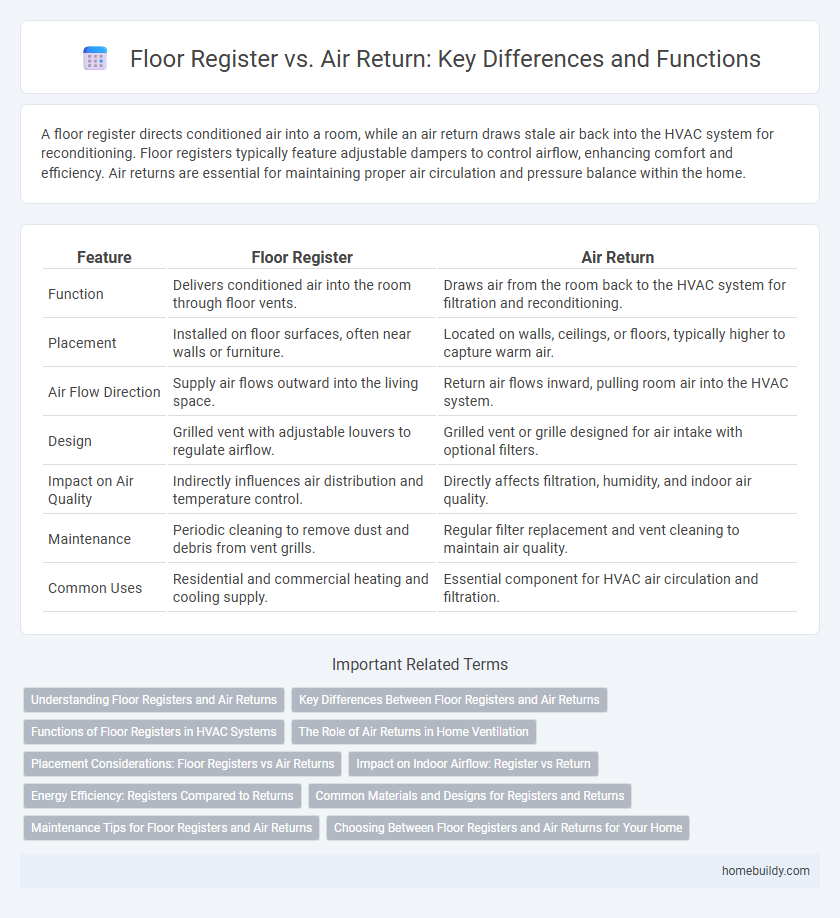
 A floor register directs conditioned air into a room, while an air return draws stale air back into the HVAC system for reconditioning. Floor registers typically feature adjustable dampers to control airflow, enhancing comfort and efficiency. Air returns are essential for maintaining proper air circulation and pressure balance within the home.
Table of Comparison
| Feature | Floor Register | Air Return |
|---|---|---|
| Function | Delivers conditioned air into the room through floor vents. | Draws air from the room back to the HVAC system for filtration and reconditioning. |
| Placement | Installed on floor surfaces, often near walls or furniture. | Located on walls, ceilings, or floors, typically higher to capture warm air. |
| Air Flow Direction | Supply air flows outward into the living space. | Return air flows inward, pulling room air into the HVAC system. |
| Design | Grilled vent with adjustable louvers to regulate airflow. | Grilled vent or grille designed for air intake with optional filters. |
| Impact on Air Quality | Indirectly influences air distribution and temperature control. | Directly affects filtration, humidity, and indoor air quality. |
| Maintenance | Periodic cleaning to remove dust and debris from vent grills. | Regular filter replacement and vent cleaning to maintain air quality. |
| Common Uses | Residential and commercial heating and cooling supply. | Essential component for HVAC air circulation and filtration. |
Understanding Floor Registers and Air Returns
Floor registers control the distribution of heated or cooled air from HVAC systems into individual rooms, ensuring optimal airflow and temperature regulation at floor level. Air returns function as the pathway for air to flow back into the HVAC system, promoting efficient air circulation and maintaining balanced pressure within the space. Understanding the distinct roles of floor registers and air returns is crucial for designing an effective and energy-efficient ventilation system.
Key Differences Between Floor Registers and Air Returns
Floor registers control airflow by allowing conditioned air to enter a room through floor-level grilles, enhancing heat distribution and comfort. Air returns, on the other hand, are designed to pull stale air back into the HVAC system for filtration and temperature regulation. Key differences include their function, placement (floor versus walls or ceilings), and impact on air circulation efficiency within a building.
Functions of Floor Registers in HVAC Systems
Floor registers serve as crucial components in HVAC systems by directing heated or cooled air into living spaces, enhancing airflow distribution and maintaining indoor comfort. Unlike air returns, which pull air back into the system for filtration and recirculation, floor registers control the release of conditioned air from the ductwork. Their adjustable design allows precise regulation of airflow volume and direction, optimizing energy efficiency and climate control within a room.
The Role of Air Returns in Home Ventilation
Air returns are essential components in home ventilation systems, facilitating the movement of stale air back to the HVAC unit for reconditioning and circulation. Unlike floor registers that primarily deliver conditioned air into living spaces, air returns maintain balanced airflow and pressure within the home, preventing air stagnation and ensuring efficient temperature regulation. Properly placed air returns help improve indoor air quality by continuously drawing in contaminants and allergens for filtration.
Placement Considerations: Floor Registers vs Air Returns
Floor registers are installed directly on the floor to supply conditioned air into living spaces, providing efficient air distribution and maintaining floor-level airflow. Air returns, typically placed high on walls or ceilings, draw stale air back into the HVAC system to be reconditioned, ensuring proper circulation and pressure balance. Proper placement of floor registers near exterior walls or windows maximizes heating efficiency, while strategic air return locations prevent airflow obstruction and enhance system performance.
Impact on Indoor Airflow: Register vs Return
Floor registers facilitate controlled airflow distribution by directing conditioned air into living spaces, enhancing comfort and ventilation efficiency. Air returns, in contrast, draw air from rooms back to the HVAC system, maintaining balanced pressure and promoting effective circulation. Proper placement and size of both registers and returns are critical for optimizing indoor airflow, reducing hotspots, and improving energy efficiency.
Energy Efficiency: Registers Compared to Returns
Floor registers direct conditioned air into living spaces, enhancing energy efficiency by distributing airflow evenly and reducing temperature fluctuations. Air returns pull air back into the HVAC system but can allow unfiltered dust and debris to recirculate, potentially lowering indoor air quality and system performance. Choosing floor registers over traditional air returns can improve airflow control and reduce energy consumption by maintaining consistent heating or cooling throughout a room.
Common Materials and Designs for Registers and Returns
Floor registers typically feature durable materials such as cast iron, steel, or aluminum, designed to withstand foot traffic and heavy use while providing efficient air distribution. Air returns commonly use larger, perforated steel or aluminum grilles that facilitate higher airflow volumes and sound attenuation. Both designs prioritize functional airflow management, with floor registers often incorporating adjustable louvers or dampers and air returns focusing on maximizing intake surface area for HVAC system balance.
Maintenance Tips for Floor Registers and Air Returns
Regular cleaning of floor registers prevents dust buildup that can restrict airflow and reduce HVAC efficiency. Air returns require periodic inspection to ensure filters are clean and free from obstructions, maintaining optimal indoor air quality. Both components benefit from routine maintenance to extend system lifespan and improve energy performance.
Choosing Between Floor Registers and Air Returns for Your Home
Floor registers efficiently distribute heated or cooled air directly into living spaces, enhancing airflow and maintaining consistent room temperatures. Air returns, essential for system balance, pull air back into the HVAC system, preventing pressure imbalances and promoting effective circulation. Choosing between floor registers and air returns depends on your home's layout, HVAC design, and airflow needs to optimize comfort and system efficiency.
Floor register vs air return Infographic