 homebuildy.com
 Floor registers prioritize functionality by directing airflow efficiently through heating and cooling systems, while decorative registers enhance aesthetic appeal with intricate designs and finishes. Choosing between a floor register and a decorative register depends on whether performance or style is the primary concern for a room. Many homeowners balance both by selecting registers that combine effective airflow with visually pleasing elements.
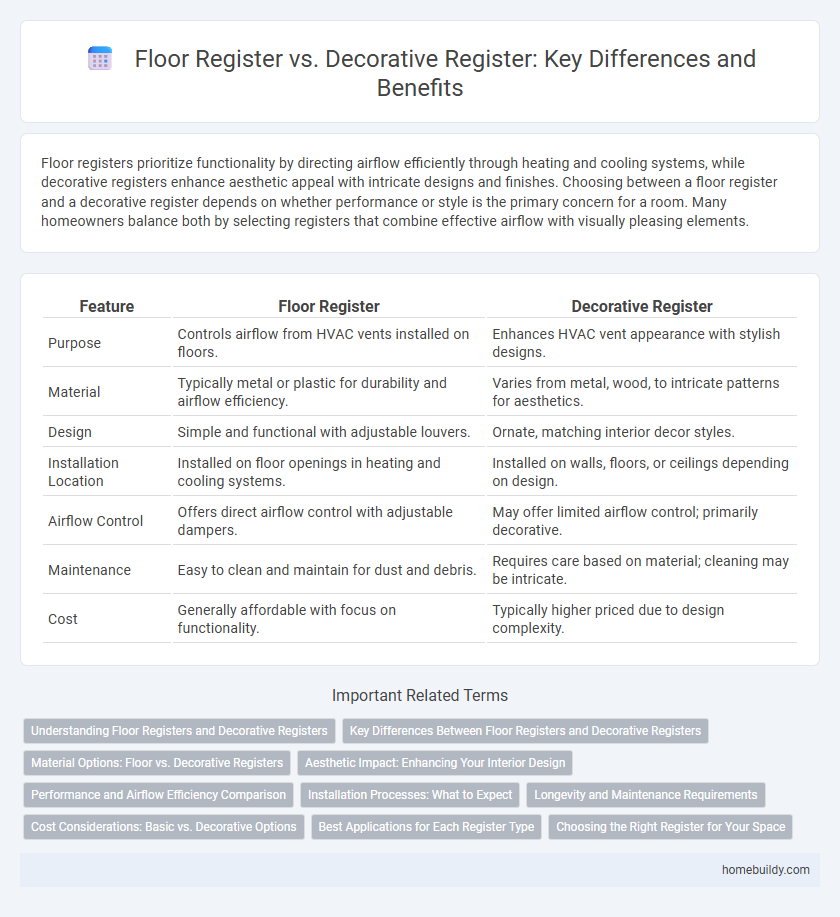
Table of Comparison
| Feature | Floor Register | Decorative Register |
|---|---|---|
| Purpose | Controls airflow from HVAC vents installed on floors. | Enhances HVAC vent appearance with stylish designs. |
| Material | Typically metal or plastic for durability and airflow efficiency. | Varies from metal, wood, to intricate patterns for aesthetics. |
| Design | Simple and functional with adjustable louvers. | Ornate, matching interior decor styles. |
| Installation Location | Installed on floor openings in heating and cooling systems. | Installed on walls, floors, or ceilings depending on design. |
| Airflow Control | Offers direct airflow control with adjustable dampers. | May offer limited airflow control; primarily decorative. |
| Maintenance | Easy to clean and maintain for dust and debris. | Requires care based on material; cleaning may be intricate. |
| Cost | Generally affordable with focus on functionality. | Typically higher priced due to design complexity. |
Understanding Floor Registers and Decorative Registers
Floor registers primarily function as air vents designed to regulate airflow in heating and cooling systems, providing efficient ventilation within a space. Decorative registers, while maintaining airflow functionality, emphasize aesthetic appeal through various materials, patterns, and finishes, enhancing interior design. Understanding the balance between airflow efficiency and visual design is key when choosing between floor registers and decorative registers for optimal HVAC performance and style integration.
Key Differences Between Floor Registers and Decorative Registers
Floor registers are designed primarily for efficient air circulation, featuring durable materials and functional grilles to withstand foot traffic and optimize airflow in HVAC systems. Decorative registers emphasize aesthetic appeal, often incorporating intricate designs, varied finishes, and materials to complement interior decor while maintaining basic airflow capabilities. Key differences include their focus on durability and airflow efficiency in floor registers versus enhanced visual style and customization options in decorative registers.
Material Options: Floor vs. Decorative Registers
Floor registers are typically crafted from durable materials like steel, cast iron, or aluminum to withstand heavy foot traffic and resist wear, ensuring long-lasting performance and safety. Decorative registers often prioritize aesthetic appeal, featuring materials such as brass, copper, or ornate wood finishes that complement interior design while providing adequate airflow. Selecting the appropriate material depends on balancing durability requirements of floor registers with the stylish, customizable options available in decorative registers.
Aesthetic Impact: Enhancing Your Interior Design
Floor registers and decorative registers serve distinct aesthetic functions in interior design, with floor registers offering a minimalist and functional appearance that blends seamlessly into various flooring types. Decorative registers, crafted with intricate patterns and diverse materials such as brass, wrought iron, or wood, act as statement pieces that elevate the room's visual appeal. Selecting between the two depends on whether the design priority is subtle integration or an eye-catching decorative element that complements the overall interior style.
Performance and Airflow Efficiency Comparison
Floor registers typically offer superior airflow efficiency due to their larger surface area and streamlined design, which allows for optimal air distribution and reduced resistance. Decorative registers, while aesthetically pleasing with intricate patterns and diverse materials, often compromise performance by restricting airflow and causing uneven air circulation. Choosing a floor register prioritizes functionality and ventilation efficiency, critical for maintaining balanced indoor air quality and HVAC system performance.
Installation Processes: What to Expect
Floor registers typically require straightforward installation involving screwing the register into the duct opening, ensuring a secure and flush fit with the floor surface. Decorative registers may demand more precise alignment and sometimes additional hardware or custom fittings to maintain their aesthetic appeal while fitting correctly. Both installation processes benefit from accurate measurements and careful handling to preserve function and style.
Longevity and Maintenance Requirements
Floor registers, designed primarily for function, typically feature durable materials such as steel or cast iron, ensuring long-lasting performance with minimal wear. Decorative registers often incorporate intricate designs and softer metals like brass or aluminum, which may require more frequent cleaning and occasional polishing to maintain their aesthetic appeal. Choosing a floor register over a decorative option reduces maintenance demands and extends the lifespan due to its sturdy construction and simple design.
Cost Considerations: Basic vs. Decorative Options
Basic floor registers typically cost between $10 to $30, offering straightforward functionality and durability with materials like steel or aluminum. Decorative floor registers, made from cast iron, brass, or intricate wood designs, range from $50 to $150, reflecting their enhanced aesthetic appeal and craftsmanship. Installation costs may also vary, with decorative options potentially requiring specialized fitting to preserve their design integrity.
Best Applications for Each Register Type
Floor registers are ideal for high-traffic areas and rooms requiring efficient airflow management, such as living rooms, basements, and hallways, due to their durability and large surface area. Decorative registers excel in enhancing aesthetic appeal in formal spaces like dining rooms, offices, and bedrooms, where style complements function without heavy wear. Selecting the appropriate register depends on balancing airflow needs with design preferences, ensuring optimal performance and visual harmony in each application.
Choosing the Right Register for Your Space
Floor registers provide efficient airflow control and durability, ideal for high-traffic areas requiring sturdy ventilation solutions. Decorative registers enhance aesthetic appeal with intricate designs and customizable finishes, suitable for spaces where style complements function. Selecting the right register depends on balancing airflow needs, durability, and design preferences to match your room's purpose and interior decor.
Floor register vs decorative register Infographic