 homebuildy.com
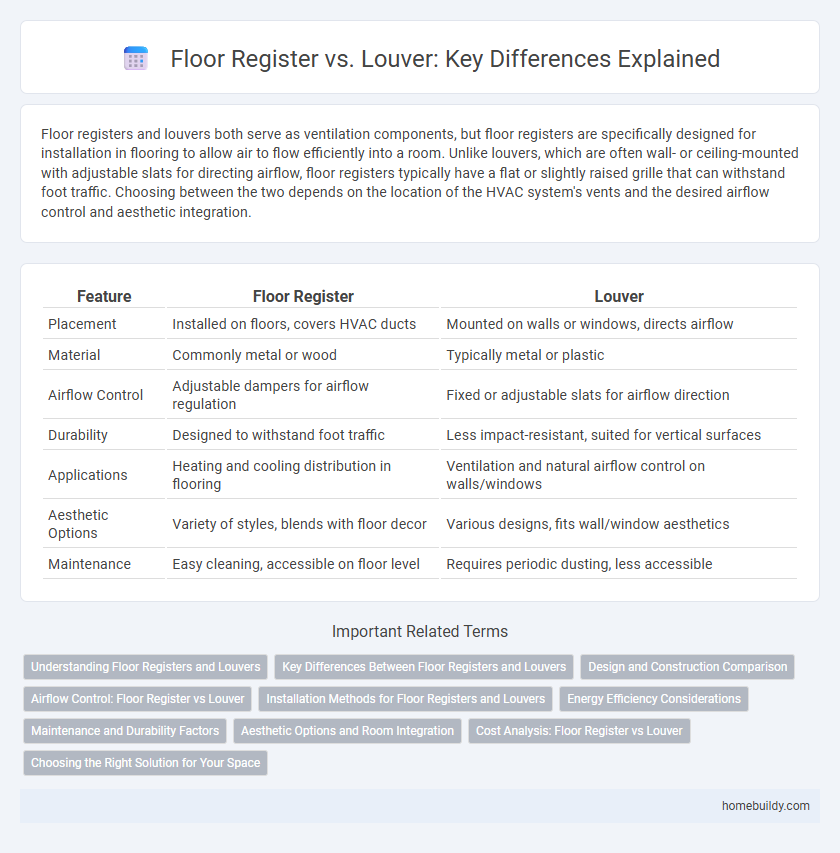
 Floor registers and louvers both serve as ventilation components, but floor registers are specifically designed for installation in flooring to allow air to flow efficiently into a room. Unlike louvers, which are often wall- or ceiling-mounted with adjustable slats for directing airflow, floor registers typically have a flat or slightly raised grille that can withstand foot traffic. Choosing between the two depends on the location of the HVAC system's vents and the desired airflow control and aesthetic integration.
Table of Comparison
| Feature | Floor Register | Louver |
|---|---|---|
| Placement | Installed on floors, covers HVAC ducts | Mounted on walls or windows, directs airflow |
| Material | Commonly metal or wood | Typically metal or plastic |
| Airflow Control | Adjustable dampers for airflow regulation | Fixed or adjustable slats for airflow direction |
| Durability | Designed to withstand foot traffic | Less impact-resistant, suited for vertical surfaces |
| Applications | Heating and cooling distribution in flooring | Ventilation and natural airflow control on walls/windows |
| Aesthetic Options | Variety of styles, blends with floor decor | Various designs, fits wall/window aesthetics |
| Maintenance | Easy cleaning, accessible on floor level | Requires periodic dusting, less accessible |
Understanding Floor Registers and Louvers
Floor registers and louvers both facilitate airflow in HVAC systems but differ in design and application; floor registers typically feature adjustable dampers and decorative grilles mounted flush with the floor surface, enhancing airflow control and aesthetic appeal. Louvers, often installed on walls or doors, consist of angled slats designed to allow air passage while preventing debris entry and promoting ventilation without adjustable features. Understanding the distinct functions and placements of floor registers and louvers is essential for optimizing air distribution and maintaining indoor air quality.
Key Differences Between Floor Registers and Louvers
Floor registers are designed to cover HVAC openings on floors, allowing air to flow while protecting the ductwork, whereas louvers are typically installed on walls or ceilings to facilitate ventilation and protect openings from debris. Floor registers often have adjustable dampers for airflow control, while louvers usually feature fixed slats angled to redirect air or prevent water entry. The material and construction of floor registers prioritize durability against foot traffic, contrasting with louvers that emphasize weather resistance and aesthetic integration on building exteriors.
Design and Construction Comparison
Floor registers typically feature a sturdy metal or wood grille with adjustable dampers for airflow control, designed to withstand foot traffic and heavy use in residential and commercial settings. Louvers, on the other hand, consist of fixed or adjustable slats angled to direct airflow, often installed in walls or ceilings rather than floors and constructed from lighter materials like aluminum or plastic. The primary design distinction lies in floor registers' reinforced frames and damper mechanisms, while louvers prioritize streamlined airflow direction and aesthetic integration into vertical surfaces.
Airflow Control: Floor Register vs Louver
Floor registers provide precise airflow control by allowing adjustable vents that direct air efficiently into living spaces, improving ventilation and comfort. Louvers, often fixed or with limited adjustability, offer less flexibility in airflow direction and volume control. For optimal air distribution and customized airflow management, floor registers outperform louvers in residential and commercial HVAC systems.
Installation Methods for Floor Registers and Louvers
Floor registers install by fitting directly into floor openings, often secured with screws or friction fit, ensuring airflow control and easy removal for cleaning. Louvers typically mount onto walls or ceilings using brackets or screws, designed to regulate air distribution while blending with surface aesthetics. Proper installation of both involves measuring duct openings accurately and sealing edges to prevent air leaks and maintain HVAC efficiency.
Energy Efficiency Considerations
Floor registers typically allow for more direct airflow control, enhancing energy efficiency by directing warm or cool air precisely where needed, reducing HVAC system workload. Louvers, while effective for ventilation, may cause more air leakage and less targeted airflow, potentially increasing energy consumption. Choosing floor registers with adjustable dampers and airtight installation improves temperature regulation and minimizes energy loss.
Maintenance and Durability Factors
Floor registers typically require less frequent cleaning due to their simpler design, while louvers, with multiple angled slats, tend to accumulate dust and debris more quickly, increasing maintenance needs. In terms of durability, floor registers are often made from robust metals like steel or cast iron that withstand foot traffic and furniture placement, whereas louvers, especially those crafted from thinner metal or plastic, may bend or warp over time. Choosing a floor register over a louver can lead to lower long-term maintenance costs and greater resistance to physical wear in high-traffic areas.
Aesthetic Options and Room Integration
Floor registers offer a wider range of aesthetic options compared to louvers, featuring varied designs, materials like wood or brass, and customizable finishes that blend seamlessly with different flooring types. Unlike louvers, which are often wall-mounted and utilitarian, floor registers integrate smoothly into the room's decor, enhancing visual appeal while maintaining air distribution efficiency. Their flush installation supports a minimalist look, making them ideal for contemporary and traditional interiors seeking discreet HVAC solutions.
Cost Analysis: Floor Register vs Louver
Floor registers generally cost less than louvers due to simpler materials and design, making them a budget-friendly choice for HVAC ventilation. Louvers, often constructed from more durable metals and featuring adjustable slats, tend to have higher upfront costs but can offer better airflow control and longevity. Maintenance expenses also differ, with floor registers requiring frequent cleaning to prevent debris buildup, while louvers typically need less upkeep but involve higher initial investment.
Choosing the Right Solution for Your Space
Floor registers provide efficient airflow control and are ideal for heating and cooling systems requiring unobstructed air distribution, while louvers offer adjustable slats for directing airflow and managing ventilation in various areas. Consider the specific needs of your space, such as airflow volume, aesthetic preferences, and maintenance requirements, when selecting between a floor register and a louver. Prioritize materials like steel or aluminum for durability and ensure the size matches duct openings to optimize performance and comfort.
Floor register vs louver Infographic