 homebuildy.com
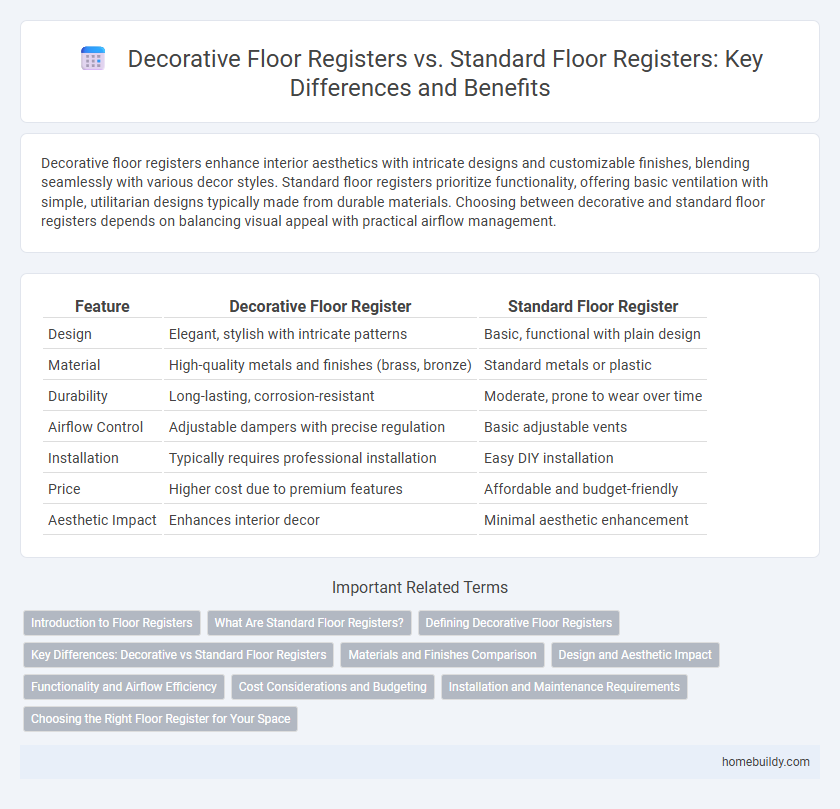
 Decorative floor registers enhance interior aesthetics with intricate designs and customizable finishes, blending seamlessly with various decor styles. Standard floor registers prioritize functionality, offering basic ventilation with simple, utilitarian designs typically made from durable materials. Choosing between decorative and standard floor registers depends on balancing visual appeal with practical airflow management.
Table of Comparison
| Feature | Decorative Floor Register | Standard Floor Register |
|---|---|---|
| Design | Elegant, stylish with intricate patterns | Basic, functional with plain design |
| Material | High-quality metals and finishes (brass, bronze) | Standard metals or plastic |
| Durability | Long-lasting, corrosion-resistant | Moderate, prone to wear over time |
| Airflow Control | Adjustable dampers with precise regulation | Basic adjustable vents |
| Installation | Typically requires professional installation | Easy DIY installation |
| Price | Higher cost due to premium features | Affordable and budget-friendly |
| Aesthetic Impact | Enhances interior decor | Minimal aesthetic enhancement |
Introduction to Floor Registers
Floor registers regulate airflow in HVAC systems by covering duct openings on floors. Decorative floor registers enhance aesthetic appeal with various materials and intricate designs, blending seamlessly with interior decor. Standard floor registers prioritize function and durability, typically featuring plain metal grilles for effective air distribution.
What Are Standard Floor Registers?
Standard floor registers are functional ventilation covers typically made from steel or aluminum, designed primarily to allow air flow through heating and cooling systems. They feature basic, utilitarian designs that prioritize durability and airflow efficiency over aesthetic appeal. Often painted in neutral colors, these registers fit flush with flooring but lack the decorative elements found in premium or customized floor register options.
Defining Decorative Floor Registers
Decorative floor registers enhance interior design by combining functionality with aesthetic appeal, offering intricate patterns and customizable finishes that complement various decor styles. Unlike standard floor registers, which prioritize airflow efficiency with basic designs, decorative registers serve as both air vents and design elements that elevate the visual ambiance of a room. Materials such as brass, bronze, and wood are commonly used in decorative registers to provide durability and an elegant look, making them a preferred choice for upscale residential and commercial spaces.
Key Differences: Decorative vs Standard Floor Registers
Decorative floor registers differentiate from standard floor registers primarily through design aesthetics and material quality, offering intricate patterns and finishes that enhance interior decor while maintaining functionality. Standard registers typically emphasize utility with simpler designs, made from basic metals or plastic, prioritizing airflow and durability over appearance. The choice impacts both visual appeal and maintenance, as decorative registers often require gentle cleaning to preserve finishes, whereas standard ones are easier to replace or clean due to their straightforward construction.
Materials and Finishes Comparison
Decorative floor registers are typically crafted from durable materials such as brass, bronze, steel, or aluminum, offering a range of intricate finishes like antique, brushed, or powder-coated colors that enhance aesthetic appeal. Standard floor registers commonly use basic steel or plastic with a limited selection of finishes, focusing more on functionality than design. The material quality and finish variety in decorative registers contribute to improved durability and visual integration with interior decor compared to standard versions.
Design and Aesthetic Impact
Decorative floor registers enhance interior design by offering intricate patterns, customizable finishes, and materials like brass or bronze that complement various decor styles, whereas standard floor registers typically feature plain, utilitarian designs made of basic steel or plastic. The aesthetic impact of decorative registers elevates the visual appeal of a room by blending seamlessly with flooring and furniture, creating a cohesive look unlike the often overlooked appearance of standard registers. Selecting a decorative floor register can transform an HVAC component into a subtle design element that adds character and elegance to living spaces.
Functionality and Airflow Efficiency
Decorative floor registers are designed to enhance aesthetic appeal without compromising airflow efficiency, often featuring precision-engineered louvers that maintain optimal air distribution. Standard floor registers prioritize functionality and durability, typically offering straightforward designs that maximize airflow with minimal resistance. While decorative registers blend style with performance, standard registers focus primarily on delivering consistent ventilation in high-traffic areas.
Cost Considerations and Budgeting
Decorative floor registers generally cost 30% to 50% more than standard floor registers due to their enhanced materials and intricate designs. Budgeting for decorative options requires factoring in higher upfront costs alongside potential gains in aesthetic value and home resale appeal. Standard floor registers remain the economical choice, offering functional ventilation at a significantly lower price point without decorative enhancements.
Installation and Maintenance Requirements
Decorative floor registers often require more precise installation to align with intricate designs and may need custom fitting to existing duct openings, whereas standard floor registers typically feature straightforward installation with universal sizing. Maintenance of decorative floor registers involves careful cleaning to preserve finishes and detailing, which can be more time-consuming than the simpler, durable surfaces of standard registers. Both types benefit from regular dusting, but decorative options may require specialized care products to maintain their aesthetic appeal.
Choosing the Right Floor Register for Your Space
Decorative floor registers enhance the aesthetic appeal of your space with intricate designs and customizable finishes, making them ideal for interior styles that emphasize detail and visual harmony. Standard floor registers prioritize function with simple, durable materials and universal designs that efficiently regulate airflow and blend seamlessly with most floors. Selecting the right floor register involves balancing airflow needs, maintenance preferences, and design goals to ensure comfort and style in any room.
decorative floor register vs standard floor register Infographic