 homebuildy.com
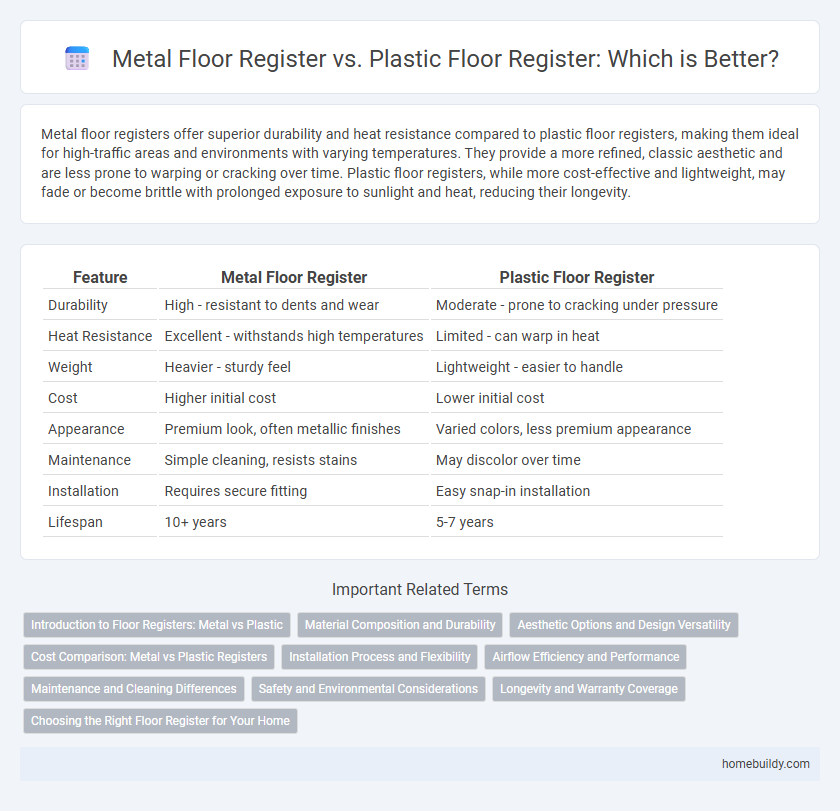
 Metal floor registers offer superior durability and heat resistance compared to plastic floor registers, making them ideal for high-traffic areas and environments with varying temperatures. They provide a more refined, classic aesthetic and are less prone to warping or cracking over time. Plastic floor registers, while more cost-effective and lightweight, may fade or become brittle with prolonged exposure to sunlight and heat, reducing their longevity.
Table of Comparison
| Feature | Metal Floor Register | Plastic Floor Register |
|---|---|---|
| Durability | High - resistant to dents and wear | Moderate - prone to cracking under pressure |
| Heat Resistance | Excellent - withstands high temperatures | Limited - can warp in heat |
| Weight | Heavier - sturdy feel | Lightweight - easier to handle |
| Cost | Higher initial cost | Lower initial cost |
| Appearance | Premium look, often metallic finishes | Varied colors, less premium appearance |
| Maintenance | Simple cleaning, resists stains | May discolor over time |
| Installation | Requires secure fitting | Easy snap-in installation |
| Lifespan | 10+ years | 5-7 years |
Introduction to Floor Registers: Metal vs Plastic
Metal floor registers offer superior durability, heat resistance, and enhanced airflow control compared to plastic floor registers, making them ideal for high-traffic and heat-prone areas. Plastic floor registers are lightweight, cost-effective, and resistant to corrosion, suitable for low-traffic zones with moderate temperature variations. Choosing between metal and plastic floor registers depends on factors like environmental conditions, budget, and aesthetic preferences.
Material Composition and Durability
Metal floor registers are typically made from steel or aluminum, offering superior durability and resistance to wear compared to plastic counterparts. Plastic floor registers, constructed from PVC or ABS, tend to be lightweight and cost-effective but can degrade or crack under heavy foot traffic and temperature fluctuations. The inherent strength and corrosion resistance of metal materials ensure longer lifespan and maintain functionality in demanding environments.
Aesthetic Options and Design Versatility
Metal floor registers offer a wide range of aesthetic options, including intricate patterns, brushed finishes, and customizable colors that complement various interior styles from industrial to traditional. Plastic floor registers provide basic design versatility with simpler patterns and limited color choices, making them suitable for budget-friendly or modern minimalistic spaces. Choosing metal enhances design flexibility and visual appeal, while plastic prioritizes functionality and cost-effectiveness.
Cost Comparison: Metal vs Plastic Registers
Metal floor registers typically cost between $15 and $40, offering greater durability and a premium appearance compared to plastic registers, which generally range from $5 to $15. Although plastic floor registers are more budget-friendly, they tend to wear out faster and may require more frequent replacement. Investing in metal floor registers often results in long-term savings due to their robustness and resistance to damage.
Installation Process and Flexibility
Metal floor registers offer a sturdier installation process due to their weight and rigidity, ensuring a secure fit within duct openings. Plastic floor registers provide greater flexibility during installation because they are lighter and easier to cut or adjust to fit irregular sizes. This adaptability makes plastic registers a preferred choice for complex or custom HVAC layouts where precise fitting is essential.
Airflow Efficiency and Performance
Metal floor registers offer superior airflow efficiency due to their rigid construction, which minimizes resistance and maintains consistent air distribution. Plastic floor registers may warp or deform over time, reducing airflow performance and causing uneven ventilation. The durability of metal registers ensures sustained optimal performance in HVAC systems, enhancing overall indoor air quality.
Maintenance and Cleaning Differences
Metal floor registers typically require less frequent replacement due to their durability and resistance to warping or cracking, making maintenance more straightforward. They can be cleaned effectively with a damp cloth and mild detergent, while plastic registers often need gentler cleaning to avoid surface scratches and may discolor over time. Regular dusting and avoiding harsh chemicals preserve the finish and functionality of both materials, but metal registers generally offer longer-lasting aesthetics and structural integrity.
Safety and Environmental Considerations
Metal floor registers offer superior fire resistance and durability, reducing the risk of deformation or toxic fumes under high temperatures compared to plastic floor registers. Plastic registers may release harmful chemicals when exposed to heat or wear down more quickly, contributing to indoor air pollution and environmental waste. Choosing metal registers enhances safety by minimizing fire hazards and supports environmental sustainability through longer lifespan and recyclability.
Longevity and Warranty Coverage
Metal floor registers typically offer greater longevity due to their durable construction, resisting wear and damage better than plastic alternatives. Many metal registers come with extended warranty coverage, often ranging from 5 to 10 years, reflecting their higher durability and manufacturer confidence. In contrast, plastic floor registers generally have shorter lifespans and limited warranty periods, usually around 1 to 3 years, making metal a more reliable long-term investment.
Choosing the Right Floor Register for Your Home
Metal floor registers offer superior durability and heat resistance, making them ideal for high-traffic areas and homes with wood or tile flooring. Plastic floor registers provide a lightweight, cost-effective option with easier installation and are less likely to rust or corrode in moist environments. Selecting the right floor register depends on balancing factors such as aesthetic preference, durability needs, and environmental conditions within your home.
metal floor register vs plastic floor register Infographic