 homebuildy.com
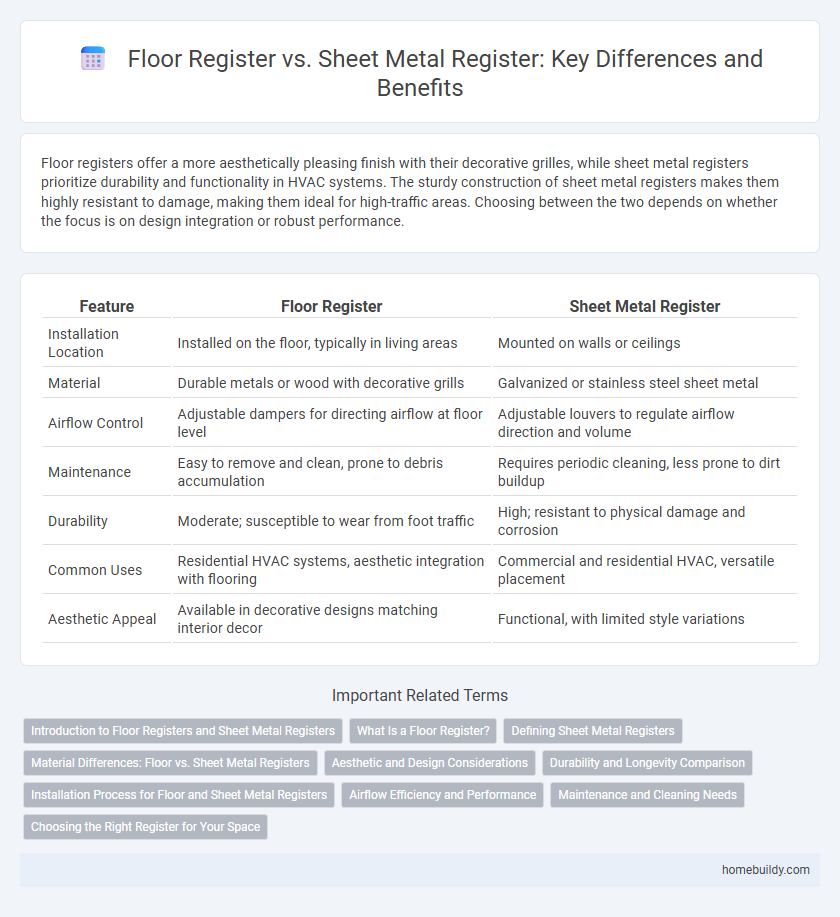
 Floor registers offer a more aesthetically pleasing finish with their decorative grilles, while sheet metal registers prioritize durability and functionality in HVAC systems. The sturdy construction of sheet metal registers makes them highly resistant to damage, making them ideal for high-traffic areas. Choosing between the two depends on whether the focus is on design integration or robust performance.
Table of Comparison
| Feature | Floor Register | Sheet Metal Register |
|---|---|---|
| Installation Location | Installed on the floor, typically in living areas | Mounted on walls or ceilings |
| Material | Durable metals or wood with decorative grills | Galvanized or stainless steel sheet metal |
| Airflow Control | Adjustable dampers for directing airflow at floor level | Adjustable louvers to regulate airflow direction and volume |
| Maintenance | Easy to remove and clean, prone to debris accumulation | Requires periodic cleaning, less prone to dirt buildup |
| Durability | Moderate; susceptible to wear from foot traffic | High; resistant to physical damage and corrosion |
| Common Uses | Residential HVAC systems, aesthetic integration with flooring | Commercial and residential HVAC, versatile placement |
| Aesthetic Appeal | Available in decorative designs matching interior decor | Functional, with limited style variations |
Introduction to Floor Registers and Sheet Metal Registers
Floor registers consist of decorative grilles designed to cover air vents on floors, allowing efficient airflow while enhancing room aesthetics. Sheet metal registers are functional ventilation components made from durable metal, typically used in duct systems to regulate and direct air distribution. Both serve crucial roles in HVAC systems but differ primarily in material, design, and installation locations, with floor registers prioritizing design integration and sheet metal registers emphasizing durability and airflow control.
What Is a Floor Register?
A floor register is a type of air vent installed flush with the floor surface, designed to regulate airflow in heating and cooling systems. Unlike sheet metal registers, which are typically mounted on walls or ceilings and made from thin metal, floor registers are often constructed with durable materials and feature adjustable louvers to control air direction and volume. Floor registers provide efficient air distribution in rooms with hardwood, tile, or carpeted floors, enhancing HVAC system performance.
Defining Sheet Metal Registers
Sheet metal registers are HVAC components fabricated from galvanized steel or aluminum, designed to control airflow through duct openings in floors, walls, or ceilings. Unlike typical floor registers, which often feature decorative grilles with adjustable louvers, sheet metal registers prioritize durability and precise fit to ductwork, facilitating efficient air distribution and minimizing leakage. Their rigid construction allows for easy customization in size and shape, making them essential for integrating duct systems within architectural constraints.
Material Differences: Floor vs. Sheet Metal Registers
Floor registers are typically made from durable materials like wood, plastic, or heavy-duty aluminum to withstand foot traffic and weight, while sheet metal registers are primarily constructed from thin galvanized steel or aluminum designed for wall or ceiling installation. The robust material of floor registers provides enhanced resistance to dents, scratches, and corrosion compared to the lighter gauge metal used in sheet metal registers. Material selection impacts not only durability but also thermal conductivity and aesthetic integration within home flooring systems.
Aesthetic and Design Considerations
Floor registers offer a sleek, low-profile design that blends seamlessly with hardwood or tile flooring, enhancing the room's overall aesthetic. Sheet metal registers tend to have a more industrial appearance, which may not complement modern interior designs as effectively. Choosing a floor register with customizable finishes and decorative grilles improves visual appeal and matches various architectural styles.
Durability and Longevity Comparison
Floor registers typically feature heavier gauge steel or cast iron construction, providing enhanced durability compared to standard sheet metal registers made from thinner, more flexible materials. The robust materials and reinforced frames of floor registers resist warping, corrosion, and physical damage, contributing to a longer lifespan in high-traffic areas. Sheet metal registers often require more frequent replacements due to their susceptibility to dents, rust, and wear, making floor registers a superior choice for long-term durability.
Installation Process for Floor and Sheet Metal Registers
Floor registers typically require installation by fitting into pre-cut openings in hardwood or tile floors, ensuring a flush, secure fit that prevents tripping hazards. Sheet metal registers are designed to be mounted onto duct openings or wall cavities, usually secured with screws or clips, facilitating easy alignment and airtight connections. Proper sealing and sizing are critical during installation of both types to optimize airflow efficiency and maintain HVAC system performance.
Airflow Efficiency and Performance
Floor registers typically offer superior airflow efficiency compared to sheet metal registers due to their precision-engineered louvers, which maximize air distribution while minimizing turbulence. Their design often incorporates adjustable dampers, allowing for better control over airflow performance in various room conditions. Sheet metal registers, while durable, may create more resistance and uneven airflow patterns, resulting in less efficient ventilation.
Maintenance and Cleaning Needs
Floor registers require regular cleaning to prevent dust and debris buildup that can obstruct airflow, often needing vacuuming or wiping down with a damp cloth. Sheet metal registers are generally easier to maintain due to their smooth surfaces, which resist dirt accumulation and allow for quicker cleaning with mild detergents. Both types benefit from periodic removal and thorough cleaning to maintain optimal airflow and indoor air quality.
Choosing the Right Register for Your Space
Floor registers offer a sleek, low-profile design that seamlessly integrates with hardwood or tile flooring, making them ideal for living areas where aesthetics matter most. Sheet metal registers provide greater durability and enhanced airflow control, suited for high-traffic or industrial spaces requiring efficient ventilation. Selecting the right register depends on balancing the need for visual appeal, material strength, and airflow efficiency in your specific environment.
Floor register vs sheet metal register Infographic