 homebuildy.com
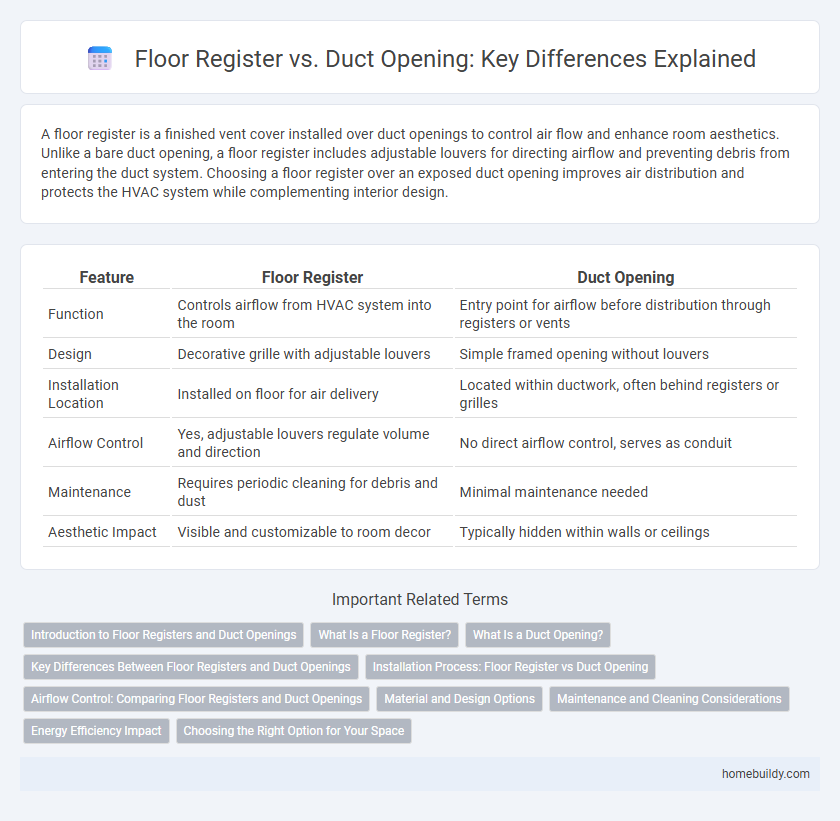
 A floor register is a finished vent cover installed over duct openings to control air flow and enhance room aesthetics. Unlike a bare duct opening, a floor register includes adjustable louvers for directing airflow and preventing debris from entering the duct system. Choosing a floor register over an exposed duct opening improves air distribution and protects the HVAC system while complementing interior design.
Table of Comparison
| Feature | Floor Register | Duct Opening |
|---|---|---|
| Function | Controls airflow from HVAC system into the room | Entry point for airflow before distribution through registers or vents |
| Design | Decorative grille with adjustable louvers | Simple framed opening without louvers |
| Installation Location | Installed on floor for air delivery | Located within ductwork, often behind registers or grilles |
| Airflow Control | Yes, adjustable louvers regulate volume and direction | No direct airflow control, serves as conduit |
| Maintenance | Requires periodic cleaning for debris and dust | Minimal maintenance needed |
| Aesthetic Impact | Visible and customizable to room decor | Typically hidden within walls or ceilings |
Introduction to Floor Registers and Duct Openings
Floor registers are designed to cover duct openings, allowing air to flow efficiently into a room while preventing debris from entering the HVAC system. Unlike bare duct openings, floor registers feature adjustable grilles or louvers that control airflow direction and volume, improving indoor air distribution and comfort. Proper installation of floor registers ensures optimal heating and cooling performance while maintaining aesthetic appeal.
What Is a Floor Register?
A floor register is a vent cover installed on floors to control the airflow from heating and cooling systems, ensuring efficient air distribution in a room. Unlike a simple duct opening, which is just the exposed end of an air duct, a floor register includes adjustable louvers or dampers to regulate air volume and direction. Floor registers are made from materials like metal or wood, designed to blend with flooring while protecting ductwork and enhancing HVAC system performance.
What Is a Duct Opening?
A duct opening is the structural aperture in HVAC systems that connects the ductwork to the conditioned space, allowing air to flow from the ducts into rooms or return air to the system. Unlike floor registers, which have grilles or vents to control airflow and prevent debris from entering, duct openings are typically bare or fitted with basic frames and require a register or grille for finished installation. Proper sealing and sizing of duct openings are crucial for maintaining HVAC efficiency and preventing air leakage.
Key Differences Between Floor Registers and Duct Openings
Floor registers are decorative grilles installed over duct openings to control airflow and prevent debris from entering HVAC systems, while duct openings are the raw, uncovered entry points in the ductwork. Floor registers typically include adjustable dampers for regulating air volume, contrasting with duct openings that lack built-in airflow control features. The materials and design of floor registers also prioritize aesthetic appeal and safety on walking surfaces, a consideration absent in basic duct openings.
Installation Process: Floor Register vs Duct Opening
Installing a floor register involves securing the grille over the finished floor surface, ensuring proper alignment with the existing cutout and inserting it without gaps for efficient airflow. In contrast, a duct opening installation requires cutting or preparing a hole in the ductwork, often involving sealing techniques to prevent air leaks before attaching the register or grille. Proper installation of floor registers emphasizes aesthetic integration and structural support, while duct openings prioritize airtight connections and alignment within HVAC systems.
Airflow Control: Comparing Floor Registers and Duct Openings
Floor registers provide precise airflow control with adjustable dampers, allowing users to regulate air volume and direction effectively. Duct openings, typically fixed and unregulated, lack the ability to modulate airflow once installed, resulting in less efficient air distribution. This makes floor registers a preferred choice for optimizing HVAC performance and maintaining balanced indoor comfort.
Material and Design Options
Floor registers are typically made from durable materials such as steel, aluminum, or bronze, offering superior strength and aesthetic appeal compared to standard duct openings. Their design options include adjustable louvers or grilles that allow precise airflow control, while duct openings generally lack such features and are often unfinished or covered with basic mesh. High-quality floor registers provide customizable finishes and decorative patterns that enhance interior design, unlike standard duct openings which prioritize function over form.
Maintenance and Cleaning Considerations
Floor registers require regular cleaning to prevent dust and debris accumulation, which can obstruct airflow and reduce HVAC efficiency. Unlike duct openings, which are recessed and harder to access, floor registers typically have removable grilles, making maintenance more straightforward. Ensuring easy access and periodic inspection of floor registers helps maintain optimal indoor air quality and system performance.
Energy Efficiency Impact
Floor registers with adjustable dampers provide superior control over airflow compared to open duct openings, significantly enhancing energy efficiency by reducing heat loss and preventing air leakage. Properly sealed and sized floor registers minimize the exchange of conditioned air with unconditioned spaces, maintaining consistent indoor temperatures and lowering HVAC energy consumption. Energy savings of up to 15% can be achieved by optimizing floor register placement and utilizing high-quality materials with low thermal conductivity.
Choosing the Right Option for Your Space
Floor registers offer adjustable airflow control and a sleek finish suitable for high-traffic areas, enhancing comfort and aesthetics. Duct openings without registers provide direct ventilation but may lead to uneven air distribution and dust accumulation. Selecting the right option depends on room size, airflow needs, and maintenance preferences to optimize HVAC efficiency and interior design.
Floor register vs duct opening Infographic