 homebuildy.com
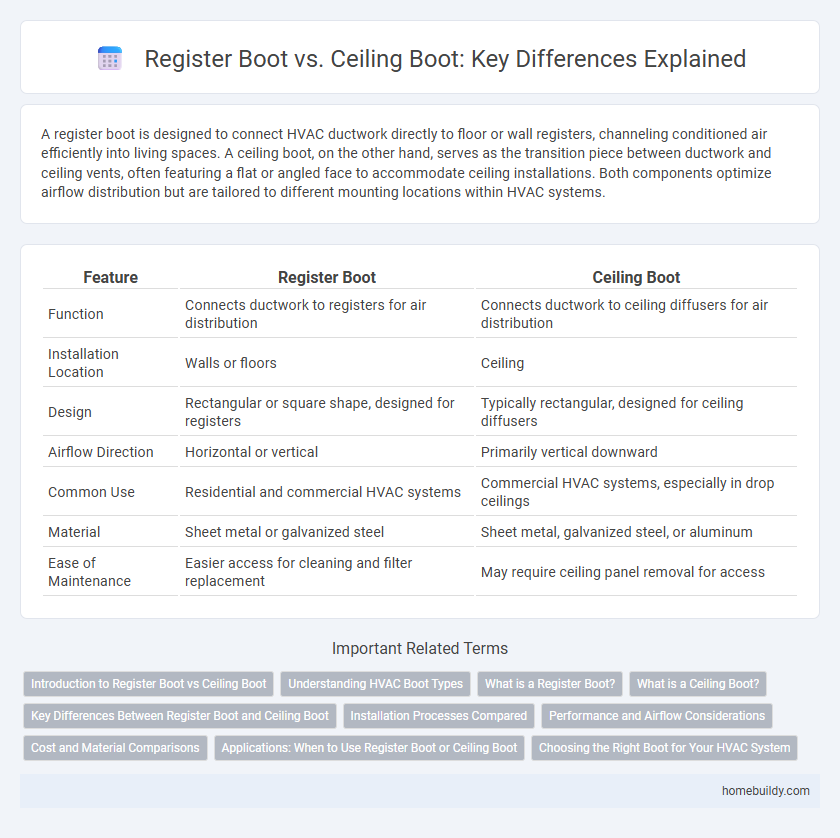
 A register boot is designed to connect HVAC ductwork directly to floor or wall registers, channeling conditioned air efficiently into living spaces. A ceiling boot, on the other hand, serves as the transition piece between ductwork and ceiling vents, often featuring a flat or angled face to accommodate ceiling installations. Both components optimize airflow distribution but are tailored to different mounting locations within HVAC systems.
Table of Comparison
| Feature | Register Boot | Ceiling Boot |
|---|---|---|
| Function | Connects ductwork to registers for air distribution | Connects ductwork to ceiling diffusers for air distribution |
| Installation Location | Walls or floors | Ceiling |
| Design | Rectangular or square shape, designed for registers | Typically rectangular, designed for ceiling diffusers |
| Airflow Direction | Horizontal or vertical | Primarily vertical downward |
| Common Use | Residential and commercial HVAC systems | Commercial HVAC systems, especially in drop ceilings |
| Material | Sheet metal or galvanized steel | Sheet metal, galvanized steel, or aluminum |
| Ease of Maintenance | Easier access for cleaning and filter replacement | May require ceiling panel removal for access |
Introduction to Register Boot vs Ceiling Boot
Register boots and ceiling boots are essential components in HVAC systems that connect air ducts to registers or diffusers. A register boot typically fits into a floor or wall register and directs airflow efficiently into the room, while a ceiling boot connects the ductwork to ceiling-mounted diffusers, optimizing space and air distribution. Both are designed to ensure proper airflow management, but their placement and compatibility with registers versus diffusers distinguish their applications.
Understanding HVAC Boot Types
Register boots and ceiling boots are essential HVAC components that facilitate airflow from ductwork to conditioned spaces. Register boots connect ducts to floor or wall registers, featuring built-in dampers for airflow control, while ceiling boots interface with ceiling diffusers, often designed to optimize air distribution above. Choosing the appropriate boot type depends on the installation environment, desired airflow pattern, and system efficiency requirements.
What is a Register Boot?
A register boot is a component in HVAC systems that connects the ductwork to a floor, wall, or ceiling register, directing airflow efficiently into a room. It acts as a transition piece, ensuring a secure fit between the duct and the visible register grille, which helps maximize air distribution and maintain system performance. Unlike a ceiling boot, which specifically fits ceiling-mounted registers, a register boot can be installed in floors or walls, providing versatile options for air delivery locations.
What is a Ceiling Boot?
A ceiling boot is a type of HVAC duct fitting designed to connect a duct register to the ceiling, allowing air to be distributed efficiently through ceiling-mounted vents. Unlike a register boot, which typically connects to floor or wall registers, a ceiling boot is shaped to fit flush with ceiling surfaces and support air flow from above. This fitting ensures proper sealing and air distribution in ceiling ductwork systems for optimal climate control.
Key Differences Between Register Boot and Ceiling Boot
Register boots connect ductwork to floor or wall registers, directing airflow into rooms with adjustable dampers for precise control, while ceiling boots link ducts to ceiling diffusers for overhead air distribution. Register boots are typically larger and designed for horizontal airflow, whereas ceiling boots facilitate vertical airflow, impacting installation location and performance. Material composition and size variations also distinguish them, with ceiling boots often featuring flanges for secure attachment to ceiling tiles.
Installation Processes Compared
Register boots typically install directly onto floor joists or subfloor openings, providing a straightforward method that aligns with ductwork size for efficient airflow management. Ceiling boots require attachment to ceiling joists and often necessitate additional support and precise cutting of ceiling drywall, making their installation more complex and time-consuming. The choice between register boots and ceiling boots impacts labor costs and installation time due to these differing structural and support requirements.
Performance and Airflow Considerations
Register boots provide more precise airflow control and better performance due to adjustable dampers, optimizing air distribution in HVAC systems. Ceiling boots, often installed in drop ceilings, offer less control but are suitable for diffusing air evenly in large open spaces. Choosing between the two depends on specific airflow requirements and system design preferences for efficiency and comfort.
Cost and Material Comparisons
Register boots typically cost less than ceiling boots due to simpler materials and straightforward design, making them a budget-friendly option for HVAC installations. Ceiling boots often use more durable materials like galvanized steel or aluminum for ceiling mounting, contributing to higher costs compared to the plastic or lightweight metal common in register boots. The material choice directly impacts longevity and price, with ceiling boots offering enhanced durability suitable for overhead placement while register boots provide an economical solution for floor or wall registers.
Applications: When to Use Register Boot or Ceiling Boot
Register boots are ideal for wall or floor air vents, providing focused airflow control in residential and commercial HVAC systems. Ceiling boots are best suited for overhead duct outlets, ensuring even air distribution in large open spaces or rooms with drop ceilings. Selecting the right boot depends on the location of your ductwork and the desired airflow direction for optimal climate control.
Choosing the Right Boot for Your HVAC System
Selecting the right boot for your HVAC system hinges on duct size and airflow efficiency, where register boots fit smaller ducts and offer precise adapter options, while ceiling boots support larger ducts and distribute air more broadly. Register boots provide tighter seals and easier installation for rectangular or round ducts, optimizing airflow control in confined spaces. Ceiling boots accommodate broader ceiling slots and integrate with diffusers to enhance overall air distribution and aesthetic appeal in larger rooms.
Register boot vs ceiling boot Infographic