 homebuildy.com
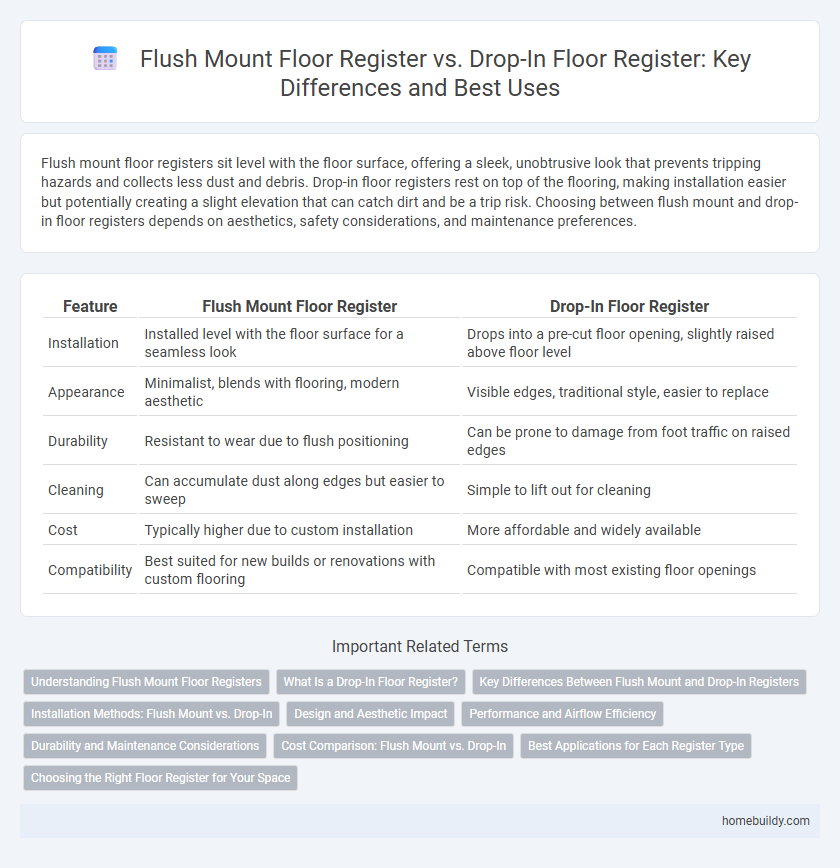
 Flush mount floor registers sit level with the floor surface, offering a sleek, unobtrusive look that prevents tripping hazards and collects less dust and debris. Drop-in floor registers rest on top of the flooring, making installation easier but potentially creating a slight elevation that can catch dirt and be a trip risk. Choosing between flush mount and drop-in floor registers depends on aesthetics, safety considerations, and maintenance preferences.
Table of Comparison
| Feature | Flush Mount Floor Register | Drop-In Floor Register |
|---|---|---|
| Installation | Installed level with the floor surface for a seamless look | Drops into a pre-cut floor opening, slightly raised above floor level |
| Appearance | Minimalist, blends with flooring, modern aesthetic | Visible edges, traditional style, easier to replace |
| Durability | Resistant to wear due to flush positioning | Can be prone to damage from foot traffic on raised edges |
| Cleaning | Can accumulate dust along edges but easier to sweep | Simple to lift out for cleaning |
| Cost | Typically higher due to custom installation | More affordable and widely available |
| Compatibility | Best suited for new builds or renovations with custom flooring | Compatible with most existing floor openings |
Understanding Flush Mount Floor Registers
Flush mount floor registers sit level with the floor surface, providing a seamless and unobtrusive airflow solution ideal for modern interiors. Unlike drop-in floor registers, which sit above the floor and can collect debris or pose tripping hazards, flush mounts are recessed, enhancing safety and ease of cleaning. Their design promotes efficient air distribution while maintaining aesthetic appeal in residential and commercial spaces.
What Is a Drop-In Floor Register?
A drop-in floor register is a type of ventilation grille designed to be placed directly into the floor opening without the need for additional mounting hardware, allowing for easy installation and removal. Unlike flush mount floor registers that sit level with the floor surface, drop-in registers rest inside the duct opening, often featuring a slightly raised or decorative border. These registers are commonly used in homes and commercial buildings for efficient air distribution and straightforward maintenance.
Key Differences Between Flush Mount and Drop-In Registers
Flush mount floor registers sit level with the floor, offering a seamless look and minimizing tripping hazards, ideal for modern interiors and high-traffic areas. Drop-in floor registers rest atop the floor surface, allowing for easier installation and replacement, making them suitable for retrofit projects or spaces requiring frequent maintenance. Material and airflow control options vary between the two, with flush mounts often integrating with hardwood or tile flooring, while drop-in types typically fit into existing floor openings with adjustable dampers.
Installation Methods: Flush Mount vs. Drop-In
Flush mount floor registers require precise cutting of the subfloor to align seamlessly with the surface, ensuring a smooth, level finish that prevents tripping hazards. Drop-in floor registers are designed to fit directly into pre-existing duct openings or metal frames, simplifying installation without the need for floor modification. Installation time for flush mount registers is generally longer due to the need for accurate measurements and adjustments, while drop-in registers offer quicker, more flexible placement suitable for retrofits.
Design and Aesthetic Impact
Flush mount floor registers offer a sleek, minimalist appearance by sitting nearly level with the floor surface, enhancing modern interior designs without disrupting the flooring continuity. Drop-in floor registers are more visible, typically featuring a raised frame that creates a traditional, functional look suited for classic or utilitarian spaces. The choice between flush mount and drop-in registers significantly influences overall room aesthetics, with flush mounts providing a seamless integration and drop-ins contributing a more pronounced vent presence.
Performance and Airflow Efficiency
Flush mount floor registers offer superior airflow efficiency by sitting level with the floor, reducing air turbulence and enabling smooth, unobstructed airflow. Drop-in floor registers may create slight airflow resistance due to their raised edges, which can disrupt performance in HVAC systems. Optimizing airflow through flush mount designs enhances heating and cooling distribution, improving overall system efficiency in residential and commercial spaces.
Durability and Maintenance Considerations
Flush mount floor registers offer superior durability due to their recessed installation, reducing exposure to foot traffic and minimizing damage over time. Drop-in floor registers are easier to remove for maintenance but tend to be less durable as they sit above the floor surface, making them more prone to wear and displacement. Choosing flush mount designs enhances longevity and reduces frequent maintenance needs in high-traffic areas.
Cost Comparison: Flush Mount vs. Drop-In
Flush mount floor registers typically cost more due to their complex installation and seamless design that aligns with the floor surface, enhancing aesthetic appeal and reducing trip hazards. Drop-in floor registers are generally more affordable, featuring simpler installation where the register rests on a frame set into the floor, making them easier to replace or upgrade. Budget considerations favor drop-in registers for cost efficiency, while flush mounts offer long-term value through improved durability and design integration.
Best Applications for Each Register Type
Flush mount floor registers are ideal for high-traffic areas and modern interiors where a sleek, unobtrusive appearance is desired, as they sit level with the flooring and reduce tripping hazards. Drop-in floor registers excel in applications requiring easier access for cleaning and adjustment, commonly used in residential settings with carpeted floors or raised flooring systems. Selecting the appropriate type depends on the floor material, traffic patterns, and maintenance preferences for effective airflow management.
Choosing the Right Floor Register for Your Space
Flush mount floor registers sit level with the floor surface, providing a sleek and unobtrusive look ideal for high-traffic areas and modern interiors. Drop-in floor registers rest on top of the floor and are easier to install or replace, making them a practical choice for older homes or spaces requiring frequent access to ductwork. Selecting the right floor register involves considering floor type, foot traffic, and maintenance requirements to optimize airflow and aesthetic integration.
flush mount floor register vs drop-in floor register Infographic