 homebuildy.com
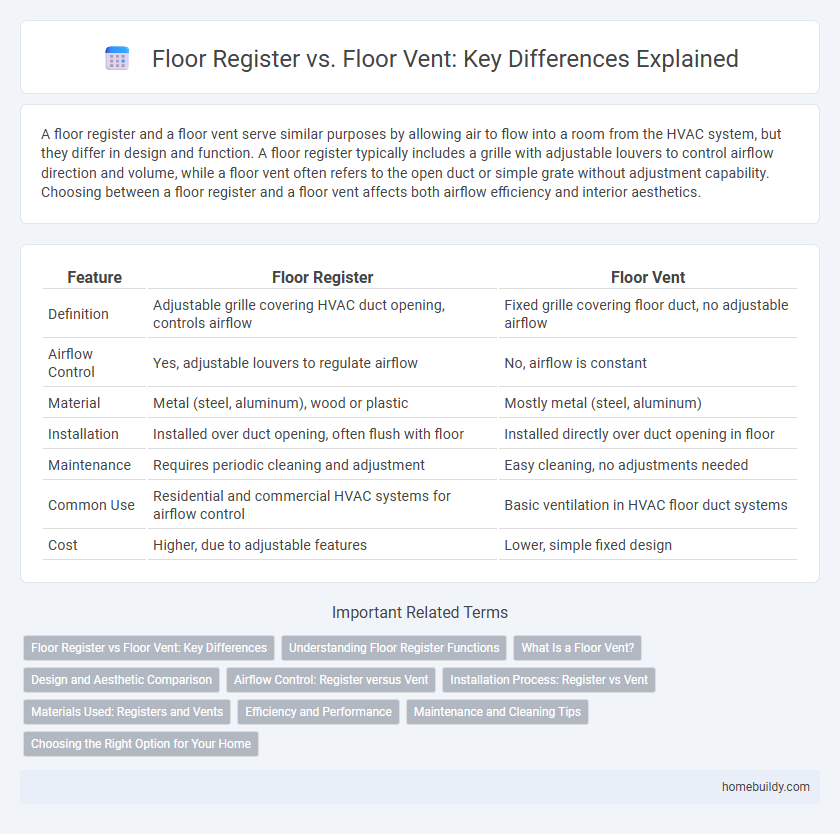
 A floor register and a floor vent serve similar purposes by allowing air to flow into a room from the HVAC system, but they differ in design and function. A floor register typically includes a grille with adjustable louvers to control airflow direction and volume, while a floor vent often refers to the open duct or simple grate without adjustment capability. Choosing between a floor register and a floor vent affects both airflow efficiency and interior aesthetics.
Table of Comparison
| Feature | Floor Register | Floor Vent |
|---|---|---|
| Definition | Adjustable grille covering HVAC duct opening, controls airflow | Fixed grille covering floor duct, no adjustable airflow |
| Airflow Control | Yes, adjustable louvers to regulate airflow | No, airflow is constant |
| Material | Metal (steel, aluminum), wood or plastic | Mostly metal (steel, aluminum) |
| Installation | Installed over duct opening, often flush with floor | Installed directly over duct opening in floor |
| Maintenance | Requires periodic cleaning and adjustment | Easy cleaning, no adjustments needed |
| Common Use | Residential and commercial HVAC systems for airflow control | Basic ventilation in HVAC floor duct systems |
| Cost | Higher, due to adjustable features | Lower, simple fixed design |
Floor Register vs Floor Vent: Key Differences
Floor registers and floor vents are both components of HVAC systems designed to regulate airflow but differ primarily in design and function. Floor registers feature adjustable dampers to control the volume and direction of airflow, offering customized ventilation, whereas floor vents typically lack these controls and serve as fixed openings. Choosing between a floor register and a floor vent depends on the desired airflow control and aesthetic preference within the space.
Understanding Floor Register Functions
Floor registers and floor vents both serve to regulate airflow in HVAC systems, but floor registers include adjustable louvers to control air direction and volume, unlike simple floor vents. Floor registers help enhance heating and cooling efficiency by allowing precise airflow control, improving room comfort and energy usage. Selecting the right floor register size and style ensures optimal air distribution and complements interior design.
What Is a Floor Vent?
A floor vent is a component of a building's HVAC system designed to regulate airflow from ductwork directly into a room. Unlike a floor register, which includes a cover with adjustable louvers for controlling air direction and volume, a floor vent serves primarily as the open duct outlet itself. Floor vents are critical for efficient heating and cooling distribution, enabling air to enter the living space from beneath floor level.
Design and Aesthetic Comparison
Floor registers typically feature decorative grilles with intricate patterns, allowing homeowners to choose styles that complement various interior decor themes, while floor vents often have simpler, utilitarian designs focused on functionality. Registers are designed to blend seamlessly with flooring materials, sometimes available in wood or brass finishes that enhance room aesthetics, whereas vents are generally made from basic metal or plastic with minimal design considerations. This difference makes floor registers a preferred choice for those prioritizing both air flow control and visually appealing HVAC elements in their living spaces.
Airflow Control: Register versus Vent
Floor registers feature adjustable dampers that allow precise airflow control, enabling users to regulate the volume and direction of air entering a room. In contrast, floor vents typically lack built-in dampers, resulting in fixed airflow without the capability to modulate the air distribution. The ability to control airflow with floor registers improves energy efficiency and indoor comfort by tailoring ventilation to specific needs.
Installation Process: Register vs Vent
Floor registers feature a removable grille designed for easy installation over existing duct openings, typically secured with screws or clips, allowing straightforward access for cleaning and maintenance. Floor vents, often built as integrated duct covers, require more precise fitting during installation to ensure proper airflow and secure attachment, sometimes necessitating adjustments to the ductwork or floor cutouts. Choosing between a floor register and floor vent impacts the installation process due to differences in mounting methods, accessibility, and compatibility with existing HVAC systems.
Materials Used: Registers and Vents
Floor registers typically feature durable materials such as steel, aluminum, and brass, offering enhanced strength and corrosion resistance for long-term use. Floor vents are commonly made from plastic or lightweight metals, prioritizing cost-effectiveness and easy installation over durability. The choice of materials directly impacts airflow efficiency, maintenance requirements, and aesthetic integration within different flooring types.
Efficiency and Performance
Floor registers and floor vents both manage airflow in HVAC systems, but floor registers offer superior efficiency due to their adjustable dampers that control air volume precisely. The performance of floor registers is enhanced by their ability to direct airflow effectively, reducing energy loss and maintaining consistent room temperature. Unlike fixed floor vents, registers optimize heating and cooling by minimizing drafts and ensuring balanced air distribution.
Maintenance and Cleaning Tips
Floor registers require regular dusting and vacuuming to prevent dust buildup, while floor vents often accumulate more debris due to open grilles. Cleaning floor registers involves removing the cover and wiping down the damper and frame with a damp cloth to maintain airflow efficiency. Periodic inspection of both floor registers and vents ensures no blockages or damage, prolonging HVAC system performance and indoor air quality.
Choosing the Right Option for Your Home
A floor register features adjustable louvers to control airflow, making it ideal for customized ventilation in any room, while a floor vent typically lacks this feature and serves as a simple air outlet. Selecting the right option depends on your home's heating and cooling system compatibility, desired airflow control, and aesthetic preferences. Consider factors such as material durability, size compatibility with duct openings, and ease of maintenance to ensure efficient and long-lasting performance.
floor register vs floor vent Infographic