 homebuildy.com
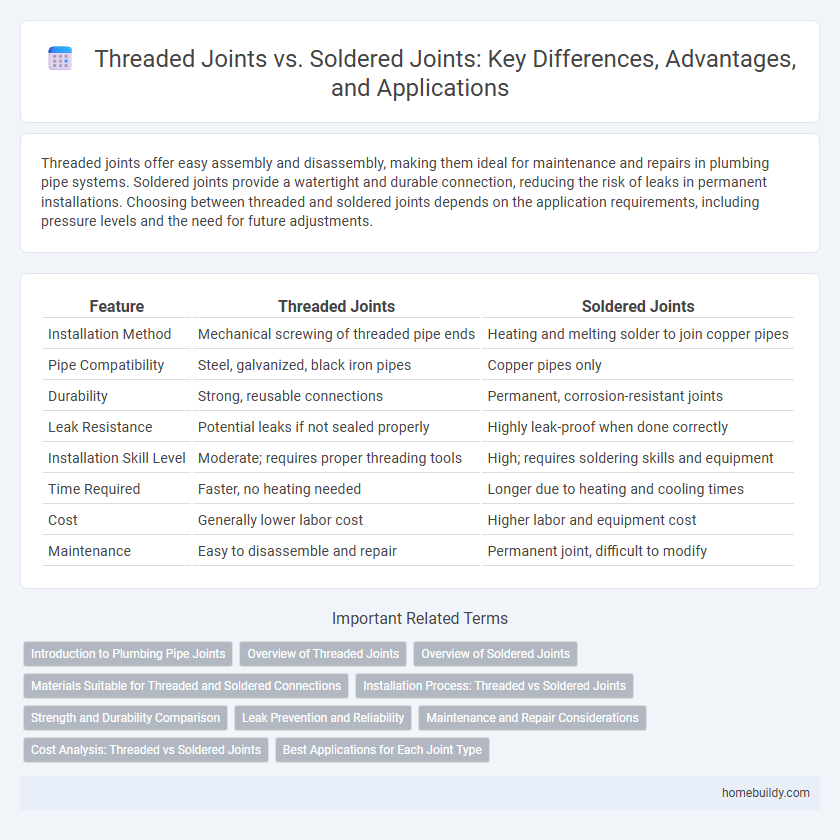
 Threaded joints offer easy assembly and disassembly, making them ideal for maintenance and repairs in plumbing pipe systems. Soldered joints provide a watertight and durable connection, reducing the risk of leaks in permanent installations. Choosing between threaded and soldered joints depends on the application requirements, including pressure levels and the need for future adjustments.
Table of Comparison
| Feature | Threaded Joints | Soldered Joints |
|---|---|---|
| Installation Method | Mechanical screwing of threaded pipe ends | Heating and melting solder to join copper pipes |
| Pipe Compatibility | Steel, galvanized, black iron pipes | Copper pipes only |
| Durability | Strong, reusable connections | Permanent, corrosion-resistant joints |
| Leak Resistance | Potential leaks if not sealed properly | Highly leak-proof when done correctly |
| Installation Skill Level | Moderate; requires proper threading tools | High; requires soldering skills and equipment |
| Time Required | Faster, no heating needed | Longer due to heating and cooling times |
| Cost | Generally lower labor cost | Higher labor and equipment cost |
| Maintenance | Easy to disassemble and repair | Permanent joint, difficult to modify |
Introduction to Plumbing Pipe Joints
Threaded joints in plumbing pipes provide a strong mechanical connection by screwing male and female threads together, ideal for metal pipes like steel or galvanized iron. Soldered joints form a watertight seal by melting a filler metal between copper pipe fittings, commonly used in copper piping systems. Both methods ensure durability and leak prevention but differ in application, materials, and installation techniques.
Overview of Threaded Joints
Threaded joints in plumbing pipes involve screwing male and female threaded fittings together, creating a secure and leak-resistant connection without the need for heat or adhesives. These joints are commonly used in metal pipes like steel, galvanized iron, and certain types of plastic, providing easy assembly and disassembly for maintenance or repairs. Their durability and mechanical strength make them ideal for high-pressure water and gas lines, especially in industrial and residential plumbing systems.
Overview of Soldered Joints
Soldered joints in plumbing involve melting a filler metal to create a secure, leak-resistant bond between copper pipes and fittings, ensuring durability and long-term reliability. This method requires heating the joint area and applying solder, which flows into the connection by capillary action, forming a strong, sealed union ideal for water supply systems. Proper flux application and temperature control are critical to prevent corrosion and ensure optimal joint strength in soldered plumbing connections.
Materials Suitable for Threaded and Soldered Connections
Threaded joints are ideal for materials such as galvanized steel, black iron, and brass, providing strong mechanical connections that can be easily disassembled for maintenance. Soldered joints work best with copper and brass pipes, offering leak-proof seals through capillary action when heated with solder alloys like tin-lead or lead-free compositions. Selecting the appropriate connection type depends on the compatibility of the pipe material with either threaded or soldered joints to ensure durability and reliability in plumbing systems.
Installation Process: Threaded vs Soldered Joints
Threaded joints require precise alignment and manual tightening of pipes with matching threads, ensuring a secure, removable connection that avoids heat application. Soldered joints involve cleaning pipe surfaces, applying flux, and heating the joint with a torch to melt solder, creating a permanent, leak-proof seal. The installation of threaded joints is generally faster and less specialized, while soldered joints demand skilled labor and careful temperature control.
Strength and Durability Comparison
Threaded joints provide robust mechanical strength and are less prone to vibration-related loosening, making them ideal for high-pressure plumbing systems. Soldered joints form a strong, leak-proof seal with excellent corrosion resistance, offering superior durability in copper piping applications. While soldered joints generally excel in long-term reliability, threaded joints allow for easier disassembly and maintenance in complex plumbing networks.
Leak Prevention and Reliability
Threaded joints provide strong mechanical connections ideal for high-pressure plumbing systems, reducing leak risks when properly sealed with materials like PTFE tape. Soldered joints create a permanent, corrosion-resistant bond by melting metal alloys, ensuring excellent leak prevention in copper pipe installations. Reliability depends on installation quality; threaded joints may loosen over time, while soldered joints maintain durability without risk of joint separation.
Maintenance and Repair Considerations
Threaded joints in plumbing pipes offer easier disassembly and reassembly, making maintenance and repairs more straightforward without specialized tools. Soldered joints provide a leak-proof seal but require heating and skill for repairs, posing challenges for quick fixes and increasing downtime. Choosing threaded joints enhances long-term serviceability, while soldered joints demand professional intervention during maintenance.
Cost Analysis: Threaded vs Soldered Joints
Threaded joints typically incur higher initial labor costs due to the precision and time required for cutting and fitting threads, but they offer easier maintenance and reusability, potentially reducing long-term expenses. Soldered joints involve lower material costs and faster installation times, making them cost-effective for large-scale projects, though repairs often require melting and re-soldering, increasing maintenance costs. Overall, the cost analysis depends on project scale, labor rates, and future maintenance expectations, with threaded joints favored in complex systems and soldered joints preferred for straightforward piping layouts.
Best Applications for Each Joint Type
Threaded joints excel in applications requiring disassembly and frequent maintenance, such as in water supply lines and HVAC systems, where durability and ease of repair are essential. Soldered joints provide a leak-proof and corrosion-resistant connection ideal for permanent installations like domestic water piping and refrigeration lines. Selecting between threaded and soldered joints depends on factors such as pressure requirements, pipe material, and accessibility for future maintenance.
Threaded joints vs Soldered joints Infographic