 homebuildy.com
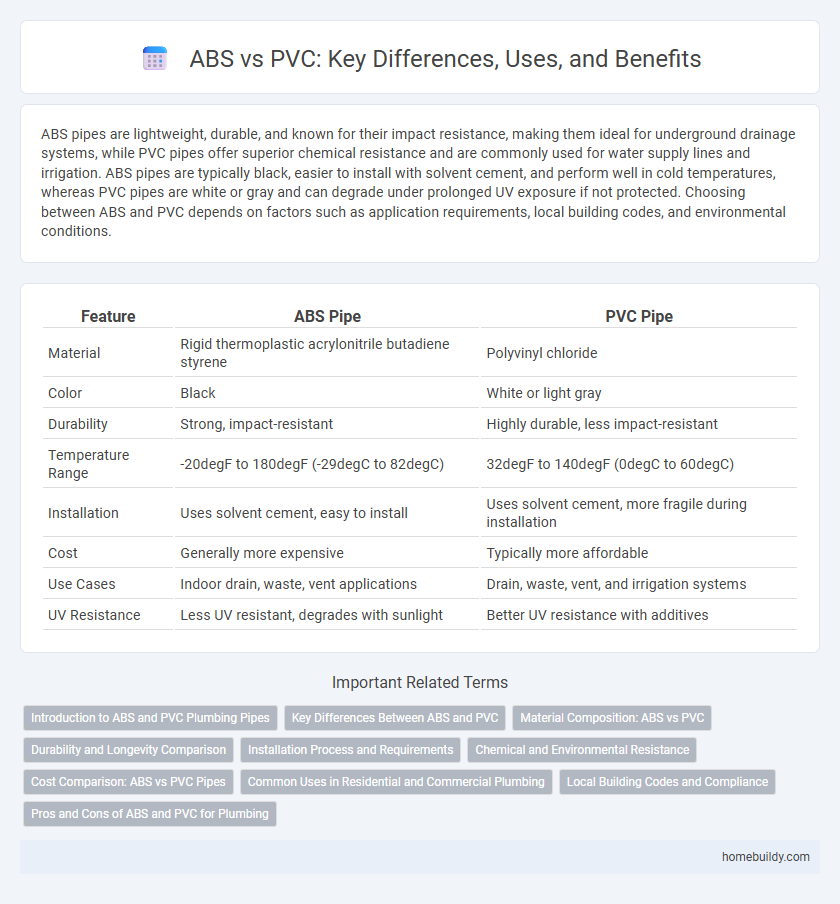
 ABS pipes are lightweight, durable, and known for their impact resistance, making them ideal for underground drainage systems, while PVC pipes offer superior chemical resistance and are commonly used for water supply lines and irrigation. ABS pipes are typically black, easier to install with solvent cement, and perform well in cold temperatures, whereas PVC pipes are white or gray and can degrade under prolonged UV exposure if not protected. Choosing between ABS and PVC depends on factors such as application requirements, local building codes, and environmental conditions.
Table of Comparison
| Feature | ABS Pipe | PVC Pipe |
|---|---|---|
| Material | Rigid thermoplastic acrylonitrile butadiene styrene | Polyvinyl chloride |
| Color | Black | White or light gray |
| Durability | Strong, impact-resistant | Highly durable, less impact-resistant |
| Temperature Range | -20degF to 180degF (-29degC to 82degC) | 32degF to 140degF (0degC to 60degC) |
| Installation | Uses solvent cement, easy to install | Uses solvent cement, more fragile during installation |
| Cost | Generally more expensive | Typically more affordable |
| Use Cases | Indoor drain, waste, vent applications | Drain, waste, vent, and irrigation systems |
| UV Resistance | Less UV resistant, degrades with sunlight | Better UV resistance with additives |
Introduction to ABS and PVC Plumbing Pipes
ABS (Acrylonitrile Butadiene Styrene) and PVC (Polyvinyl Chloride) are two widely used materials for plumbing pipes, each offering distinct benefits in residential and commercial applications. ABS pipes are known for their rigidity and resistance to impact and chemical corrosion, making them ideal for underground and vent pipe systems. PVC pipes provide excellent flow efficiency, durability, and are commonly used for water supply and drainage systems due to their resistance to water absorption and mineral corrosion.
Key Differences Between ABS and PVC
ABS (Acrylonitrile Butadiene Styrene) pipes offer superior impact resistance and flexibility, making them ideal for underground applications, while PVC (Polyvinyl Chloride) pipes are more resistant to chemicals and UV exposure, suited for above-ground and exposed environments. ABS typically has a higher temperature tolerance around 180degF, compared to PVC's maximum of approximately 140degF, influencing their use in hot water systems. Jointing methods differ as ABS pipes use solvent cement with a black color code, whereas PVC pipes employ a clear or purple primer and cement, which affects installation technique and compatibility.
Material Composition: ABS vs PVC
ABS pipes are made from acrylonitrile butadiene styrene, a strong thermoplastic known for impact resistance and rigidity, making it suitable for underground and industrial plumbing applications. PVC pipes consist of polyvinyl chloride, a versatile thermoplastic valued for its chemical resistance, lightweight nature, and ease of installation, commonly used in residential plumbing systems. The differing molecular structures influence their durability, temperature tolerance, and compatibility with various plumbing environments.
Durability and Longevity Comparison
ABS (Acrylonitrile Butadiene Styrene) pipes exhibit higher impact resistance and perform better in extreme temperatures compared to PVC (Polyvinyl Chloride), making ABS more durable for underground and heavy-duty plumbing applications. PVC pipes offer strong chemical resistance and greater UV stability, which enhances their longevity in outdoor or exposed environments. Both materials provide long service life, but ABS is preferred for its toughness while PVC excels in environments requiring excellent corrosion resistance.
Installation Process and Requirements
ABS pipes offer a smoother installation process due to their lightweight nature and solvent-welded joints that cure quickly at room temperature. PVC pipes require a primer and solvent cement for secure connections, demanding careful surface preparation to ensure proper adhesion and prevent leaks. Both materials must comply with local plumbing codes, but ABS generally allows for more flexible fitting options and faster assembly times.
Chemical and Environmental Resistance
ABS plumbing pipes offer superior chemical resistance to acids, alkalis, and solvents, making them ideal for industrial applications where harsh chemicals are present. PVC pipes demonstrate excellent resistance to a wide range of chemicals but can degrade when exposed to certain hydrocarbons and UV radiation over time. Environmentally, PVC is more commonly recycled and has a lower environmental footprint compared to ABS, which is less recyclable and often limited in eco-friendly disposal options.
Cost Comparison: ABS vs PVC Pipes
ABS pipes generally have a lower material cost compared to PVC pipes, making them a budget-friendly option for many plumbing projects. However, PVC pipes can offer greater long-term value due to their increased durability and chemical resistance, which reduces maintenance and replacement expenses. Installation costs for both ABS and PVC are relatively similar, but PVC's wider availability can sometimes lead to better pricing and more contractor familiarity.
Common Uses in Residential and Commercial Plumbing
ABS pipes are frequently used for underground drainage, vent, and sewer systems in residential and commercial buildings due to their strength and resistance to impact at low temperatures. PVC pipes dominate in water supply lines, irrigation systems, and indoor plumbing because of their chemical resistance, ease of installation, and cost-effectiveness. Both materials are suitable for different plumbing applications but choosing between ABS and PVC depends on specific requirements like temperature tolerance, pressure handling, and local building codes.
Local Building Codes and Compliance
Local building codes play a critical role in determining whether ABS or PVC plumbing pipes are permissible in specific regions. ABS pipes are often preferred in colder climates due to their superior impact resistance and flexibility, whereas PVC pipes are widely accepted for drainage and vent systems in many jurisdictions. Ensuring compliance with local building codes requires consulting municipal regulations, as violations can lead to costly rework or fines.
Pros and Cons of ABS and PVC for Plumbing
ABS pipes offer superior impact resistance and perform well in cold temperatures, making them ideal for underground drainage systems, but they are more vulnerable to UV degradation, requiring protection from sunlight. PVC pipes are highly resistant to chemical corrosion and widely available at a lower cost, preferred for indoor drain, waste, and vent systems, though they become brittle in extreme cold without added flexibility. Both materials comply with plumbing codes, but ABS tends to require specialized solvent cement, while PVC has broader compatibility with connectors and fittings.
ABS vs PVC Infographic