 homebuildy.com
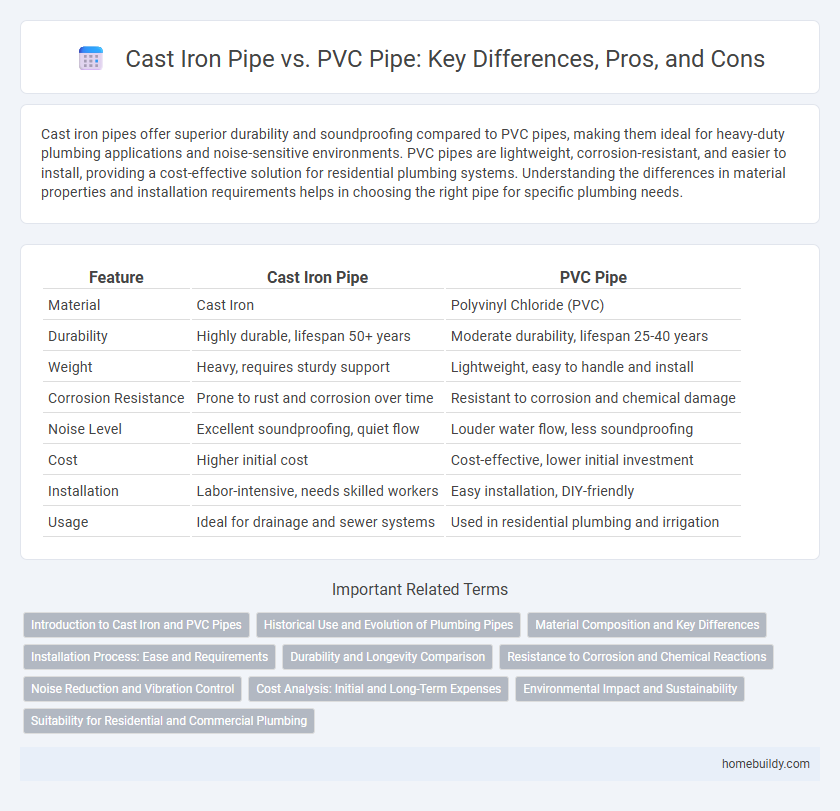
 Cast iron pipes offer superior durability and soundproofing compared to PVC pipes, making them ideal for heavy-duty plumbing applications and noise-sensitive environments. PVC pipes are lightweight, corrosion-resistant, and easier to install, providing a cost-effective solution for residential plumbing systems. Understanding the differences in material properties and installation requirements helps in choosing the right pipe for specific plumbing needs.
Table of Comparison
| Feature | Cast Iron Pipe | PVC Pipe |
|---|---|---|
| Material | Cast Iron | Polyvinyl Chloride (PVC) |
| Durability | Highly durable, lifespan 50+ years | Moderate durability, lifespan 25-40 years |
| Weight | Heavy, requires sturdy support | Lightweight, easy to handle and install |
| Corrosion Resistance | Prone to rust and corrosion over time | Resistant to corrosion and chemical damage |
| Noise Level | Excellent soundproofing, quiet flow | Louder water flow, less soundproofing |
| Cost | Higher initial cost | Cost-effective, lower initial investment |
| Installation | Labor-intensive, needs skilled workers | Easy installation, DIY-friendly |
| Usage | Ideal for drainage and sewer systems | Used in residential plumbing and irrigation |
Introduction to Cast Iron and PVC Pipes
Cast iron pipes, known for their durability and noise-reducing properties, are commonly used in drainage and sewer systems due to their resistance to heat and pressure. PVC pipes, made from polyvinyl chloride, offer lightweight, corrosion-resistant, and cost-effective solutions widely utilized in residential and commercial plumbing. Both materials serve distinct purposes, with cast iron excelling in longevity and soundproofing, while PVC provides ease of installation and chemical resistance.
Historical Use and Evolution of Plumbing Pipes
Cast iron pipes have been used in plumbing since the 17th century, prized for their durability and fire resistance, especially in urban infrastructure. PVC pipes, developed in the mid-20th century, revolutionized plumbing systems with their corrosion resistance, lightweight nature, and ease of installation. The evolution from cast iron to PVC reflects advancements in materials science, cost efficiency, and changing building codes worldwide.
Material Composition and Key Differences
Cast iron pipes are made from a durable alloy of iron, carbon, and small amounts of other metals, offering superior strength and resistance to high temperatures, while PVC pipes consist of lightweight, corrosion-resistant polyvinyl chloride plastic suitable for a variety of plumbing applications. Key differences include cast iron's sound-dampening properties and longevity, making it ideal for drainage and sewage systems, whereas PVC pipes provide easier installation, flexibility, and chemical resistance with lower cost. The choice between cast iron and PVC pipes depends on factors like environmental conditions, budget constraints, and intended plumbing use.
Installation Process: Ease and Requirements
Cast iron pipe installation involves heavy materials requiring specialized equipment and skilled labor, making the process more time-consuming and labor-intensive. PVC pipe installation is simpler due to lightweight materials, easy cutting, and solvent welding techniques that significantly reduce labor time and skill requirements. The ease of handling and quick assembly make PVC pipes a preferred choice for efficient plumbing installations.
Durability and Longevity Comparison
Cast iron pipes exhibit superior durability and longevity, often lasting over 50 years due to their resistance to physical damage and fire. PVC pipes, while less resistant to high temperatures and physical impact, offer corrosion resistance and can last 25-40 years in typical residential plumbing environments. Factors such as exposure to chemicals, temperature fluctuations, and mechanical stress significantly influence the lifespan of both materials in plumbing systems.
Resistance to Corrosion and Chemical Reactions
Cast iron pipes exhibit superior resistance to physical damage but are prone to corrosion over time when exposed to moisture and certain chemicals. PVC pipes offer excellent resistance to a broad range of chemicals and do not corrode, making them ideal for environments with corrosive substances. The choice between cast iron and PVC depends on the specific chemical exposure and long-term corrosion resistance requirements of the plumbing system.
Noise Reduction and Vibration Control
Cast iron pipes excel in noise reduction and vibration control due to their dense, heavy material that dampens sound transmission and minimizes pipe rattle within walls. PVC pipes, while lightweight and corrosion-resistant, tend to amplify water flow noise and vibrations unless equipped with specialized insulation or supports. Choosing cast iron significantly improves plumbing system quietness in residential and commercial buildings, enhancing overall acoustic comfort.
Cost Analysis: Initial and Long-Term Expenses
Cast iron pipes generally have a higher initial cost due to material and installation expenses, but their durability can reduce long-term replacement costs. PVC pipes offer lower upfront costs and simpler installation, making them cost-effective for many projects, though they may require more frequent repairs or replacements over time. Evaluating both options involves balancing initial investment against maintenance and longevity to determine overall affordability.
Environmental Impact and Sustainability
Cast iron pipes are highly durable and have a long lifespan, which reduces the need for frequent replacement and the associated waste, but their manufacturing process consumes more energy and releases higher levels of carbon emissions compared to PVC pipes. PVC pipes, made from polyvinyl chloride, require less energy to produce and are lightweight, reducing transportation emissions; however, they pose challenges in recycling and can release toxic chemicals if incinerated improperly. Sustainable plumbing solutions balance the longevity and recyclability of cast iron with the energy efficiency and lower carbon footprint of PVC, promoting responsible sourcing and end-of-life management for both materials.
Suitability for Residential and Commercial Plumbing
Cast iron pipes offer superior durability and soundproofing, making them ideal for commercial buildings with high water demand and noise control requirements. PVC pipes are lightweight, corrosion-resistant, and cost-effective, favored in residential plumbing for ease of installation and chemical resistance. Both materials suit plumbing needs, but cast iron excels in longevity and fire resistance, while PVC provides flexibility and lower upfront costs.
Cast iron pipe vs PVC pipe Infographic