 homebuildy.com
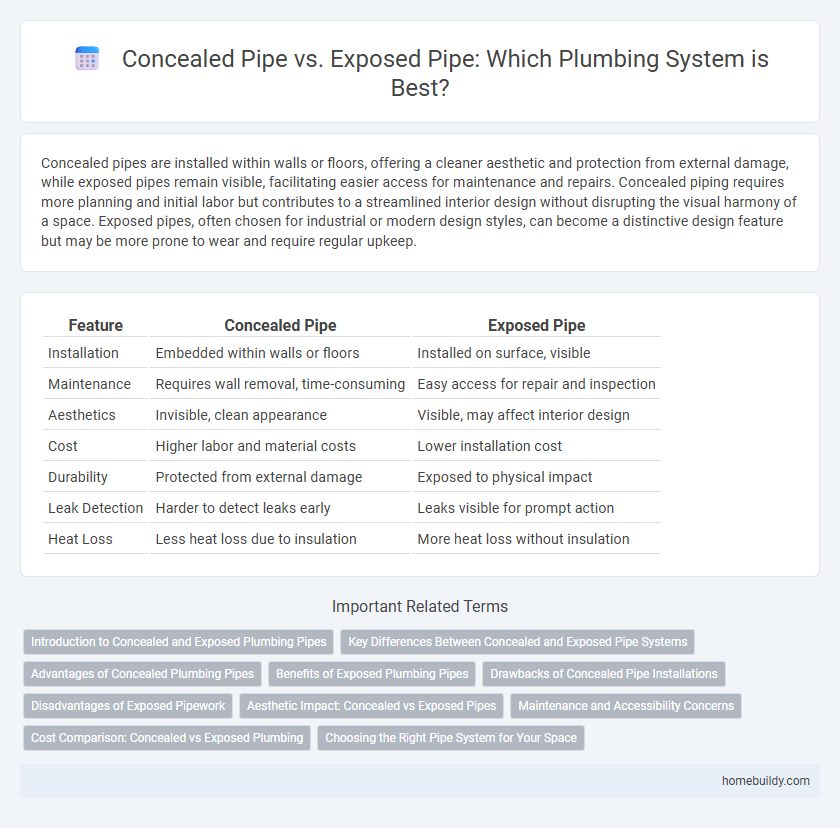
 Concealed pipes are installed within walls or floors, offering a cleaner aesthetic and protection from external damage, while exposed pipes remain visible, facilitating easier access for maintenance and repairs. Concealed piping requires more planning and initial labor but contributes to a streamlined interior design without disrupting the visual harmony of a space. Exposed pipes, often chosen for industrial or modern design styles, can become a distinctive design feature but may be more prone to wear and require regular upkeep.
Table of Comparison
| Feature | Concealed Pipe | Exposed Pipe |
|---|---|---|
| Installation | Embedded within walls or floors | Installed on surface, visible |
| Maintenance | Requires wall removal, time-consuming | Easy access for repair and inspection |
| Aesthetics | Invisible, clean appearance | Visible, may affect interior design |
| Cost | Higher labor and material costs | Lower installation cost |
| Durability | Protected from external damage | Exposed to physical impact |
| Leak Detection | Harder to detect leaks early | Leaks visible for prompt action |
| Heat Loss | Less heat loss due to insulation | More heat loss without insulation |
Introduction to Concealed and Exposed Plumbing Pipes
Concealed plumbing pipes are installed within walls, floors, or ceilings, offering a clean and aesthetically pleasing appearance by hiding piping systems from view. Exposed pipes, in contrast, run along surfaces and are visible, allowing easier access for maintenance and repairs but potentially affecting the interior design. Choosing between concealed and exposed pipes depends on factors like building structure, accessibility requirements, and design preferences in plumbing installations.
Key Differences Between Concealed and Exposed Pipe Systems
Concealed pipe systems are installed within walls, floors, or ceilings, providing a clean and aesthetically pleasing look, while exposed pipe systems remain visible, allowing easier access for maintenance and repairs. Concealed pipes require careful planning during construction to avoid future damage, whereas exposed pipes are more vulnerable to physical damage and environmental factors. Choosing between these systems depends on factors such as building design, maintenance preferences, and cost considerations.
Advantages of Concealed Plumbing Pipes
Concealed plumbing pipes offer significant advantages such as improved aesthetics by hiding unsightly pipes within walls or floors, creating a cleaner and more streamlined look in residential and commercial spaces. They also provide better protection from physical damage and environmental factors, reducing the risk of leaks and prolonging the lifespan of the plumbing system. Maintenance access panels can be strategically installed to facilitate repairs without compromising the overall design integrity.
Benefits of Exposed Plumbing Pipes
Exposed plumbing pipes offer easy access for maintenance and repairs, reducing labor costs and downtime. Their visibility allows for quick leak detection, preventing water damage and costly renovations. Additionally, exposed pipes can enhance industrial or modern interior design aesthetics, combining functionality with style.
Drawbacks of Concealed Pipe Installations
Concealed pipe installations often pose challenges such as difficult access for maintenance and repairs, leading to increased labor costs and time delays. These hidden pipes are more susceptible to unnoticed leaks, which can cause significant structural damage before detection. Limited visibility also complicates inspection processes, hindering early problem identification and efficient troubleshooting.
Disadvantages of Exposed Pipework
Exposed pipework in plumbing systems is prone to physical damage, corrosion, and temperature fluctuations, which can reduce the lifespan of the pipes. It also negatively impacts the aesthetic appeal of interiors due to visible metal or plastic pipes running along walls or ceilings. Exposed pipes often require more frequent maintenance and cleaning to prevent dust accumulation and leaks.
Aesthetic Impact: Concealed vs Exposed Pipes
Concealed pipes offer a cleaner and more streamlined aesthetic by hiding plumbing behind walls or ceilings, minimizing visual clutter in interior spaces. Exposed pipes can serve as a design feature in industrial or modern interiors, adding character but potentially disrupting minimalist decor. The choice between concealed and exposed pipes significantly influences the overall room appearance, balancing functionality with visual appeal.
Maintenance and Accessibility Concerns
Concealed pipes, embedded within walls or floors, present significant maintenance challenges due to limited accessibility, often requiring extensive demolition for repairs, increasing labor costs and downtime. Exposed pipes offer easier access for inspections, repairs, and routine maintenance, which reduces overall service disruption and facilitates quicker problem identification. Prioritizing exposed pipe installations in high-maintenance areas ensures improved longevity and streamlined plumbing system upkeep.
Cost Comparison: Concealed vs Exposed Plumbing
Concealed plumbing pipes generally incur higher installation costs due to the need for wall or floor modifications, increased labor, and materials for covering and finishing surfaces. Exposed pipes offer lower initial expenses as they are easier to install and maintain, reducing both labor and repair costs. Long-term maintenance of concealed pipes may lead to higher expenses if leaks occur, while exposed plumbing allows quicker identification and resolution of issues, impacting overall cost efficiency.
Choosing the Right Pipe System for Your Space
Concealed pipes offer a cleaner aesthetic and protection from physical damage, making them ideal for residential spaces or areas with limited visual clutter. Exposed pipes facilitate easier access for maintenance and repairs, suited to industrial or modern interior designs where plumbing is a design element. Selecting the right pipe system depends on factors like space design, accessibility needs, and long-term durability requirements.
Concealed Pipe vs Exposed Pipe Infographic