 homebuildy.com
 Lead pipes are prone to corrosion and can leach harmful toxins into drinking water, posing significant health risks. Copper pipes offer superior durability, corrosion resistance, and are safer for potable water systems. Choosing copper piping enhances water quality and provides a longer-lasting plumbing solution.
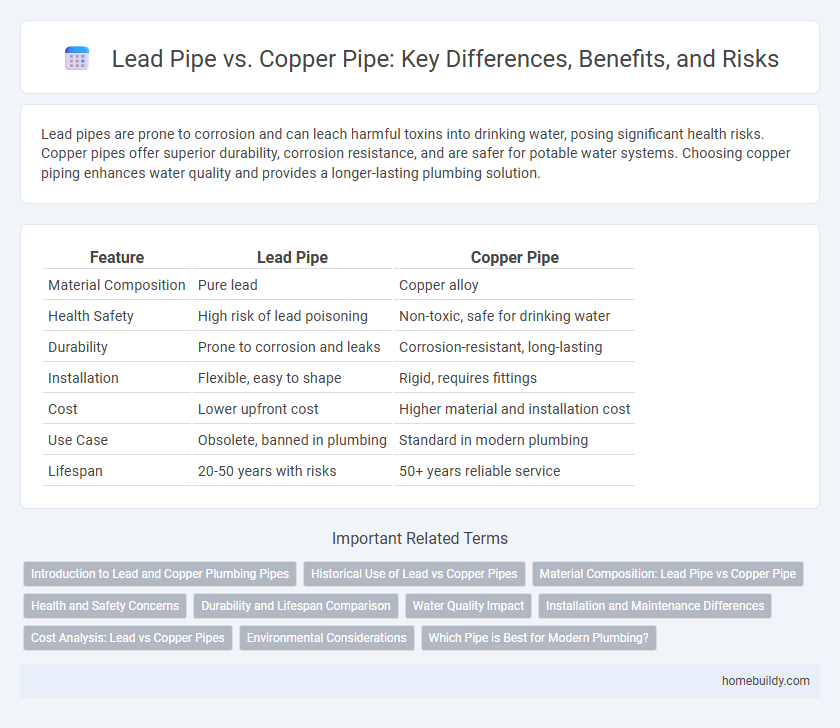
Table of Comparison
| Feature | Lead Pipe | Copper Pipe |
|---|---|---|
| Material Composition | Pure lead | Copper alloy |
| Health Safety | High risk of lead poisoning | Non-toxic, safe for drinking water |
| Durability | Prone to corrosion and leaks | Corrosion-resistant, long-lasting |
| Installation | Flexible, easy to shape | Rigid, requires fittings |
| Cost | Lower upfront cost | Higher material and installation cost |
| Use Case | Obsolete, banned in plumbing | Standard in modern plumbing |
| Lifespan | 20-50 years with risks | 50+ years reliable service |
Introduction to Lead and Copper Plumbing Pipes
Lead pipes, historically used in plumbing, are known for their malleability but pose significant health risks due to lead leaching into water supplies. Copper pipes offer durability, corrosion resistance, and safety, making them a preferred choice in modern plumbing systems. Understanding the differences between lead and copper pipes is crucial for ensuring water quality and compliance with plumbing standards.
Historical Use of Lead vs Copper Pipes
Lead pipes were commonly used in plumbing systems from ancient Rome through the early 20th century due to their malleability and ease of installation, but concerns over lead poisoning led to their decline. Copper pipes gained popularity in the mid-20th century for residential and commercial plumbing because of their durability, corrosion resistance, and safety for potable water supply. Modern plumbing codes largely prohibit lead pipes, favoring copper as a reliable and health-conscious alternative.
Material Composition: Lead Pipe vs Copper Pipe
Lead pipes consist primarily of elemental lead, a heavy metal known for its malleability but toxic properties, while copper pipes are made from pure or alloyed copper with superior corrosion resistance and antimicrobial qualities. The inherent chemical composition of copper pipes allows for better durability and safer water quality compared to traditional lead pipes, which pose significant health risks due to potential lead leaching. Modern plumbing standards strongly favor copper pipes over lead pipes, reflecting advancements in material science and public health regulations.
Health and Safety Concerns
Lead pipes pose significant health risks due to lead leaching into drinking water, potentially causing neurological damage and developmental issues. Copper pipes offer safer alternatives with lower toxicity, though high copper levels can cause gastrointestinal distress. Proper maintenance and regular water testing are essential to prevent contamination risks associated with both pipe materials.
Durability and Lifespan Comparison
Copper pipes offer superior durability with a typical lifespan of 50 to 70 years, resisting corrosion and high water pressure effectively. Lead pipes, on the other hand, have a significantly shorter lifespan and pose health risks due to lead contamination. Modern plumbing systems favor copper for its long-term reliability and safety benefits.
Water Quality Impact
Lead pipes pose significant health risks as they can leach toxic lead particles into drinking water, causing serious neurological and developmental issues. Copper pipes are safer alternatives, as they resist corrosion and minimize metal contamination, contributing to improved water quality. Regular testing and maintenance are essential to ensure that plumbing systems preserve water safety and comply with health standards.
Installation and Maintenance Differences
Lead pipes require specialized handling and protective measures during installation due to their toxicity, while copper pipes offer easier installation with standard plumbing tools and fittings. Maintenance for lead pipes is more intensive, necessitating frequent inspections for corrosion and lead leaching, whereas copper pipes benefit from greater durability and lower risk of contamination, reducing long-term maintenance needs. Copper piping systems also support soldering and compression fittings, enhancing repair flexibility compared to the more rigid and hazardous lead pipe system.
Cost Analysis: Lead vs Copper Pipes
Lead pipes typically have a lower upfront cost compared to copper pipes, making them initially more affordable for budget-conscious projects. However, copper pipes offer greater durability and lower maintenance expenses over time, resulting in a more cost-effective long-term investment. The potential health risks and regulatory restrictions associated with lead pipes can lead to costly replacements and legal issues, further increasing their overall cost.
Environmental Considerations
Lead pipes pose significant environmental risks due to their potential to leach toxic lead into water supplies, contaminating ecosystems and posing health hazards. Copper pipes offer better environmental performance as they are more durable, recyclable, and less likely to pollute water with harmful substances. Choosing copper reduces long-term ecological impact and supports safer water quality standards.
Which Pipe is Best for Modern Plumbing?
Copper pipes offer superior durability, corrosion resistance, and antimicrobial properties compared to lead pipes, making them the preferred choice for modern plumbing systems. Lead pipes pose significant health risks due to lead leaching into water, which has led to widespread regulations banning their use in residential buildings. Modern plumbing standards prioritize copper and other safe materials to ensure water quality and system longevity.
Lead Pipe vs Copper Pipe Infographic