 homebuildy.com
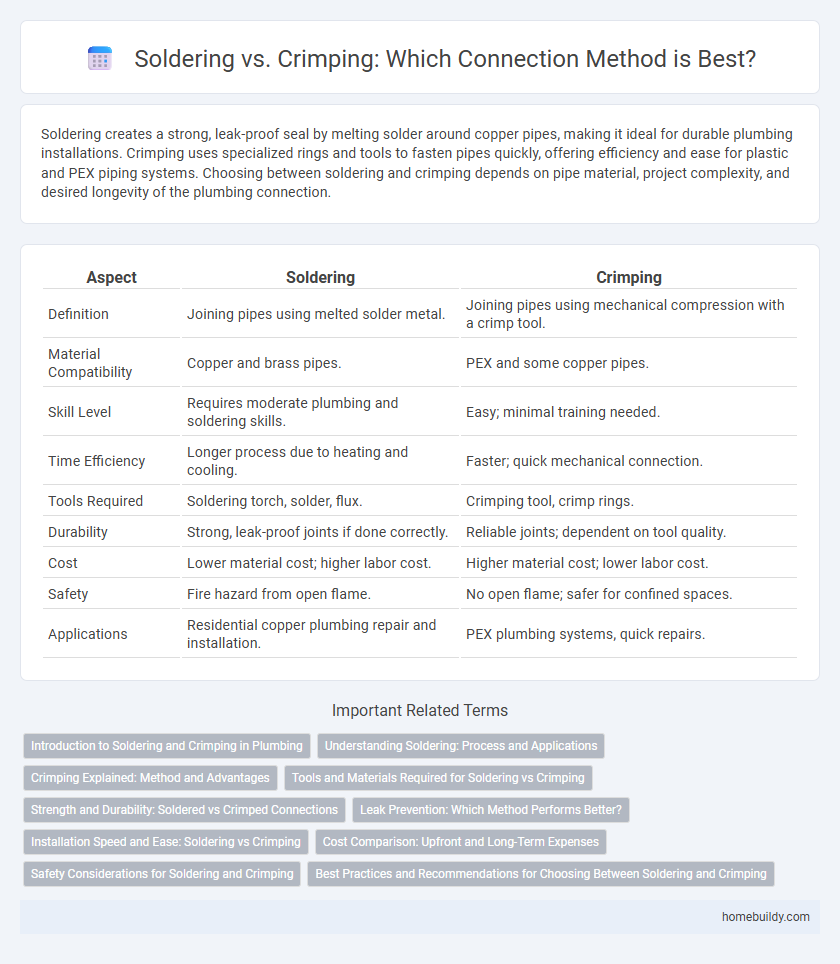
 Soldering creates a strong, leak-proof seal by melting solder around copper pipes, making it ideal for durable plumbing installations. Crimping uses specialized rings and tools to fasten pipes quickly, offering efficiency and ease for plastic and PEX piping systems. Choosing between soldering and crimping depends on pipe material, project complexity, and desired longevity of the plumbing connection.
Table of Comparison
| Aspect | Soldering | Crimping |
|---|---|---|
| Definition | Joining pipes using melted solder metal. | Joining pipes using mechanical compression with a crimp tool. |
| Material Compatibility | Copper and brass pipes. | PEX and some copper pipes. |
| Skill Level | Requires moderate plumbing and soldering skills. | Easy; minimal training needed. |
| Time Efficiency | Longer process due to heating and cooling. | Faster; quick mechanical connection. |
| Tools Required | Soldering torch, solder, flux. | Crimping tool, crimp rings. |
| Durability | Strong, leak-proof joints if done correctly. | Reliable joints; dependent on tool quality. |
| Cost | Lower material cost; higher labor cost. | Higher material cost; lower labor cost. |
| Safety | Fire hazard from open flame. | No open flame; safer for confined spaces. |
| Applications | Residential copper plumbing repair and installation. | PEX plumbing systems, quick repairs. |
Introduction to Soldering and Crimping in Plumbing
Soldering in plumbing involves heating a metal pipe and applying a filler metal, such as lead-free solder, to create a secure, leak-proof joint often used with copper pipes. Crimping uses a mechanical tool to compress a ring or sleeve around the pipe fitting, providing a quick, durable connection typically applied in PEX piping systems. Both methods ensure reliable pipe connections but differ in technique, tools, and application suitability for various plumbing materials.
Understanding Soldering: Process and Applications
Soldering involves heating a metal alloy to join plumbing pipes, creating a durable, leak-proof seal primarily used with copper piping systems. This method requires a flux to clean the joint and prevent oxidation, ensuring a strong bond between pipes and fittings. Soldered connections are ideal for high-temperature applications and are widely used in residential and commercial plumbing due to their reliability and long-lasting performance.
Crimping Explained: Method and Advantages
Crimping in plumbing involves using a specialized tool to compress a metal ring around a pipe, creating a secure, leak-proof connection without the need for heat. This method reduces installation time, minimizes fire risk, and is ideal for working in tight or hard-to-reach spaces. Copper and PEX pipes are commonly joined through crimping, offering durable and reliable plumbing joints.
Tools and Materials Required for Soldering vs Crimping
Soldering requires a propane torch, solder wire composed of lead-free or leaded alloys, and flux to ensure proper bonding and leak-proof joints in copper pipes. Crimping utilizes a crimping tool with interchangeable jaws designed to compress metal rings or fittings, and PEX pipes often demand compatible PEX rings or clamps made from stainless steel or brass. The choice of tools and materials impacts installation speed, joint durability, and suitability for different plumbing systems.
Strength and Durability: Soldered vs Crimped Connections
Soldered connections in plumbing pipes offer superior strength and durability due to the metallurgical bond created by melting solder into the joint, ensuring leak-proof and long-lasting seals. Crimped connections rely on mechanical compression, which provides faster assembly but may be less robust under high pressure or temperature fluctuations. Over time, soldered joints typically outperform crimped ones in resisting corrosion, fatigue, and environmental stress, making them ideal for critical water supply lines.
Leak Prevention: Which Method Performs Better?
Soldering provides a durable, metal-to-metal seal that significantly reduces the risk of leaks in plumbing pipes by melting filler metal into the joint, creating a strong, watertight bond. Crimping offers faster installation with a reliable mechanical connection using copper or PEX pipes, but it may be more prone to leaks if not executed with precision or quality fittings. Studies show soldered joints generally outperform crimped connections in long-term leak prevention due to their solid, corrosion-resistant seals.
Installation Speed and Ease: Soldering vs Crimping
Crimping offers faster installation times compared to soldering, as it requires no heating and cools instantly, allowing for quicker project completion. Soldering demands precise temperature control and longer cooling periods, making it more time-intensive but providing strong, leak-proof joints. Homeowners and professionals often prefer crimping for ease of use and minimal setup, while soldering remains favored for durable, permanent connections in plumbing systems.
Cost Comparison: Upfront and Long-Term Expenses
Soldering plumbing pipes generally involves lower upfront material costs, requiring only solder, flux, and a torch, whereas crimping necessitates investing in specialized crimping tools and metal rings, leading to higher initial expenses. Over the long term, soldered joints, while cost-effective initially, may require more maintenance and potential repairs due to susceptibility to leaks, increasing overall expenses. Crimped connections offer durability and quicker installation, reducing labor costs and long-term maintenance, often resulting in better cost efficiency despite higher initial investment.
Safety Considerations for Soldering and Crimping
Soldering plumbing pipes requires careful ventilation to avoid inhaling harmful fumes, and the use of lead-free solder enhances safety by reducing toxic exposure. Crimping poses fewer health risks since it eliminates the need for an open flame, decreasing fire hazards and making it safer for enclosed or poorly ventilated spaces. Both methods demand proper personal protective equipment, such as gloves and eye protection, to prevent burns and injuries during installation.
Best Practices and Recommendations for Choosing Between Soldering and Crimping
Soldering plumbing pipes ensures a strong, leak-free joint by melting alloy to fuse metal surfaces, making it ideal for copper systems requiring durability and high pressure tolerance. Crimping uses specialized tools and rings to mechanically compress fittings onto PEX or other plastic pipes, offering speed, ease, and reliable connections in residential water supply lines. Choose soldering for metal pipes requiring long-term reliability and crimping for faster installation with flexible piping materials, ensuring compliance with local plumbing codes and manufacturer guidelines.
Soldering vs Crimping Infographic