 homebuildy.com
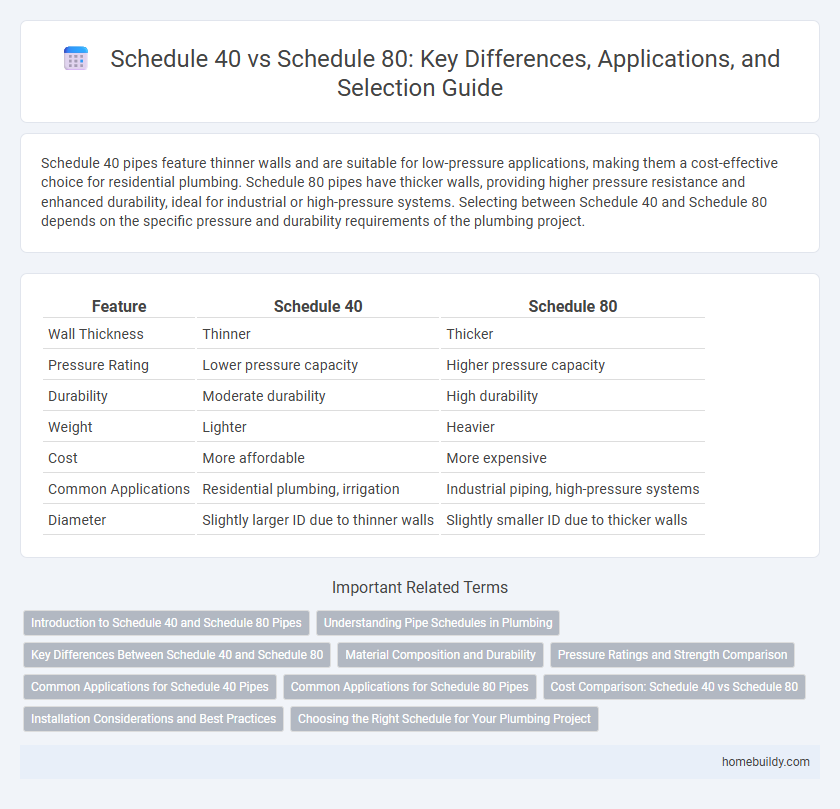
 Schedule 40 pipes feature thinner walls and are suitable for low-pressure applications, making them a cost-effective choice for residential plumbing. Schedule 80 pipes have thicker walls, providing higher pressure resistance and enhanced durability, ideal for industrial or high-pressure systems. Selecting between Schedule 40 and Schedule 80 depends on the specific pressure and durability requirements of the plumbing project.
Table of Comparison
| Feature | Schedule 40 | Schedule 80 |
|---|---|---|
| Wall Thickness | Thinner | Thicker |
| Pressure Rating | Lower pressure capacity | Higher pressure capacity |
| Durability | Moderate durability | High durability |
| Weight | Lighter | Heavier |
| Cost | More affordable | More expensive |
| Common Applications | Residential plumbing, irrigation | Industrial piping, high-pressure systems |
| Diameter | Slightly larger ID due to thinner walls | Slightly smaller ID due to thicker walls |
Introduction to Schedule 40 and Schedule 80 Pipes
Schedule 40 and Schedule 80 pipes differ primarily in wall thickness, with Schedule 80 having a thicker wall designed to withstand higher pressure environments. Schedule 40 pipes are commonly used in residential plumbing systems due to their adequate strength and cost-efficiency for typical water flow applications. Both pipe schedules are made from materials like PVC, CPVC, and steel, but Schedule 80 pipes offer enhanced durability and resistance to mechanical damage for industrial and commercial uses.
Understanding Pipe Schedules in Plumbing
Schedule 40 and Schedule 80 pipes differ primarily in wall thickness, with Schedule 80 offering a thicker wall for higher pressure applications. Understanding pipe schedules is crucial in plumbing to ensure proper pipe strength and durability based on system requirements. Selecting the correct schedule helps prevent leaks, bursts, and ensures long-term performance in water and gas distribution systems.
Key Differences Between Schedule 40 and Schedule 80
Schedule 40 and Schedule 80 pipes differ primarily in wall thickness, with Schedule 80 having a thicker wall to withstand higher pressure levels and provide greater durability. Schedule 40 pipes are commonly used in residential plumbing for lower-pressure applications, while Schedule 80 is preferred in industrial settings requiring enhanced strength and corrosion resistance. The increased wall thickness of Schedule 80 also results in a smaller internal diameter compared to Schedule 40 of the same nominal size.
Material Composition and Durability
Schedule 40 and Schedule 80 plumbing pipes are primarily made from polyvinyl chloride (PVC) or steel, with Schedule 80 featuring a thicker wall composition for enhanced strength. The increased wall thickness of Schedule 80 pipes provides greater durability, making them suitable for higher pressure applications and more demanding environments. While both materials offer corrosion resistance, Schedule 80's robust construction improves impact resistance and longevity under extreme conditions.
Pressure Ratings and Strength Comparison
Schedule 80 plumbing pipes have thicker walls than Schedule 40 pipes, resulting in higher pressure ratings and greater strength. Schedule 80 pipes typically handle pressures up to 400 psi, while Schedule 40 pipes generally support pressures around 280 psi, depending on diameter and material. The increased wall thickness in Schedule 80 pipes makes them ideal for industrial applications requiring enhanced durability and pressure resistance.
Common Applications for Schedule 40 Pipes
Schedule 40 pipes are widely used in residential plumbing systems, irrigation, and water supply lines due to their balance of strength, durability, and affordability. These pipes are suitable for low to moderate pressure applications, including drainage, waste, and vent systems in commercial and industrial buildings. PVC Schedule 40 pipes are commonly chosen for underground conduit and potable water distribution, meeting standard building codes for many everyday plumbing needs.
Common Applications for Schedule 80 Pipes
Schedule 80 pipes are commonly used in industrial settings where higher pressure and temperature resistance are required, such as chemical processing, water treatment, and oil and gas industries. These pipes are preferred for underground or hazardous applications due to their thicker walls, which provide enhanced durability and corrosion resistance. Schedule 80 is also ideal for plumbing systems that handle high-pressure fluids or gases, ensuring long-term reliability and safety.
Cost Comparison: Schedule 40 vs Schedule 80
Schedule 40 plumbing pipes are generally more cost-effective than Schedule 80 due to their thinner walls and reduced material usage, making them ideal for standard residential water supply lines. Schedule 80 pipes, with thicker walls and higher durability, command a higher price but offer enhanced pressure resistance and longevity for industrial or high-pressure applications. Choosing between Schedule 40 and Schedule 80 depends on balancing budget constraints with the required strength and safety standards of the plumbing system.
Installation Considerations and Best Practices
Schedule 40 and Schedule 80 pipes differ primarily in wall thickness, impacting weight and ease of handling during installation. Schedule 40, being lighter and thinner, is easier to cut, join, and support, making it preferable for residential plumbing or low-pressure applications. Schedule 80, with its thicker walls, requires more robust support, specialized cutting tools, and careful alignment to ensure leak-free joints in high-pressure or industrial systems.
Choosing the Right Schedule for Your Plumbing Project
Schedule 40 and Schedule 80 pipes differ primarily in wall thickness, affecting their pressure ratings and durability in plumbing systems. Schedule 40 pipes suit most residential water supply lines, offering sufficient strength and cost-effectiveness, while Schedule 80 pipes provide enhanced resistance to high pressure and impact, ideal for industrial or high-stress applications. Selecting the right schedule depends on the specific requirements of your plumbing project, including pressure demands, environmental conditions, and safety considerations.
Schedule 40 vs Schedule 80 Infographic