 homebuildy.com
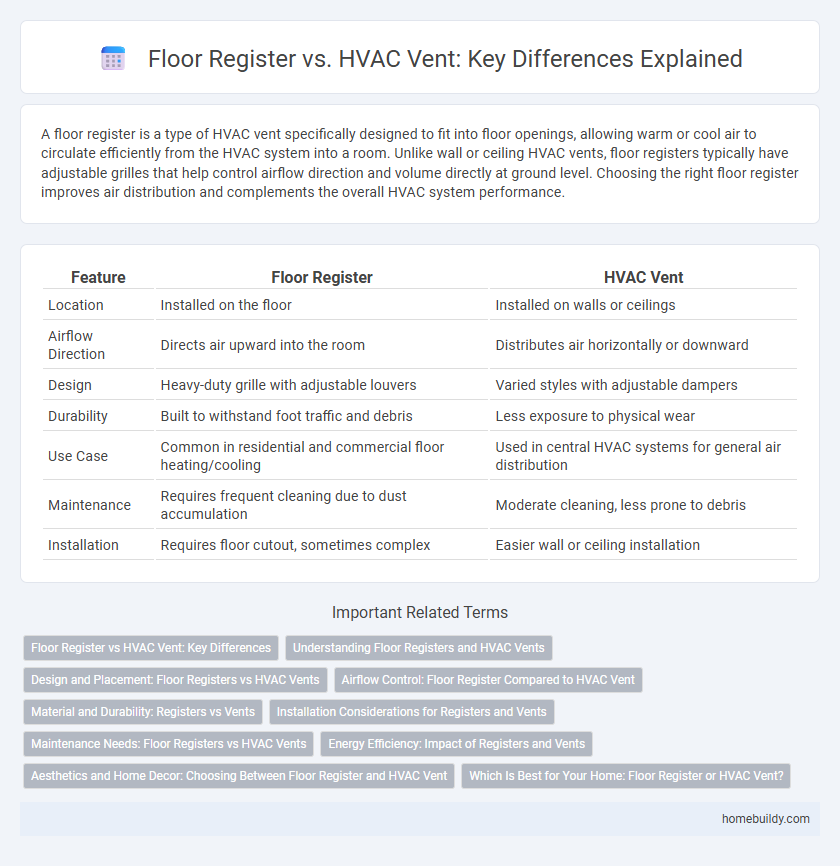
 A floor register is a type of HVAC vent specifically designed to fit into floor openings, allowing warm or cool air to circulate efficiently from the HVAC system into a room. Unlike wall or ceiling HVAC vents, floor registers typically have adjustable grilles that help control airflow direction and volume directly at ground level. Choosing the right floor register improves air distribution and complements the overall HVAC system performance.
Table of Comparison
| Feature | Floor Register | HVAC Vent |
|---|---|---|
| Location | Installed on the floor | Installed on walls or ceilings |
| Airflow Direction | Directs air upward into the room | Distributes air horizontally or downward |
| Design | Heavy-duty grille with adjustable louvers | Varied styles with adjustable dampers |
| Durability | Built to withstand foot traffic and debris | Less exposure to physical wear |
| Use Case | Common in residential and commercial floor heating/cooling | Used in central HVAC systems for general air distribution |
| Maintenance | Requires frequent cleaning due to dust accumulation | Moderate cleaning, less prone to debris |
| Installation | Requires floor cutout, sometimes complex | Easier wall or ceiling installation |
Floor Register vs HVAC Vent: Key Differences
Floor registers and HVAC vents serve distinct roles in air distribution systems; floor registers are specifically designed for floor installation, featuring adjustable grilles to control airflow direction and volume directly from floor ducts. HVAC vents, typically wall or ceiling-mounted, facilitate broader air distribution but lack the precise floor-level airflow control offered by floor registers. Material composition and aesthetic integration also differ, with floor registers often emphasizing durability and design compatibility for high-traffic flooring areas.
Understanding Floor Registers and HVAC Vents
Floor registers are specifically designed grilles installed flush with the floor to cover duct openings, facilitating efficient air distribution and allowing easy airflow control through adjustable dampers. HVAC vents, a broader category, include floor registers, wall vents, and ceiling diffusers, each tailored for specific placement to optimize heating, ventilation, and air conditioning system performance. Understanding the functional differences and installation locations between floor registers and other HVAC vents ensures improved airflow management and enhanced indoor air quality.
Design and Placement: Floor Registers vs HVAC Vents
Floor registers are designed with adjustable louvers and decorative grilles that blend seamlessly with flooring materials, enhancing aesthetic appeal in living spaces. HVAC vents typically feature simpler designs intended for wall or ceiling placement, focusing more on airflow efficiency than visual integration. Proper placement of floor registers near exterior walls or under windows maximizes heat distribution, while HVAC vents are strategically located to ensure balanced air circulation throughout the room.
Airflow Control: Floor Register Compared to HVAC Vent
Floor registers provide precise airflow control by allowing adjustable louvers to direct air flow horizontally along the floor, optimizing room temperature distribution. HVAC vents typically deliver air from walls or ceilings, which can result in less targeted airflow and potential temperature stratification. The design of floor registers enhances energy efficiency by improving air circulation and reducing hot or cold spots within living spaces.
Material and Durability: Registers vs Vents
Floor registers are typically constructed from durable metals such as steel or aluminum, providing enhanced strength and longer lifespan compared to HVAC vents, which are often made from lighter materials like plastic. The metal composition of registers allows them to withstand heavy foot traffic and resist wear in high-traffic areas, ensuring sustained performance. HVAC vents, while easier to install and more cost-effective, may lack the same level of durability and are more prone to cracking or damage over time.
Installation Considerations for Registers and Vents
Floor registers require precise placement within flooring materials to ensure secure installation and optimal airflow, often necessitating cutouts that match register dimensions. HVAC vents typically mount on walls or ceilings, simplifying installation with standard framing supports and fewer concerns about foot traffic durability. Proper sealing and alignment are crucial for both to maximize energy efficiency and prevent air leakage.
Maintenance Needs: Floor Registers vs HVAC Vents
Floor registers require regular cleaning to remove dust and debris that accumulate on the grill and inside the duct to maintain optimal airflow and indoor air quality. HVAC vents, often integrated into walls or ceilings, demand periodic inspection for blockages and filter replacement to ensure system efficiency and prevent dust buildup. Both components benefit from routine maintenance schedules, but floor registers may need more frequent attention due to their proximity to foot traffic and potential dirt ingress.
Energy Efficiency: Impact of Registers and Vents
Floor registers and HVAC vents both play critical roles in air distribution, but floor registers often enhance energy efficiency by directing warm air upward, optimizing heat circulation in rooms with colder floors. Efficient floor registers reduce heat loss and improve airflow control, resulting in lower heating and cooling costs compared to standard HVAC vents. Properly sized and sealed registers minimize air leakage, contributing to overall system efficiency and consistent indoor comfort.
Aesthetics and Home Decor: Choosing Between Floor Register and HVAC Vent
Floor registers offer a more discreet and aesthetically pleasing option, blending seamlessly with hardwood or tile flooring, enhancing home decor without disrupting design flow. HVAC vents, typically mounted on walls or ceilings, are more visible and can detract from the room's visual appeal. Selecting floor registers supports a cleaner, minimalist interior style while maintaining efficient airflow distribution.
Which Is Best for Your Home: Floor Register or HVAC Vent?
Floor registers provide targeted airflow control and are often preferred for rooms with hardwood or tile floors due to their low-profile design, preventing tripping hazards. HVAC vents, typically wall or ceiling-mounted, offer broader air distribution and are ideal for central cooling and heating systems that require efficient whole-room temperature regulation. Choosing between a floor register and an HVAC vent depends on your home's flooring type, airflow needs, and overall HVAC system design for optimal comfort and energy efficiency.
floor register vs HVAC vent Infographic