 homebuildy.com
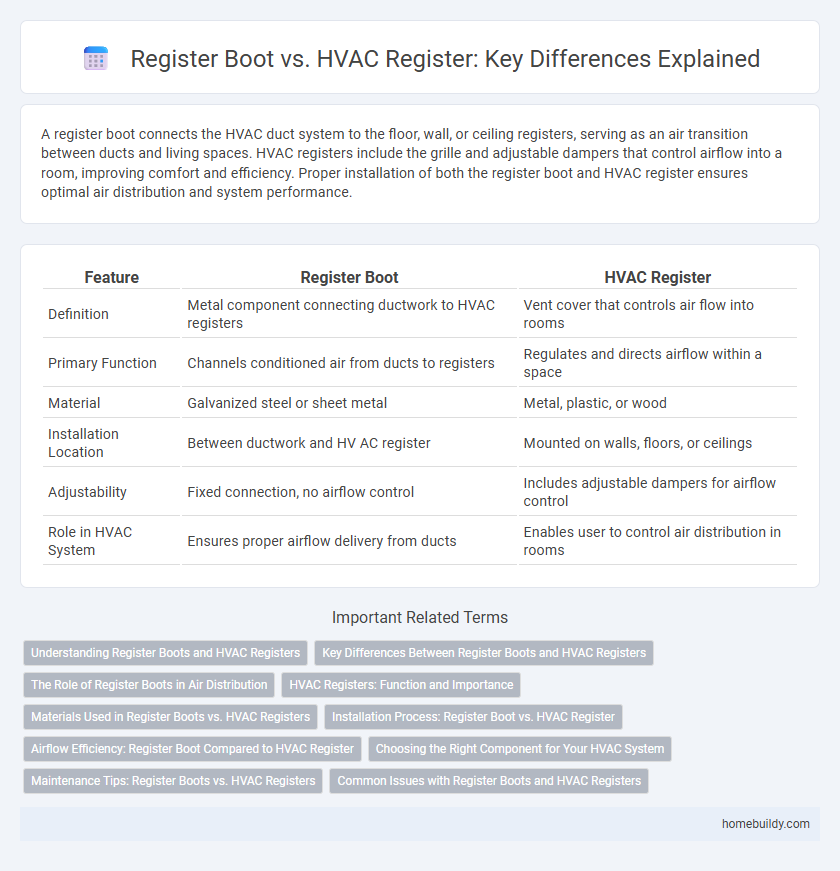
 A register boot connects the HVAC duct system to the floor, wall, or ceiling registers, serving as an air transition between ducts and living spaces. HVAC registers include the grille and adjustable dampers that control airflow into a room, improving comfort and efficiency. Proper installation of both the register boot and HVAC register ensures optimal air distribution and system performance.
Table of Comparison
| Feature | Register Boot | HVAC Register |
|---|---|---|
| Definition | Metal component connecting ductwork to HVAC registers | Vent cover that controls air flow into rooms |
| Primary Function | Channels conditioned air from ducts to registers | Regulates and directs airflow within a space |
| Material | Galvanized steel or sheet metal | Metal, plastic, or wood |
| Installation Location | Between ductwork and HV AC register | Mounted on walls, floors, or ceilings |
| Adjustability | Fixed connection, no airflow control | Includes adjustable dampers for airflow control |
| Role in HVAC System | Ensures proper airflow delivery from ducts | Enables user to control air distribution in rooms |
Understanding Register Boots and HVAC Registers
Register boots serve as the essential connection between ductwork and HVAC registers, ensuring efficient airflow distribution throughout the system. While HVAC registers are the visible vents through which air enters a room, register boots provide the structural support and airtight seal needed to maintain optimal system performance. Understanding the function and relationship of register boots and HVAC registers is critical for proper HVAC installation and improved indoor air quality.
Key Differences Between Register Boots and HVAC Registers
Register boots are specialized metal fittings that connect HVAC ducts to wall or floor registers, allowing efficient airflow transition from the duct system. HVAC registers are the visible, decorative vents with adjustable louvers that control air direction and volume in a room, serving as the point of air distribution. The key difference lies in function and placement: register boots are internal components within the ductwork, while HVAC registers are external fixtures accessible to occupants.
The Role of Register Boots in Air Distribution
Register boots serve as crucial connectors between ductwork and HVAC registers, ensuring efficient air distribution throughout a building. They help maintain proper airflow by securely attaching the register to the duct, preventing leaks and enhancing system performance. Optimized register boots improve heating and cooling delivery, contributing to overall indoor comfort and energy efficiency.
HVAC Registers: Function and Importance
HVAC registers regulate airflow in heating, ventilation, and air conditioning systems, ensuring efficient temperature control and air distribution within indoor spaces. These registers feature adjustable louvers that allow users to direct airflow and manage volume, enhancing comfort and energy efficiency. Properly functioning HVAC registers are critical for maintaining indoor air quality and optimizing system performance.
Materials Used in Register Boots vs. HVAC Registers
Register boots are typically constructed from galvanized steel or aluminum for durability and corrosion resistance, ensuring long-term performance within HVAC systems. In contrast, HVAC registers often feature materials such as painted steel, plastic, or wood, providing aesthetic versatility and compatibility with interior decor. The choice of materials in register boots prioritizes structural integrity and airflow efficiency, while HVAC registers emphasize design flexibility and ease of maintenance.
Installation Process: Register Boot vs. HVAC Register
Register boots require precise alignment and secure attachment to the ductwork to ensure proper airflow and prevent air leaks. HVAC registers are installed by fitting the register face into the ceiling, wall, or floor opening, often using spring clips or screws for a stable fit. The installation of a register boot is more involved, needing airtight sealing and sometimes insulation, unlike the straightforward placement of an HVAC register.
Airflow Efficiency: Register Boot Compared to HVAC Register
Register boots enhance airflow efficiency by providing a secure seal between ductwork and floor registers, minimizing air leakage and maintaining consistent pressure throughout the HVAC system. Unlike standard HVAC registers, which primarily serve as grilles or vents, register boots function as transitional plenums that optimize the flow path, reducing turbulence and pressure drops. This improved efficiency contributes to balanced air distribution, lower energy consumption, and enhanced overall system performance.
Choosing the Right Component for Your HVAC System
Selecting the appropriate register boot for your HVAC system ensures optimal airflow distribution and energy efficiency by securely connecting ductwork to registers. Unlike standard HVAC registers that control air direction and volume, register boots serve as transitional components that adapt duct sizes to fit various register openings. Proper compatibility between the register boot and HVAC register enhances system performance, minimizes air leakage, and improves indoor comfort levels.
Maintenance Tips: Register Boots vs. HVAC Registers
Register boots require regular cleaning to prevent dust and debris buildup that can obstruct airflow, ensuring efficient heating and cooling system performance. HVAC registers benefit from routine inspection and occasional lubrication of adjustable dampers to maintain proper air distribution and noise reduction. Both components should be checked periodically for damage or wear to avoid costly repairs and maintain indoor air quality.
Common Issues with Register Boots and HVAC Registers
Common issues with register boots include improper sealing causing air leaks and reduced HVAC efficiency, leading to increased energy costs. HVAC registers frequently suffer from dust accumulation and blockages, which restrict airflow and reduce indoor air quality. Both problems result in uneven heating or cooling, necessitating regular inspection and maintenance for optimal system performance.
Register boot vs HVAC register Infographic