 homebuildy.com
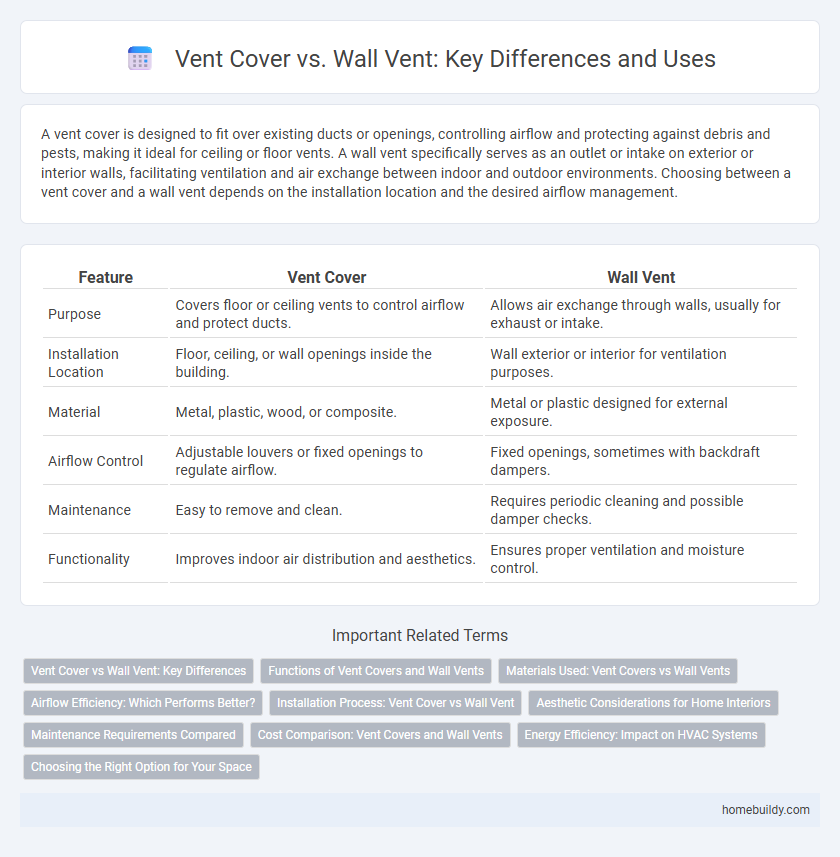
 A vent cover is designed to fit over existing ducts or openings, controlling airflow and protecting against debris and pests, making it ideal for ceiling or floor vents. A wall vent specifically serves as an outlet or intake on exterior or interior walls, facilitating ventilation and air exchange between indoor and outdoor environments. Choosing between a vent cover and a wall vent depends on the installation location and the desired airflow management.
Table of Comparison
| Feature | Vent Cover | Wall Vent |
|---|---|---|
| Purpose | Covers floor or ceiling vents to control airflow and protect ducts. | Allows air exchange through walls, usually for exhaust or intake. |
| Installation Location | Floor, ceiling, or wall openings inside the building. | Wall exterior or interior for ventilation purposes. |
| Material | Metal, plastic, wood, or composite. | Metal or plastic designed for external exposure. |
| Airflow Control | Adjustable louvers or fixed openings to regulate airflow. | Fixed openings, sometimes with backdraft dampers. |
| Maintenance | Easy to remove and clean. | Requires periodic cleaning and possible damper checks. |
| Functionality | Improves indoor air distribution and aesthetics. | Ensures proper ventilation and moisture control. |
Vent Cover vs Wall Vent: Key Differences
Vent covers are primarily designed to fit over duct openings indoors, providing decorative finishes and controlling airflow within rooms. Wall vents, in contrast, are installed on exterior walls to facilitate air exchange between the interior and outside environment, often incorporating weather-resistant materials. The key differences lie in their placement, material durability, and functional purposes, with vent covers focusing on interior air regulation and wall vents enabling ventilation and moisture control.
Functions of Vent Covers and Wall Vents
Vent covers regulate airflow and protect duct openings from debris, dust, and insects, enhancing indoor air quality. Wall vents facilitate ventilation by allowing air exchange between indoor and outdoor environments, preventing moisture buildup and improving airflow circulation. Both components work together to maintain an efficient HVAC system, balancing air distribution and preventing energy loss.
Materials Used: Vent Covers vs Wall Vents
Vent covers are commonly made from durable materials such as metal, plastic, and wood, designed to provide aesthetic appeal and easy maintenance. Wall vents typically utilize sturdier materials like galvanized steel or aluminum to withstand external environmental conditions and ensure long-term durability. The choice of materials impacts ventilation efficiency, with vent covers prioritizing design flexibility, while wall vents focus on resilience against weather and airflow management.
Airflow Efficiency: Which Performs Better?
Vent covers are designed to regulate and direct airflow more efficiently than standard wall vents by minimizing air leakage and enhancing distribution within a room. Wall vents often allow some air to escape into wall cavities, reducing overall airflow efficiency and potentially causing uneven temperature control. Choosing a high-quality vent cover significantly improves air circulation, contributing to better HVAC system performance and energy savings.
Installation Process: Vent Cover vs Wall Vent
Vent covers typically offer a straightforward installation process involving snap-on or screw mounting onto existing duct openings, ideal for quick upgrades or replacements without modifying wall structures. Wall vents often require cutting into the wall, installing the vent housing, and sealing to ensure proper airflow and prevent leaks, making the process more labor-intensive and suited for new construction or significant remodeling. Choosing between a vent cover or wall vent depends on the desired airflow efficiency, aesthetic preferences, and the scope of installation complexity.
Aesthetic Considerations for Home Interiors
Vent covers offer a sleek, customizable design that seamlessly blends with various interior styles, enhancing the room's overall aesthetic appeal. Unlike standard wall vents, vent covers come in diverse materials, colors, and patterns, allowing for tailored decor integration. Their ability to conceal duct openings without compromising airflow ensures both functionality and visual harmony in home interiors.
Maintenance Requirements Compared
Vent covers require regular cleaning to prevent dust buildup and ensure optimal airflow, typically needing attention every few months. Wall vents, often exposed to outdoor elements, demand more frequent inspections for debris, pests, and moisture damage, increasing maintenance frequency. Proper maintenance of both components is essential for energy efficiency and indoor air quality.
Cost Comparison: Vent Covers and Wall Vents
Vent covers generally offer a more affordable solution compared to wall vents, with typical costs ranging from $10 to $50 while wall vents can cost between $50 and $150. Installation of vent covers is often simpler and less time-consuming, reducing both labor expenses and the need for structural modifications. Choosing vent covers can result in significant savings for budget-conscious homeowners without compromising ventilation efficiency.
Energy Efficiency: Impact on HVAC Systems
A vent cover enhances energy efficiency by sealing air leaks and directing airflow more precisely than a standard wall vent, reducing HVAC system strain. Improved insulation from an effective vent cover minimizes heat loss or gain, lowering energy consumption and utility costs. Consistent temperature control provided by vent covers optimizes HVAC performance, extending system lifespan.
Choosing the Right Option for Your Space
Selecting the right vent cover or wall vent depends on your space's airflow requirements and aesthetic preferences. Vent covers offer customizable designs and easier maintenance, making them ideal for interior applications where style matters. Wall vents provide direct outdoor ventilation, improving air exchange and moisture control, which is crucial for basements and utility rooms.
vent cover vs wall vent Infographic