 homebuildy.com
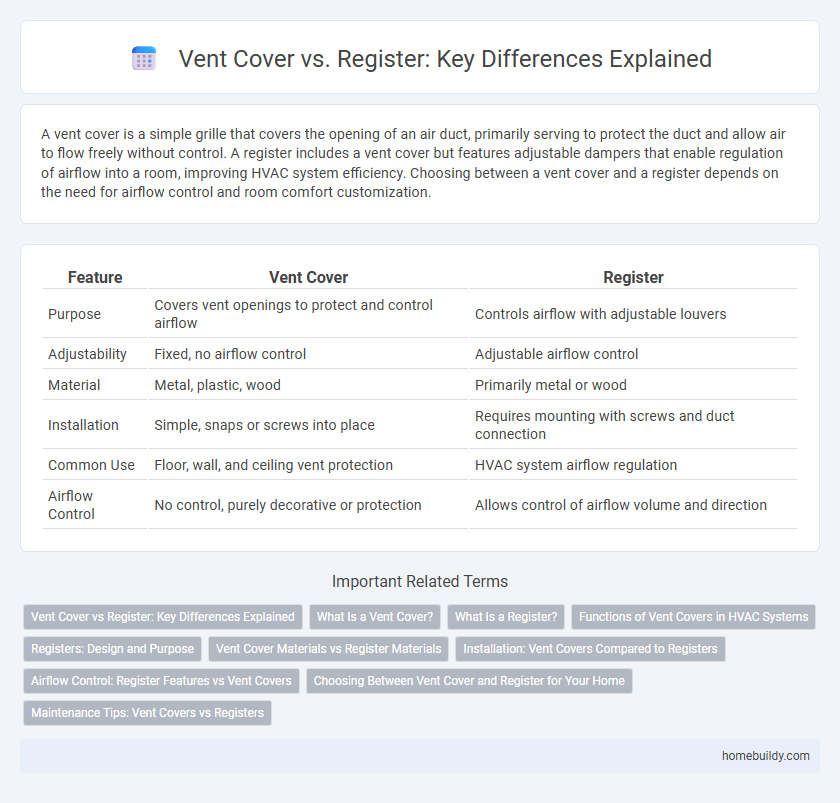
 A vent cover is a simple grille that covers the opening of an air duct, primarily serving to protect the duct and allow air to flow freely without control. A register includes a vent cover but features adjustable dampers that enable regulation of airflow into a room, improving HVAC system efficiency. Choosing between a vent cover and a register depends on the need for airflow control and room comfort customization.
Table of Comparison
| Feature | Vent Cover | Register |
|---|---|---|
| Purpose | Covers vent openings to protect and control airflow | Controls airflow with adjustable louvers |
| Adjustability | Fixed, no airflow control | Adjustable airflow control |
| Material | Metal, plastic, wood | Primarily metal or wood |
| Installation | Simple, snaps or screws into place | Requires mounting with screws and duct connection |
| Common Use | Floor, wall, and ceiling vent protection | HVAC system airflow regulation |
| Airflow Control | No control, purely decorative or protection | Allows control of airflow volume and direction |
Vent Cover vs Register: Key Differences Explained
Vent covers are designed to protect and conceal HVAC duct openings, typically featuring a simple grill to prevent debris entry, while registers include adjustable dampers that control airflow within a room. Unlike registers, vent covers do not regulate the volume of air passing through, making registers essential for managing heating and cooling efficiency. Understanding the functional distinction between vent covers and registers enhances proper HVAC system performance and indoor comfort.
What Is a Vent Cover?
A vent cover is a protective grille or plate that fits over HVAC openings to regulate airflow and prevent debris from entering ductwork. Unlike registers, which have adjustable louvers to control the volume and direction of air, vent covers are typically fixed and serve primarily as a barrier. Vent covers enhance system efficiency by maintaining proper ventilation while safeguarding ducts and interior spaces.
What Is a Register?
A register is a vent cover that includes a damper to regulate airflow, allowing precise control over heating or cooling in a room. Unlike standard vent covers, registers are installed directly over duct openings and can open or close completely to adjust the volume of air entering a space. Registers typically feature adjustable louvers that improve air distribution efficiency compared to fixed vent covers.
Functions of Vent Covers in HVAC Systems
Vent covers regulate airflow by controlling the amount of air entering or leaving a room, enhancing HVAC system efficiency and comfort levels. Unlike registers, vent covers primarily function as protective barriers that prevent debris, dust, and pests from entering ductwork while allowing unobstructed ventilation. Proper installation of vent covers ensures balanced air distribution, improved indoor air quality, and energy savings in HVAC systems.
Registers: Design and Purpose
Registers feature adjustable dampers that control airflow, providing precise ventilation management in heating and cooling systems. Their design facilitates easy cleaning and maintenance, often incorporating grilles with removable faceplates. Unlike static vent covers, registers help optimize indoor air distribution and improve overall HVAC efficiency.
Vent Cover Materials vs Register Materials
Vent covers are commonly made from lightweight materials such as plastic, aluminum, or steel, offering corrosion resistance and ease of installation, while register materials tend to prioritize durability with options like cast iron, steel, or brass to withstand higher foot traffic and wear. Plastic vent covers provide affordability and moisture resistance but lack the structural strength of metal registers. Cast iron and brass registers offer superior longevity and aesthetic appeal, making them ideal for high-traffic areas or decorative applications.
Installation: Vent Covers Compared to Registers
Vent covers typically install easily with adhesive backing or simple clips, making them ideal for quick upgrades without removing existing elements. Registers require mounting screws and precise alignment within duct openings, ensuring secure placement but demanding more installation time and tools. Choosing vent covers over registers often reduces labor and complexity while still providing effective airflow control.
Airflow Control: Register Features vs Vent Covers
Register features include adjustable dampers that allow precise airflow control, enabling users to regulate air distribution within a room effectively. Vent covers typically provide a fixed opening without adjustable components, limiting the ability to modify airflow. The presence of a damper in registers enhances energy efficiency and comfort by customizing ventilation, unlike standard vent covers.
Choosing Between Vent Cover and Register for Your Home
Choosing between a vent cover and a register for your home depends on airflow control and aesthetic preferences. Vent covers typically serve as simple grilles that protect duct openings without adjustable louvers, while registers include built-in dampers for regulating air volume. Selecting a register provides enhanced temperature control and efficiency in heating, ventilation, and air conditioning systems compared to basic vent covers.
Maintenance Tips: Vent Covers vs Registers
Vent covers require less frequent cleaning than registers because they typically have fewer moving parts and less direct exposure to dust and debris from air ducts. Regularly vacuuming vent covers and wiping them with a damp cloth helps maintain airflow and prevents dust buildup, whereas registers often need more detailed cleaning to remove dirt caught in adjustable louvers. Proper maintenance of both ensures optimal air quality and HVAC system efficiency.
vent cover vs register Infographic