 homebuildy.com
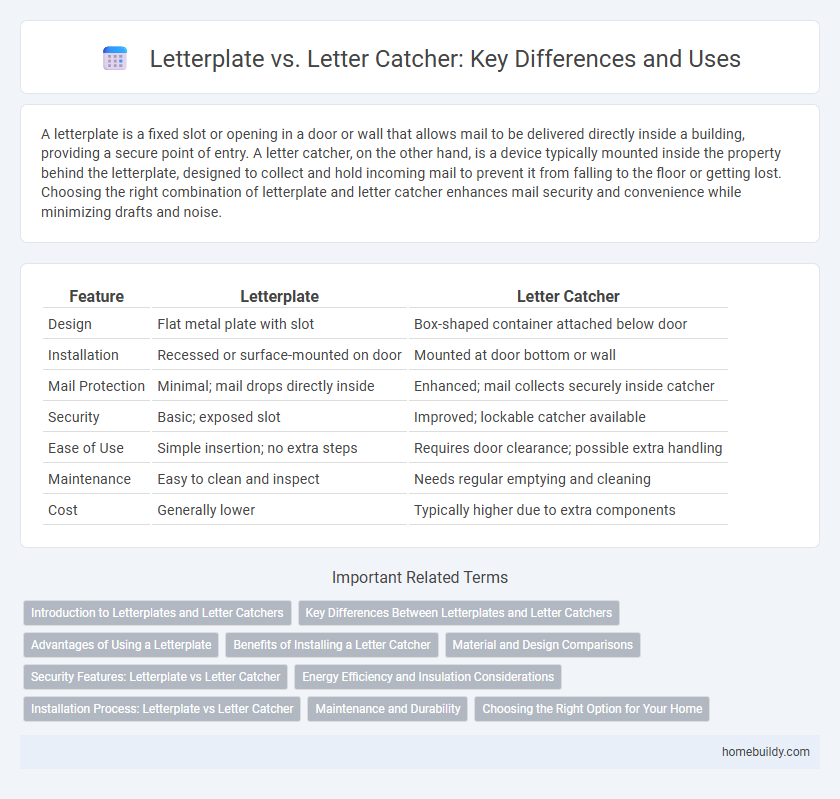
 A letterplate is a fixed slot or opening in a door or wall that allows mail to be delivered directly inside a building, providing a secure point of entry. A letter catcher, on the other hand, is a device typically mounted inside the property behind the letterplate, designed to collect and hold incoming mail to prevent it from falling to the floor or getting lost. Choosing the right combination of letterplate and letter catcher enhances mail security and convenience while minimizing drafts and noise.
Table of Comparison
| Feature | Letterplate | Letter Catcher |
|---|---|---|
| Design | Flat metal plate with slot | Box-shaped container attached below door |
| Installation | Recessed or surface-mounted on door | Mounted at door bottom or wall |
| Mail Protection | Minimal; mail drops directly inside | Enhanced; mail collects securely inside catcher |
| Security | Basic; exposed slot | Improved; lockable catcher available |
| Ease of Use | Simple insertion; no extra steps | Requires door clearance; possible extra handling |
| Maintenance | Easy to clean and inspect | Needs regular emptying and cleaning |
| Cost | Generally lower | Typically higher due to extra components |
Introduction to Letterplates and Letter Catchers
Letterplates serve as mounting fixtures for mail delivery, typically installed on doors or walls to allow letters to pass through securely. Letter catchers are internal receptacles positioned inside the property that collect mail dropped through the letterplate, preventing it from falling to the floor. These two components work together to streamline mail handling, with letterplates facilitating entry and letter catchers ensuring organized collection.
Key Differences Between Letterplates and Letter Catchers
Letterplates are fixed mail slots typically installed in doors or walls, allowing letters to be delivered directly inside a building, whereas letter catchers are external or internal containers designed to collect mail after it passes through a letterplate. Letterplates generally require precise sizing and weatherproofing to prevent drafts and water ingress, while letter catchers prioritize secure and convenient mail retrieval. The key difference lies in function: letterplates serve as entry points for incoming mail, and letter catchers provide a secure collection point, enhancing mail safety and organization.
Advantages of Using a Letterplate
A letterplate offers enhanced security by allowing mail to be deposited directly through a door without requiring external mailboxes. Its design reduces the risk of mail theft and weather damage compared to letter catchers, which are often exposed to external elements. Furthermore, letterplates provide a neater appearance and save space by integrating seamlessly into the door structure.
Benefits of Installing a Letter Catcher
Installing a letter catcher enhances mail security by preventing letters from falling onto the floor, reducing the risk of damage or loss. It also improves convenience by keeping letters organized and easily retrievable directly inside the home. Compared to traditional letterplates, letter catchers provide better insulation and weather protection by sealing the mail slot more effectively.
Material and Design Comparisons
Letterplates typically feature durable metal or plastic construction designed to fit flush within a door, providing a secure and weather-resistant entry point for mail. Letter catchers, often crafted from fabric or lightweight plastic, hang inside the door to collect mail and reduce floor clutter, emphasizing convenience over robust protection. The design of letterplates emphasizes security and insulation, whereas letter catchers prioritize ease of retrieval and interior tidiness.
Security Features: Letterplate vs Letter Catcher
A letterplate provides a secure, tamper-resistant slot built into the door, minimizing the risk of unauthorized access and protecting mail from theft or weather damage. Letter catchers, positioned inside the property, rely on the door's security and offer less direct protection against mail fishing or interception. The integrated design of letterplates often incorporates anti-fishing features, enhancing overall mail security compared to standalone letter catchers.
Energy Efficiency and Insulation Considerations
Letterplates typically offer better energy efficiency and insulation compared to letter catchers due to their direct installation into the door, minimizing air leaks and drafts. High-quality letterplates often include insulated flaps or seals that reduce heat loss, enhancing thermal performance in residential and commercial buildings. In contrast, letter catchers, which are external receptacles, may allow more air infiltration, potentially compromising the overall insulation of the entryway.
Installation Process: Letterplate vs Letter Catcher
Installing a letterplate involves cutting a precise opening in the door, which requires accurate measurements and tools to ensure a clean fit and secure mounting. In contrast, a letter catcher simply attaches to the inside of the door or wall, often with screws or adhesive, making installation quicker and less invasive. The letterplate installation demands more skill and effort due to door modifications, whereas the letter catcher offers a straightforward setup without the need to alter the door itself.
Maintenance and Durability
Letterplates typically require less maintenance due to their simple design with fewer moving parts, making them less prone to wear and tear over time. Letter catchers, while offering added security by collecting mail inside the property, demand regular cleaning and inspection to prevent jams and damage caused by moisture or debris buildup. Durability-wise, high-quality letterplates constructed from stainless steel or brass offer long-lasting performance, whereas letter catchers may face more frequent repairs depending on the material and environmental exposure.
Choosing the Right Option for Your Home
Letterplates are typically installed directly on the door, providing a streamlined look and secure mail delivery, while letter catchers offer an internal receptacle to protect mail from weather and theft. Choosing the right option depends on factors like security preferences, door type, and exposure to elements; letter catchers are ideal for homes in rainy or windy areas where mail protection is crucial. Homeowners seeking aesthetic integration and simplicity might prefer letterplates, whereas those prioritizing robust mail safeguarding often opt for letter catchers.
Letterplate vs Letter Catcher Infographic