 homebuildy.com
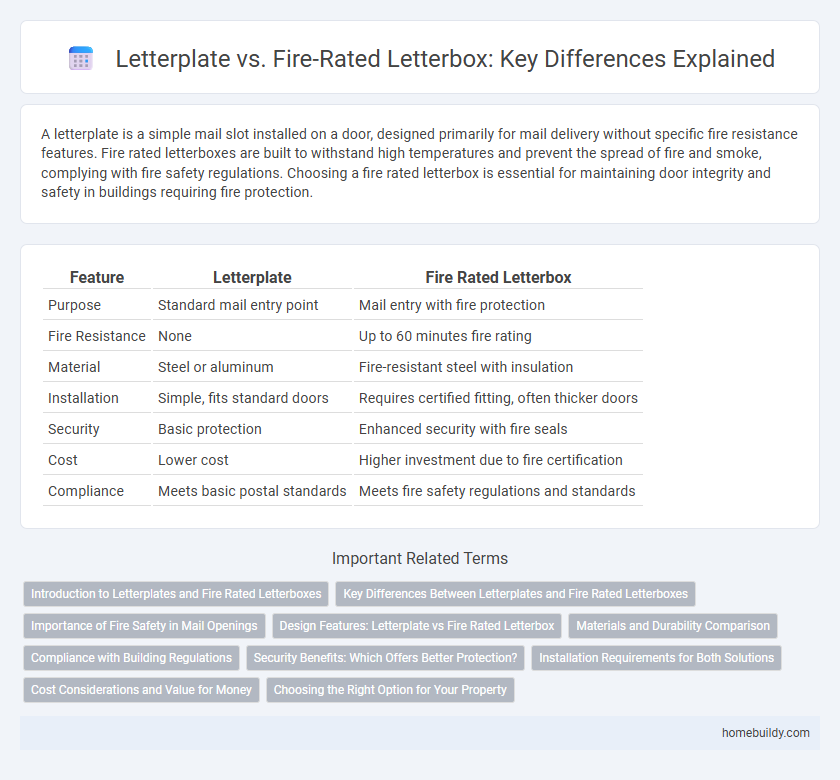
 A letterplate is a simple mail slot installed on a door, designed primarily for mail delivery without specific fire resistance features. Fire rated letterboxes are built to withstand high temperatures and prevent the spread of fire and smoke, complying with fire safety regulations. Choosing a fire rated letterbox is essential for maintaining door integrity and safety in buildings requiring fire protection.
Table of Comparison
| Feature | Letterplate | Fire Rated Letterbox |
|---|---|---|
| Purpose | Standard mail entry point | Mail entry with fire protection |
| Fire Resistance | None | Up to 60 minutes fire rating |
| Material | Steel or aluminum | Fire-resistant steel with insulation |
| Installation | Simple, fits standard doors | Requires certified fitting, often thicker doors |
| Security | Basic protection | Enhanced security with fire seals |
| Cost | Lower cost | Higher investment due to fire certification |
| Compliance | Meets basic postal standards | Meets fire safety regulations and standards |
Introduction to Letterplates and Fire Rated Letterboxes
Letterplates are standard mail slots installed on doors to allow easy mail delivery while maintaining security and weather resistance. Fire rated letterboxes, designed with fire-retardant materials and tested to meet fire safety standards, provide enhanced protection by preventing the spread of flames and smoke through the door opening. Choosing between a standard letterplate and a fire rated letterbox depends on regulatory requirements, building codes, and the need for fire safety measures in residential or commercial properties.
Key Differences Between Letterplates and Fire Rated Letterboxes
Letterplates are simple mail slots designed primarily for convenient mail delivery, while fire rated letterboxes are built with fire-resistant materials to prevent the spread of flames and smoke through door openings. Fire rated letterboxes comply with strict safety standards, featuring reinforced construction that provides protection against fire for a specified period, unlike standard letterplates which offer no fire protection. The key difference lies in the fire safety functionality, making fire rated letterboxes essential for buildings where fire resistance is required by regulations.
Importance of Fire Safety in Mail Openings
Fire-rated letterboxes provide crucial protection by preventing the spread of fire and smoke through mail openings, ensuring safer building environments. Unlike standard letterplates, fire-rated models meet stringent regulatory standards for fire resistance, enhancing overall safety in residential and commercial properties. Incorporating fire safety features in mail openings significantly reduces the risk of fire-related damage and improves occupant protection.
Design Features: Letterplate vs Fire Rated Letterbox
Letterplates feature streamlined designs with slim profiles that seamlessly integrate into doors, emphasizing aesthetics and ease of use. Fire rated letterboxes incorporate robust, fire-resistant materials and enhanced sealing mechanisms to prevent flame and smoke penetration, prioritizing safety without compromising functionality. Design innovations in fire rated letterboxes often include insulated liners and intumescent strips to maintain fire integrity while allowing secure mail delivery.
Materials and Durability Comparison
Letterplates are typically made from lightweight metals such as aluminum or stainless steel, providing a balance of durability and aesthetic appeal suitable for regular postal delivery. Fire rated letterboxes, however, incorporate heat-resistant materials like steel combined with fire-resistant insulation to maintain structural integrity and prevent fire spread during emergencies. The superior material composition of fire rated letterboxes ensures enhanced durability under extreme heat conditions, whereas standard letterplates prioritize weather resistance and corrosion protection for everyday use.
Compliance with Building Regulations
Letterplates must comply with building regulations by ensuring fire resistance and preventing the spread of flames and smoke. Fire rated letterboxes are specifically designed and tested to meet stringent fire safety standards, providing assured compliance with these regulations. Installing a fire rated letterbox is essential in buildings requiring certified fire protection, whereas standard letterplates may not fulfill legal fire safety requirements.
Security Benefits: Which Offers Better Protection?
Fire rated letterboxes provide enhanced security by incorporating fire-resistant materials that protect mail from fire damage, making them ideal for high-risk environments. Standard letterplates, while offering basic convenience, lack these protective features and are more vulnerable to tampering and theft. Choosing a fire rated letterbox significantly improves security by combining fire safety with robust mail protection.
Installation Requirements for Both Solutions
Letterplates typically require minimal installation effort, fitting directly into pre-existing door cutouts with basic tools, making them suitable for straightforward retrofitting. Fire rated letterboxes demand strict compliance with fire safety standards, necessitating professional installation to ensure airtight seals and appropriate fireproof materials are correctly integrated. Proper installation of fire rated letterboxes includes precise alignment with fire door specifications to maintain integrity under fire conditions, unlike standard letterplates which prioritize convenience over fire resistance.
Cost Considerations and Value for Money
Letterplate options vary significantly in cost, with standard letterplates typically priced lower than fire rated letterboxes due to their simpler construction and lack of fire-resistant materials. Fire rated letterboxes offer enhanced safety features, adhering to strict fire resistance standards, which justifies their higher price for residences requiring compliance with fire codes. Investing in a fire rated letterbox provides long-term value by combining security, durability, and regulatory adherence, outweighing the initial expense compared to conventional letterplates.
Choosing the Right Option for Your Property
Selecting the right letterplate depends on your property's fire safety requirements and security needs. Fire rated letterboxes are specifically designed to withstand high temperatures and prevent the spread of flames, making them ideal for commercial buildings and fire-sensitive areas. Standard letterplates offer basic functionality but lack the protective features necessary for fire safety compliance.
Letterplate vs Fire Rated Letterbox Infographic