 homebuildy.com
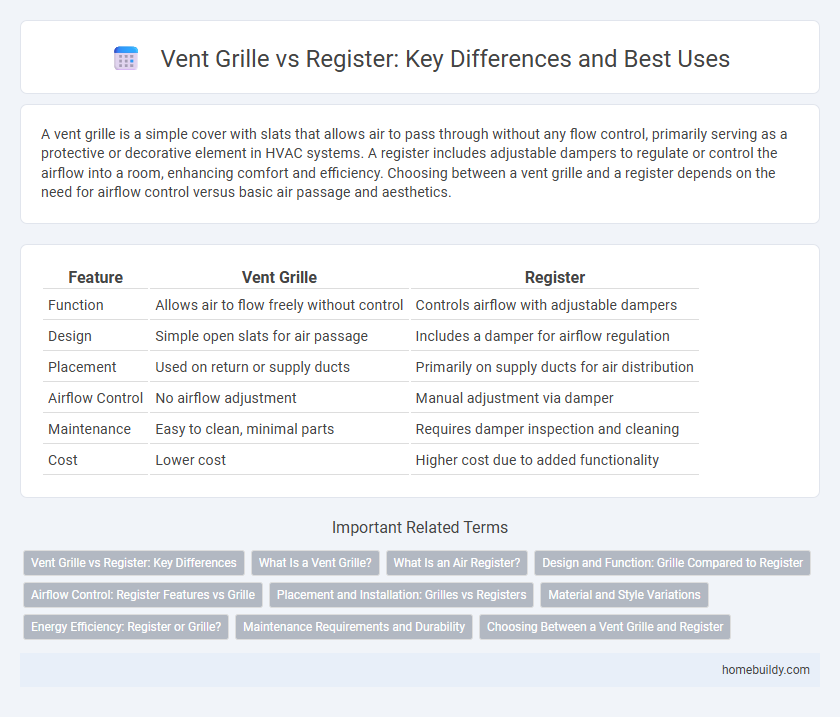
 A vent grille is a simple cover with slats that allows air to pass through without any flow control, primarily serving as a protective or decorative element in HVAC systems. A register includes adjustable dampers to regulate or control the airflow into a room, enhancing comfort and efficiency. Choosing between a vent grille and a register depends on the need for airflow control versus basic air passage and aesthetics.
Table of Comparison
| Feature | Vent Grille | Register |
|---|---|---|
| Function | Allows air to flow freely without control | Controls airflow with adjustable dampers |
| Design | Simple open slats for air passage | Includes a damper for airflow regulation |
| Placement | Used on return or supply ducts | Primarily on supply ducts for air distribution |
| Airflow Control | No airflow adjustment | Manual adjustment via damper |
| Maintenance | Easy to clean, minimal parts | Requires damper inspection and cleaning |
| Cost | Lower cost | Higher cost due to added functionality |
Vent Grille vs Register: Key Differences
Vent grilles primarily serve as covers for air ducts, allowing air to flow freely between rooms or from HVAC systems without controlling airflow. Registers include a vent grille but feature adjustable dampers that regulate or direct airflow to maintain room temperature. Understanding these key differences helps in selecting the appropriate component for efficient HVAC performance and indoor air quality management.
What Is a Vent Grille?
A vent grille is a cover placed over HVAC openings to allow air to flow in and out of a room while protecting the ductwork from debris. Unlike registers, vent grilles often do not have adjustable dampers to control airflow, serving primarily as a decorative and protective barrier. Materials commonly used for vent grilles include metal, plastic, or wood, with styles designed to match the interior decor while ensuring proper ventilation efficiency.
What Is an Air Register?
An air register is a vent cover equipped with a built-in damper that controls airflow into a room, allowing precise regulation of temperature and ventilation. Unlike vent grilles, which primarily serve as simple covers for air ducts, air registers can be adjusted to open or close, directing air more efficiently. Understanding the difference between a vent grille and an air register is essential for optimizing HVAC performance and maintaining indoor air quality.
Design and Function: Grille Compared to Register
Vent grilles feature a simple, open design that allows air to flow freely while concealing ductwork, primarily serving the function of air return or supply without adjustable airflow control. Registers incorporate adjustable louvers or dampers, providing users with the ability to control and direct airflow, making them ideal for supply vents in heating and cooling systems. The design of grilles tends to emphasize aesthetics and unobtrusiveness, whereas registers focus on both airflow regulation and functional versatility within HVAC systems.
Airflow Control: Register Features vs Grille
Vent registers include adjustable dampers that enable precise airflow control by opening or closing the vent, while vent grilles lack these features and serve primarily as covers. Registers optimize air distribution in HVAC systems by allowing users to regulate the volume and direction of airflow. Grilles, often fixed and without dampers, are designed to protect duct openings and maintain aesthetic continuity but do not influence airflow.
Placement and Installation: Grilles vs Registers
Vent grilles are typically installed over air return ducts, allowing air to flow into the HVAC system without directional control, while registers are mounted over supply ducts and include adjustable louvers to direct airflow into the room. Placement of vent grilles is usually on walls or ceilings where air returns are located, ensuring efficient air circulation by drawing air back to the system. Installation of registers focuses on optimal airflow distribution and room comfort, often requiring precise positioning and secure fastening to enable functional louver adjustments.
Material and Style Variations
Vent grilles are typically made from materials like aluminum, steel, or plastic, offering durability and resistance to moisture, whereas registers often incorporate adjustable dampers and may use similar materials but with added mechanisms for airflow control. Style variations in vent grilles favor sleek, minimalist designs to blend seamlessly with modern interiors, while registers often feature more robust, functional designs to accommodate airflow adjustments. Choosing between a vent grille and a register depends on the desired balance of aesthetic appeal and functional ventilation control.
Energy Efficiency: Register or Grille?
Registers provide enhanced energy efficiency by incorporating adjustable dampers that control airflow, reducing energy waste by preventing overcooling or overheating in specific rooms. Vent grilles lack this airflow control, allowing continuous air passage and potentially increasing energy consumption. Choosing a register over a vent grille can optimize HVAC system performance and lower energy bills.
Maintenance Requirements and Durability
Vent grilles require less frequent maintenance than registers due to their simpler design and fewer moving parts, reducing the need for regular cleaning and repairs. Made from durable materials like aluminum or steel, vent grilles resist corrosion and physical damage, enhancing longevity in HVAC systems. Registers, featuring adjustable dampers, demand more upkeep to ensure smooth operation and prevent buildup, which can affect air flow efficiency over time.
Choosing Between a Vent Grille and Register
Choosing between a vent grille and register depends on airflow control and design preferences; vent grilles primarily allow air passage without adjustable louvers, offering a more minimalist look. Registers include built-in dampers to regulate airflow, making them ideal for rooms requiring precise temperature control. Considering the specific HVAC system needs and aesthetic goals ensures optimal performance and comfort.
vent grille vs register Infographic