 homebuildy.com
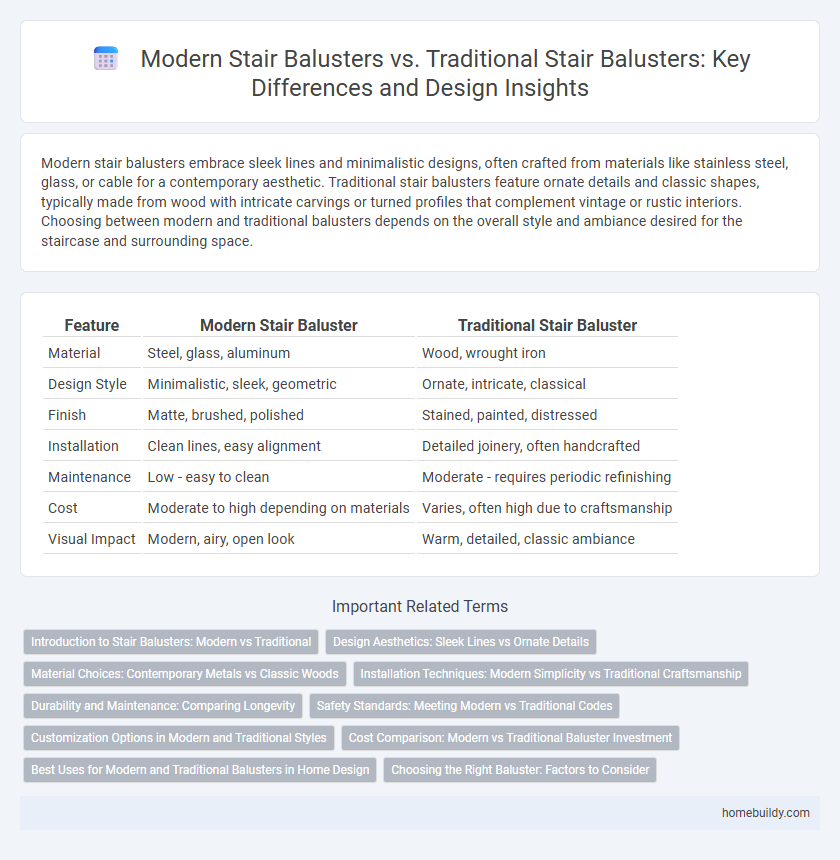
 Modern stair balusters embrace sleek lines and minimalistic designs, often crafted from materials like stainless steel, glass, or cable for a contemporary aesthetic. Traditional stair balusters feature ornate details and classic shapes, typically made from wood with intricate carvings or turned profiles that complement vintage or rustic interiors. Choosing between modern and traditional balusters depends on the overall style and ambiance desired for the staircase and surrounding space.
Table of Comparison
| Feature | Modern Stair Baluster | Traditional Stair Baluster |
|---|---|---|
| Material | Steel, glass, aluminum | Wood, wrought iron |
| Design Style | Minimalistic, sleek, geometric | Ornate, intricate, classical |
| Finish | Matte, brushed, polished | Stained, painted, distressed |
| Installation | Clean lines, easy alignment | Detailed joinery, often handcrafted |
| Maintenance | Low - easy to clean | Moderate - requires periodic refinishing |
| Cost | Moderate to high depending on materials | Varies, often high due to craftsmanship |
| Visual Impact | Modern, airy, open look | Warm, detailed, classic ambiance |
Introduction to Stair Balusters: Modern vs Traditional
Modern stair balusters feature sleek, minimalist designs often crafted from materials like stainless steel, glass, or aluminum, emphasizing clean lines and open spaces. Traditional stair balusters typically showcase ornate, carved woodwork or wrought iron with intricate detailing, reflecting classic architectural styles. The choice between modern and traditional balusters significantly influences the overall aesthetic and ambiance of staircases in residential and commercial interiors.
Design Aesthetics: Sleek Lines vs Ornate Details
Modern stair balusters feature sleek lines and minimalist designs that emphasize clean geometry and open space, enhancing contemporary interiors with a streamlined aesthetic. Traditional stair balusters showcase ornate details such as intricate carvings, turned spindles, and decorative motifs, adding elegance and historical character to classic staircases. The choice between modern and traditional balusters significantly influences the overall architectural style and visual impact of stair designs.
Material Choices: Contemporary Metals vs Classic Woods
Modern stair balusters often utilize materials such as stainless steel, aluminum, and glass, offering sleek, durable, and low-maintenance options that complement minimalist and industrial designs. Traditional stair balusters are typically crafted from hardwoods like oak, cherry, and mahogany, providing a warm, classic aesthetic with intricate carvings and rich finishes. The choice between contemporary metals and classic woods significantly impacts the staircase's style, maintenance needs, and overall ambiance in residential or commercial spaces.
Installation Techniques: Modern Simplicity vs Traditional Craftsmanship
Modern stair balusters often feature streamlined installation techniques using pre-fabricated components, allowing for quicker assembly and minimal tools, enhancing efficiency on-site. Traditional stair balusters require meticulous craftsmanship, involving custom carving and hand fitting that demand skilled labor and extended installation time. While modern methods prioritize simplicity and uniformity, traditional techniques emphasize intricate detail and personalized artistry.
Durability and Maintenance: Comparing Longevity
Modern stair balusters, often crafted from materials like stainless steel, glass, or aluminum, offer superior durability and resist corrosion, making them low-maintenance options ideal for high-traffic areas. Traditional stair balusters, typically made from wood or wrought iron, may require regular upkeep such as painting, staining, or rust prevention to maintain their appearance and structural integrity. In terms of longevity, modern materials generally outperform traditional ones due to enhanced resistance to wear, weather, and environmental factors.
Safety Standards: Meeting Modern vs Traditional Codes
Modern stair balusters typically comply with updated safety standards that emphasize stricter building codes, including precise spacing requirements to prevent child entrapment and the use of durable materials that enhance stability. Traditional stair balusters often follow older safety codes which may allow wider gaps and less stringent load-bearing criteria, potentially posing higher risks in contemporary residential settings. Compliance with current International Building Code (IBC) and International Residential Code (IRC) standards is essential for modern stair balusters to ensure optimal safety and durability.
Customization Options in Modern and Traditional Styles
Modern stair balusters offer extensive customization options including varied materials such as stainless steel, glass, and minimalist metals, allowing homeowners to create sleek, personalized designs. Traditional stair balusters typically feature classic wood or wrought iron with intricate detailing but provide fewer material choices, focusing on ornamental craftsmanship. The flexibility in modern baluster customization supports contemporary aesthetics, while traditional styles emphasize timeless elegance through established design patterns.
Cost Comparison: Modern vs Traditional Baluster Investment
Modern stair balusters typically cost more initially due to materials like stainless steel or glass and contemporary designs that require specialized manufacturing. Traditional balusters, often made from wood or wrought iron, tend to be less expensive upfront but may incur higher maintenance costs over time. Investing in modern balusters can add long-term value and durability, while traditional balusters offer a classic look with lower initial expenses.
Best Uses for Modern and Traditional Balusters in Home Design
Modern stair balusters, often crafted from sleek materials like metal or glass, best suit contemporary home designs emphasizing minimalism and open spaces, enhancing natural light and clean lines. Traditional stair balusters, typically made from wood with intricate detailing, complement classic, rustic, or colonial interiors by adding warmth, craftsmanship, and ornamental character to staircases. Selecting between modern and traditional balusters depends on the desired aesthetic, with modern styles favoring simplicity and traditional styles highlighting decorative appeal in residential architecture.
Choosing the Right Baluster: Factors to Consider
Choosing the right stair baluster involves evaluating materials, design style, and durability to ensure both safety and aesthetic appeal. Modern stair balusters often feature sleek metals and minimalist patterns, ideal for contemporary spaces, while traditional balusters typically showcase intricate woodwork and classic profiles suited for historic or rustic interiors. Consider factors such as maintenance requirements, compatibility with existing decor, and structural support to make an informed decision that enhances your staircase's functionality and visual impact.
Modern stair baluster vs Traditional stair baluster Infographic