 homebuildy.com
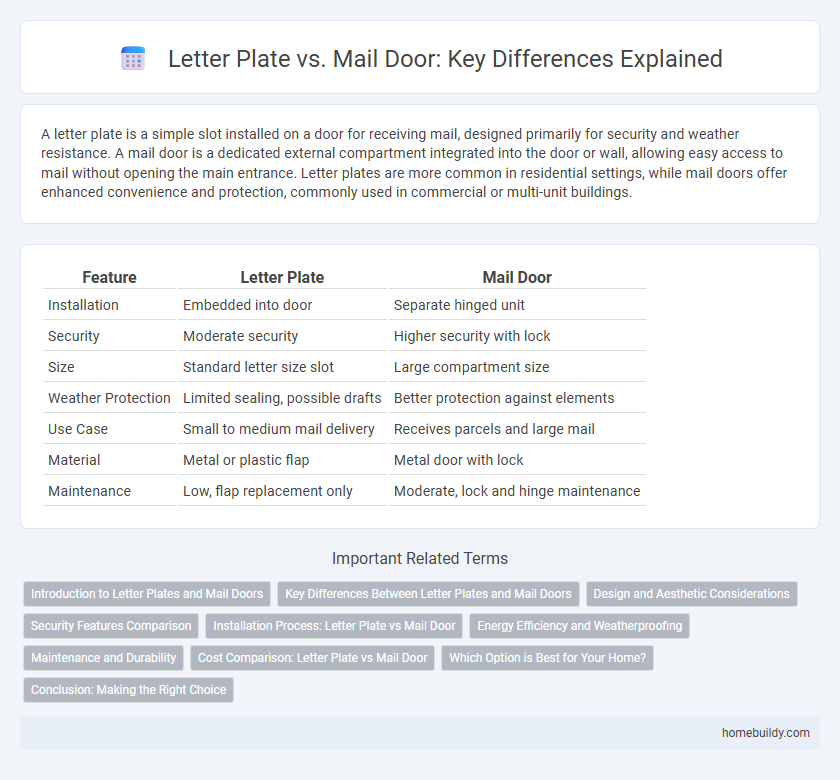
 A letter plate is a simple slot installed on a door for receiving mail, designed primarily for security and weather resistance. A mail door is a dedicated external compartment integrated into the door or wall, allowing easy access to mail without opening the main entrance. Letter plates are more common in residential settings, while mail doors offer enhanced convenience and protection, commonly used in commercial or multi-unit buildings.
Table of Comparison
| Feature | Letter Plate | Mail Door |
|---|---|---|
| Installation | Embedded into door | Separate hinged unit |
| Security | Moderate security | Higher security with lock |
| Size | Standard letter size slot | Large compartment size |
| Weather Protection | Limited sealing, possible drafts | Better protection against elements |
| Use Case | Small to medium mail delivery | Receives parcels and large mail |
| Material | Metal or plastic flap | Metal door with lock |
| Maintenance | Low, flap replacement only | Moderate, lock and hinge maintenance |
Introduction to Letter Plates and Mail Doors
Letter plates are metal or plastic fixtures installed in doors or walls to allow mail to be delivered directly into a property. Mail doors, in contrast, are specialized doors or compartments designed solely for mail access, often featuring secure locking mechanisms. Both serve the purpose of mail reception, but letter plates offer a simpler, more integrated solution while mail doors provide enhanced security and dedicated space.
Key Differences Between Letter Plates and Mail Doors
Letter plates are installed directly onto doors for mail insertion, offering a simple and cost-effective solution, while mail doors function as a dedicated compartment within the door, providing enhanced security and protection from weather elements. Letter plates typically require external access for mail retrieval, whereas mail doors often allow internal access, improving convenience and reducing the risk of mail theft. The choice between letter plates and mail doors depends on factors such as security needs, aesthetic preferences, and installation complexity.
Design and Aesthetic Considerations
Letter plates offer a sleek, minimalist design that integrates seamlessly with door aesthetics, preserving the door's original style and surface smoothness. Mail doors feature dedicated compartments with visible external panels, adding a more pronounced architectural element that can enhance or detract from the door's appearance depending on the design choice. The choice between letter plate and mail door designs hinges on balancing visual appeal with functional integration, considering materials, finishes, and overall exterior home style.
Security Features Comparison
Letter plates offer a secure solution with built-in anti-tamper features such as internal flaps and reinforced edges that prevent fishing and unauthorized access. Mail doors provide enhanced security by allowing mail to be deposited into a locked compartment, minimizing exposure to theft or vandalism. Both options improve home security, but mail doors typically offer superior protection due to their fully enclosed design.
Installation Process: Letter Plate vs Mail Door
The installation process of a letter plate typically involves cutting a precise slot into an existing door and fitting the plate securely with screws, requiring minimal tools and time. In contrast, installing a mail door demands a larger door or panel replacement with reinforced framing to ensure durability and proper sealing against weather and security concerns. Letter plates offer a straightforward retrofit solution for solid doors, whereas mail doors necessitate professional installation due to structural modifications.
Energy Efficiency and Weatherproofing
Letter plates provide a more straightforward installation on doors, often leading to minor gaps that can reduce energy efficiency and increase drafts. Mail doors feature built-in compartments designed with insulated panels and seals, significantly enhancing weatherproofing by preventing heat loss and blocking moisture infiltration. Choosing mail doors over traditional letter plates supports better thermal insulation and protects indoor environments from harsh weather conditions.
Maintenance and Durability
Letter plates feature robust stainless steel or brass construction that resists rust and corrosion, ensuring long-lasting durability even in harsh weather conditions. In contrast, mail doors often incorporate plastic or thinner metal panels prone to warping or breaking over time, leading to higher maintenance needs. Regular inspection and lubrication of hinges on mail doors are necessary to maintain smooth operation, whereas letter plates require minimal upkeep beyond occasional cleaning.
Cost Comparison: Letter Plate vs Mail Door
Letter plates generally offer a more cost-effective solution compared to mail doors, with initial installation expenses significantly lower due to simpler design and fewer materials required. Maintenance costs for letter plates tend to be minimal, as their straightforward construction reduces the likelihood of damage or malfunction. Mail doors, while providing enhanced security and weather protection, incur higher upfront and repair costs, making letter plates the preferred option for budget-conscious property owners.
Which Option is Best for Your Home?
A letter plate typically offers a straightforward installation into an existing door, providing easy access for mail delivery while maintaining security and weatherproofing. Mail doors, designed specifically with a built-in compartment, offer enhanced protection against theft and improved privacy but often require a custom fit and additional space. Choosing the best option depends on your home's door type, security needs, and personal preference for convenience versus protection.
Conclusion: Making the Right Choice
Choosing between a letter plate and a mail door depends on security preferences, aesthetic appeal, and convenience. Letter plates offer a simple, cost-effective solution for receiving mail through the door, while mail doors provide enhanced security by isolating mail access from the main door structure. Evaluating factors such as installation requirements, weather resistance, and mail volume ensures selecting the ideal option for home or office mail management.
Letter plate vs mail door Infographic