 homebuildy.com
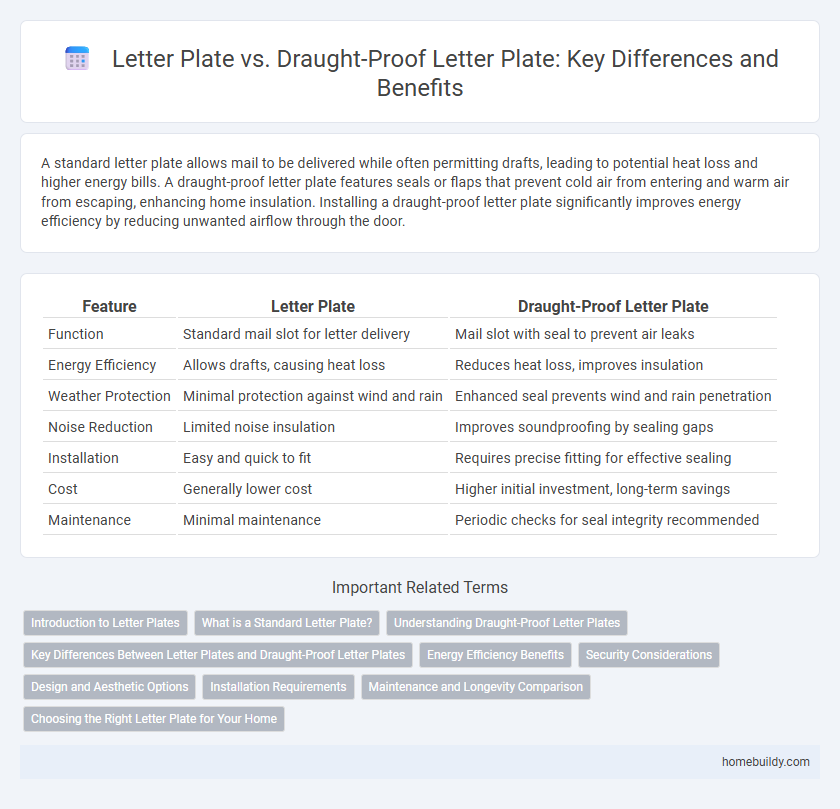
 A standard letter plate allows mail to be delivered while often permitting drafts, leading to potential heat loss and higher energy bills. A draught-proof letter plate features seals or flaps that prevent cold air from entering and warm air from escaping, enhancing home insulation. Installing a draught-proof letter plate significantly improves energy efficiency by reducing unwanted airflow through the door.
Table of Comparison
| Feature | Letter Plate | Draught-Proof Letter Plate |
|---|---|---|
| Function | Standard mail slot for letter delivery | Mail slot with seal to prevent air leaks |
| Energy Efficiency | Allows drafts, causing heat loss | Reduces heat loss, improves insulation |
| Weather Protection | Minimal protection against wind and rain | Enhanced seal prevents wind and rain penetration |
| Noise Reduction | Limited noise insulation | Improves soundproofing by sealing gaps |
| Installation | Easy and quick to fit | Requires precise fitting for effective sealing |
| Cost | Generally lower cost | Higher initial investment, long-term savings |
| Maintenance | Minimal maintenance | Periodic checks for seal integrity recommended |
Introduction to Letter Plates
Letter plates serve as the primary entry point for mail, typically installed on doors to allow letters and small parcels to pass through. Draught-proof letter plates enhance this function by incorporating seals or brush strips that prevent air leakage, improving energy efficiency and reducing drafts. Choosing between a standard and draught-proof letter plate depends on balancing mail accessibility with insulation needs.
What is a Standard Letter Plate?
A standard letter plate is a basic mail slot installed on a door or wall that allows letters to be delivered directly into a property. It typically consists of a simple flap or opening without insulation features, which can let in drafts and reduce energy efficiency. Compared to draught-proof letter plates, standard models lack sealing mechanisms that prevent cold air infiltration and improve home insulation.
Understanding Draught-Proof Letter Plates
Draught-proof letter plates provide enhanced insulation by incorporating brush seals or flap mechanisms that prevent cold air infiltration and reduce energy loss through gaps in standard letter plates. These specialized letter plates improve home energy efficiency by minimizing drafts while maintaining secure mail delivery. Selecting a draught-proof letter plate helps maintain indoor comfort and lowers heating costs compared to conventional letter plates without sealing features.
Key Differences Between Letter Plates and Draught-Proof Letter Plates
Letter plates typically consist of a simple flap or slot for mail delivery, allowing air to pass freely through the door opening, while draught-proof letter plates incorporate seals or brushes designed to reduce air leakage and improve insulation. The key difference lies in energy efficiency; draught-proof letter plates minimize heat loss and prevent drafts, contributing to lower heating costs and enhanced comfort. Installation of draught-proof models often involves additional components that create a tighter seal against external weather conditions, unlike standard letter plates which prioritize ease of mail access over thermal performance.
Energy Efficiency Benefits
A draught-proof letter plate significantly enhances energy efficiency by reducing heat loss and preventing cold air infiltration compared to a standard letter plate. Its integrated seals and insulation barriers help maintain indoor temperature, lowering heating costs and improving overall thermal performance. Choosing a draught-proof model supports sustainable energy use and contributes to a more comfortable home environment.
Security Considerations
A draught-proof letter plate enhances security by sealing gaps around the mail slot, reducing the risk of tampering or forced entry compared to traditional letter plates. It features reinforced materials and secure locking mechanisms that prevent objects or tools from being inserted through the slot. Investing in a draught-proof letter plate provides improved protection against theft and unauthorized access while maintaining energy efficiency.
Design and Aesthetic Options
Letter plates offer a wide variety of design and aesthetic options, ranging from traditional brass finishes to modern stainless steel or painted styles. Draught-proof letter plates enhance functionality by integrating seals and insulation without compromising visual appeal, often featuring sleek, minimalist designs that blend seamlessly with door materials. Choosing between the two depends on balancing decorative preferences with energy efficiency requirements, as draught-proof models provide practical benefits alongside customizable aesthetics.
Installation Requirements
Installing a standard letter plate typically requires a straightforward cut in the door for mounting, with minimal adjustments needed for alignment and frame compatibility. Draught-proof letter plates demand more precise installation procedures, as they must ensure a tight seal to prevent air leakage, often involving additional components like brushes or flaps that need to be fitted accurately. Proper installation of draught-proof models is essential to maintain energy efficiency and avoid compromising the door's insulation properties.
Maintenance and Longevity Comparison
A draught-proof letter plate requires less frequent maintenance compared to a standard letter plate due to its integrated sealing features that prevent dust and moisture ingress. The durable rubber or brush seals in draught-proof models reduce wear and tear, extending the lifespan beyond traditional metal letter plates prone to rust and corrosion. Proper upkeep of the seals ensures optimal performance and longevity, making draught-proof letter plates a cost-effective investment over time.
Choosing the Right Letter Plate for Your Home
Choosing the right letter plate for your home involves considering both security and insulation features to enhance energy efficiency. A draught-proof letter plate is specifically designed with seals to prevent cold air, dust, and moisture from entering, unlike standard letter plates which lack this protection. Opting for a draught-proof letter plate can significantly reduce heating costs while maintaining easy mail delivery and improved home comfort.
letter plate vs draught-proof letter plate Infographic