 homebuildy.com
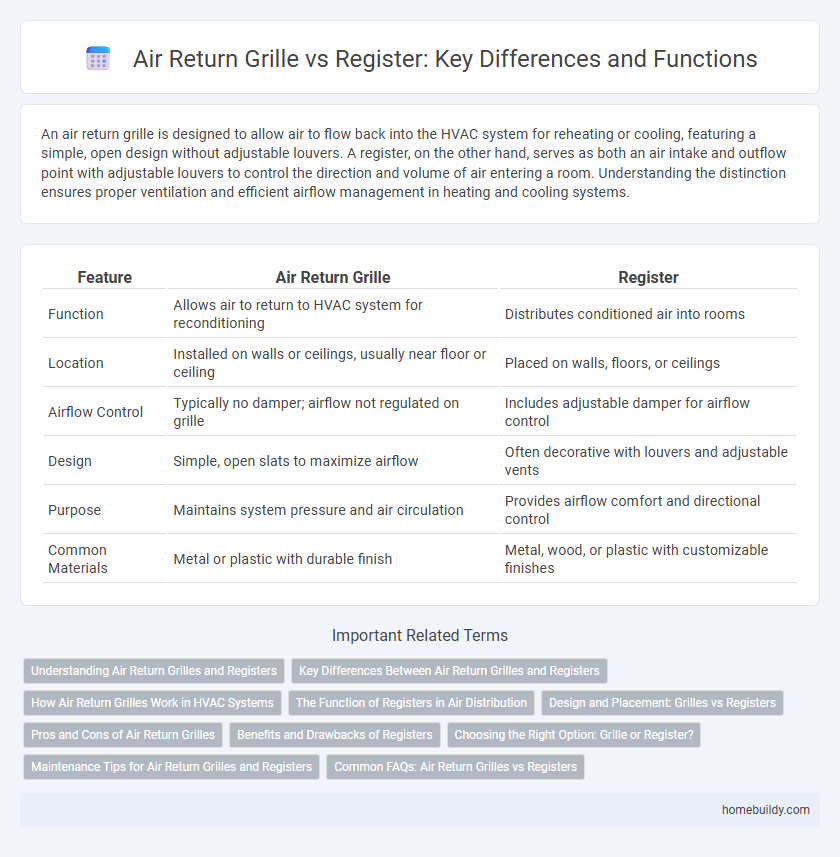
 An air return grille is designed to allow air to flow back into the HVAC system for reheating or cooling, featuring a simple, open design without adjustable louvers. A register, on the other hand, serves as both an air intake and outflow point with adjustable louvers to control the direction and volume of air entering a room. Understanding the distinction ensures proper ventilation and efficient airflow management in heating and cooling systems.
Table of Comparison
| Feature | Air Return Grille | Register |
|---|---|---|
| Function | Allows air to return to HVAC system for reconditioning | Distributes conditioned air into rooms |
| Location | Installed on walls or ceilings, usually near floor or ceiling | Placed on walls, floors, or ceilings |
| Airflow Control | Typically no damper; airflow not regulated on grille | Includes adjustable damper for airflow control |
| Design | Simple, open slats to maximize airflow | Often decorative with louvers and adjustable vents |
| Purpose | Maintains system pressure and air circulation | Provides airflow comfort and directional control |
| Common Materials | Metal or plastic with durable finish | Metal, wood, or plastic with customizable finishes |
Understanding Air Return Grilles and Registers
Air return grilles are designed to allow air to flow back into the HVAC system for reconditioning, featuring open slats without adjustable dampers. Registers, by contrast, serve as supply air outlets equipped with adjustable dampers to control airflow direction and volume. Understanding the distinction between air return grilles and registers is crucial for optimizing indoor air circulation and maintaining HVAC efficiency.
Key Differences Between Air Return Grilles and Registers
Air return grilles and registers both play crucial roles in HVAC systems but serve distinct purposes; air return grilles allow air to flow back into the system for reconditioning without adjustable louvers, while registers control airflow direction and volume with built-in adjustable dampers. Air return grilles typically feature larger openings to facilitate efficient air intake, whereas registers are designed with adjustable vents for customized air distribution. Understanding these key differences is essential for optimizing indoor air circulation and maintaining HVAC efficiency.
How Air Return Grilles Work in HVAC Systems
Air return grilles function as integral components in HVAC systems by allowing air to flow back into the system for reconditioning and circulation. Unlike registers that direct conditioned air into rooms, air return grilles capture used air from indoor spaces, facilitating efficient airflow and maintaining balanced air pressure. Properly designed and installed return grilles optimize energy efficiency and indoor air quality by ensuring continuous air exchange within heating, ventilation, and air conditioning systems.
The Function of Registers in Air Distribution
Registers in air distribution regulate airflow by opening and closing to control the volume and direction of air entering a room, enhancing comfort and efficiency. Unlike air return grilles, which allow air to be drawn back into the HVAC system for reconditioning, registers actively manage the delivery of heated or cooled air. This functional distinction is essential for maintaining balanced airflow and ensuring optimal indoor air quality.
Design and Placement: Grilles vs Registers
Air return grilles are designed primarily for airflow intake and are typically larger with open patterns to maximize ventilation efficiency, whereas registers include adjustable dampers to control airflow direction and volume. Grilles are often installed in walls or ceilings near return ducts to facilitate consistent air circulation without obstructing aesthetics, while registers are placed in supply vents to direct conditioned air precisely into living spaces. Proper placement of return grilles ensures balanced HVAC performance by preventing pressure imbalances and promoting effective air exchange throughout the system.
Pros and Cons of Air Return Grilles
Air return grilles provide effective ventilation by allowing air to flow back into the HVAC system, improving air circulation and system efficiency. Their open design reduces noise and prevents pressure buildup, but they can collect dust and require regular cleaning to maintain optimal indoor air quality. Unlike registers, air return grilles do not have adjustable dampers, limiting control over airflow direction and volume.
Benefits and Drawbacks of Registers
Air return registers offer improved airflow control and durability compared to standard return grilles, allowing for adjustable dampers to regulate air volume efficiently. However, registers can be more prone to noise and require regular cleaning to maintain optimal performance, whereas grilles generally provide quieter operation with less maintenance. Choosing between an air return grille and a register depends on balancing airflow customization needs against noise levels and upkeep demands.
Choosing the Right Option: Grille or Register?
An air return grille is designed to facilitate efficient airflow back to the HVAC system without directing air into the room, unlike a register which includes adjustable dampers to control airflow direction and volume. Choosing between an air return grille and a register depends on the function needed: return grilles optimize air circulation and filtration, while registers provide targeted heating or cooling. For optimal HVAC performance and indoor air quality, use return grilles for air intake points and registers for supply vents where airflow control and direction are necessary.
Maintenance Tips for Air Return Grilles and Registers
Air return grilles require regular cleaning to prevent dust buildup that can restrict airflow and reduce HVAC efficiency, while registers should have their adjustable dampers checked and cleaned to maintain proper air distribution. Both components benefit from vacuuming with a brush attachment and occasional washing with mild soap and water to remove accumulated dirt and allergens. Inspecting for damage and ensuring secure mounting helps sustain optimal system performance and indoor air quality.
Common FAQs: Air Return Grilles vs Registers
Air return grilles and registers differ primarily in function and airflow control, with return grilles designed to allow air to flow back into the HVAC system and registers used to distribute conditioned air into living spaces. Return grilles are typically larger, lack directional louvers, and filter incoming air, while registers have adjustable dampers and louvers to regulate airflow direction and volume. Choosing between an air return grille and a register depends on HVAC system design and airflow requirements, as each plays a critical role in maintaining efficient air circulation and indoor air quality.
air return grille vs register Infographic